












Interactions of 1-butyl-3-methylimidazolium carboxylate ionic liquids with glucose in water: a study of volumetric properties, viscosity, conductivity and NMR
文献情報
出版日
2011-07-12
DOI
10.1039/C1CP20948E
インパクトファクター
3.676
著者
Kelei Zhuo, Yujuan Chen, Jing Chen, Guangyue Bai, Jianji Wang
原文を見る
要旨
Extensive applications of ionic liquids (ILs) may result in their accumulation in the ecological environment and organisms. Although ILs are popularly called “green solvents”, their toxicity, in fact, has been exhibited. Therefore the interaction of ILs with biomolecules is a cutting-edge research subject. Herein, the interactions of 1-butyl-3-methylimidazolium carboxylate ionic liquids ([C4mim][HCOO], [C4mim][CH3COO] and [C4mim][CH3CH2COO]) with glucose in water were studied for their volumetric properties, viscosity, conductivity and NMR spectra. Limiting apparent molar volumes (V0Φ,IL), viscosity B-coefficients, limiting molar conductivities (Λ0) and Walden products (Λ0η0) were evaluated for the ILs in glucose + water solutions. Volumetric interaction parameters were also obtained from the transfer volumes of the ionic liquids. The contributions of the solvent properties (B1) and the ionic liquid–solvent interactions (B2) to the B-coefficient were extracted, together with molar activation energies (Δμ0≠IL) of the ionic liquids for viscous flow of the aqueous glucose + IL solution. In addition, the 13C and 1H NMR spectra of methyl β-D-glucopyranoside and ILs in β-D-glucopyranoside + IL + D2O were studied. The NMR results show that no special and strong interactions were observed between glucopyranoside and the ILs. However, it was confirmed that the H2 on the imidazolium ring has more activity (acidity) than atoms H4 and H5. The macro-properties and their changes were also discussed in terms of the size, structure and solvation of the ILs and glucose.
関連文献
Antibacterial activity of a dual peptide targeting the Escherichia coli sliding clamp and the ribosome
Christophe André, Florian Veillard, Philippe Wolff, Anne-Marie Lobstein, Guillaume Compain, Clément Monsarrat, Jean-Marc Reichhart, Camille Noûs, Dominique Y. Burnouf, Gilles Guichard, Jérôme E. Wagner
2020-07-16
Paper
DOI: 10.1039/D0CB00060D
Highly improved performance of a film-based fluorescent sensor via a nanomesh scaffold strategy
Meng Liu, Dong Li, Kun Li, Haitao Xu, Jiufu Lu, Xianzhao Shao, Taihong Liu
2021-11-01
Communication
DOI: 10.1039/D1SD00016K
Haemoglobin(βK120C)–albumin trimer as an artificial O2 carrier with sufficient haemoglobin allostery
Yoshitsugu Morita, Asuka Saito, Jun Yamaguchi, Teruyuki Komatsu
2020-07-13
Paper
DOI: 10.1039/D0CB00056F
4-Nitrophenyl activated esters are superior synthons for indirect radiofluorination of biomolecules
Peter D. Roselt
2020-07-07
Research Article
DOI: 10.1039/D0MD00140F
Discovery of potent nucleotide pyrophosphatase/phosphodiesterase3 (NPP3) inhibitors with ancillary carbonic anhydrase inhibition for cancer (immuno)therapy
Sang-Yong Lee, Vigneshwaran Namasivayam, Arianna Perotti, Salahuddin Mirza, Silvia Bua, Claudiu T. Supuran, Christa E. Müller
2021-06-16
Research Article
DOI: 10.1039/D1MD00117E
2-Difluoromethylpyridine as a bioisosteric replacement of pyridine-N-oxide: the case of quorum sensing inhibitors
Thang Nguyen Quoc
2021-09-08
Research Article
DOI: 10.1039/D1MD00245G
Wheat pathogen Zymoseptoria tritici N-myristoyltransferase inhibitors: on-target antifungal activity and an unusual metabolic defense mechanism
Cory A. Ocasio, Benjamin Strutton, Jo Mattocks, Andrew J. Corran
2020-05-13
Paper
DOI: 10.1039/D0CB00020E
Formulation and clinical translation of [177Lu]Lu-trastuzumab for radioimmunotheranostics of metastatic breast cancer
Mohini Guleria, Rohit Sharma, Jeyachitra Amirdhanayagam, Haladhar D. Sarma, Venkatesh Rangarajan
2020-11-14
Research Article
DOI: 10.1039/D0MD00319K
Identification of molecular glues of the SLP76/14-3-3 protein–protein interaction
Martin Redhead, Marta Westwood, Seppe Leysen, Jeremy Davis, Christian Ottmann
2021-08-02
Research Article
DOI: 10.1039/D1MD00172H
こちらもおすすめ
化合物よくある質問
2-ヒドロキシ-5-ニトロベンジンブロモイドの代替品はありますか?
2-ヒドロキシ-5-ニトロベンジンブロモイドは特定の化学反応に適しているため、代替品は限られています。しかし、同様の構造を持つ2-ヒドロキシ-4-ニトロベンジン...
772-33-82-(Bromomethyl)-4-ni...
化合物よくある質問
N-(2-ブロモフェニル)-1-チロール-3-オキソ-3-(ピペリジニル)プロペン-2-イル)ベンゼンアミドを取り扱う際の実験室安全事項は何ですか?
N-(2-ブロモフェニル)-1-チロール-3-オキソ-3-(ピペリジニル)プロペン-2-イル)ベンゼンアミドは有毒で、皮膚や粘膜に刺激を与える可能性があります。...
1800044-77-2N-[(1Z)-1-(2-Bromoph...
化合物よくある質問
1,3プロパンジオール,2-[2-(2アミノ-6クロロ-9Hピリミジン-9-イル)エチル-1,1,2,2-D4]-2,3-ジアセタートの市場動向や研究トレンドはどうですか?
この化合物は、新規治療薬の開発に注目されています。市場では、その有効性と安全性が評価され、研究分野では、分子生物学と医薬化学の新たな発見が期待されています。
1020718-81-31,3-Propanediol, 2-[...
579-44-2Ethanone, 2-hydroxy-...
化合物よくある質問
Succinimidyl-alanyl-phenylalanyl-prolyl-phenylalanine 4-nitroanilide はどの業界で使用されていますか?
Succinimidyl-alanyl-phenylalanyl-prolyl-phenylalanine 4-nitroanilide は主に医薬品開発やポ...
128802-73-3succinimidyl-alanyl-...
化合物よくある質問
メチル6-アミノ-5-クロロピリジン-2-カーボイル酸について、適用される法規ガイドラインは何ですか?
メチル6-アミノ-5-クロロピリジン-2-カーボイル酸(CAS番号: 1256794-05-4)の使用には、GHS( Globally Harmonized S...
1256794-05-4Methyl 6-amino-5-chl...
化合物よくある質問
エチル4-(シクロ Pentagonyl)アミノ-2-メチル硫化基ピリミジン-5-カルボキシレートを取り扱う際の実験室安全事項は何ですか?
取り扱いには、耐薬品性の容器を使用し、通気性の良い場所で操作することを推奨します。漏れ時は、SDS(安全データシート)を参照して適切な措置を取ること。手洗いと洗...
211245-62-4ethyl 4-(cyclopentyl...
化合物よくある質問
(S)-3-ベンZYルピペリジン塩酸塩とは何ですか?
(S)-3-ベンZYルピペリジン塩酸塩は、CAS番号1258940-00-9で表される化合物です。これは、(S)-3-苯基哌啶的盐酸盐であり、主に医薬品の原料と...
1258940-00-9(S)-3-Phenylpiperidi...
化合物よくある質問
3,5-二甲基金剛胺の主な用途は何ですか?
3,5-二甲基金剛胺は、主に医薬品の原料として使用され、また抗うつ薬や抗アルツハイマー薬の開発に利用されます。さらに、化粧品や食品添加物の製造でも重要な役割を果...
19988-45-52-(2,3-Dihydroxyphen...
化合物よくある質問
ビス(4-メチル-2-ペンチル)フェニルカルボン酸エステルの代替品はありますか?
ビス(4-メチル-2-ペンチル)フェニルカルボン酸エステル (CAS番号: 1398066-13-1) の代替品には、ビス(2-エチルヘキシル)フェノールカルボ...
1398066-13-1Bis(4-methyl-2-penty...
掲載誌
Physical Chemistry Chemical Physics

CiteScore:
5.5
自己引用率:
10.3%
年間論文数:
3036
Physical Chemistry Chemical Physics (PCCP) is an international journal co-owned by 19 physical chemistry and physics societies from around the world. This journal publishes original, cutting-edge research in physical chemistry, chemical physics and biophysical chemistry. To be suitable for publication in PCCP, articles must include significant innovation and/or insight into physical chemistry; this is the most important criterion that reviewers and Editors will judge against when evaluating submissions. The journal has a broad scope and welcomes contributions spanning experiment, theory, computation and data science. Topical coverage includes spectroscopy, dynamics, kinetics, statistical mechanics, thermodynamics, electrochemistry, catalysis, surface science, quantum mechanics, quantum computing and machine learning. Interdisciplinary research areas such as polymers and soft matter, materials, nanoscience, energy, surfaces/interfaces, and biophysical chemistry are welcomed if they demonstrate significant innovation and/or insight into physical chemistry. Joined experimental/theoretical studies are particularly appreciated when complementary and based on up-to-date approaches.
おすすめ化合物
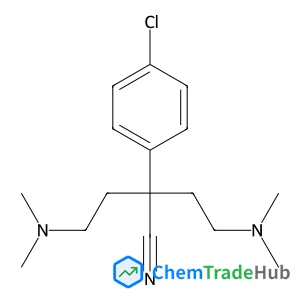
2-(4-Chlorophenyl)-4-(dimethylamino)-2-(2-(dimethylamino)ethyl)butanenitrile
CAS番号:
1246816-57-8
分子式:
C16H24ClN3
![2,6-Di(thiophen-2-yl)dithieno[3,2-b:2',3'-d]thiophene structure](https://static.chemtradehub.com/structs/910/910788-24-8-5b70.webp "2,6-Di(thiophen-2-yl)dithieno[3,2-b:2',3'-d]thiophene structure")
おすすめサプライヤー






免責事項
このページに表示される学術雑誌情報は、参考および研究目的のみを目的としています。当社は雑誌出版社とは提携しておらず、投稿の取り扱いも行っておりません。出版に関するお問い合わせは、各雑誌出版社に直接ご連絡ください。
表示されている情報に誤りがある場合は、support@chemtradehub.com までご連絡ください。迅速に確認し、対応いたします。