












Modus operandi of controlled release from mesoporous matrices: a theoretical perspective
文献情報
出版日
2011-07-26
DOI
10.1039/C1CP20636B
インパクトファクター
3.676
著者
Tina Ukmar, Miran Gaberšček, Franci Merzel, Aljaž Godec
原文を見る
要旨
The ability to alter the rate at which molecules are released from pores by manipulating structural and surface properties of mesoporous materials was demonstrated consistently in numerous studies. Yet an understanding of the role of pore size, attraction to pore walls and of the release mechanism in general has still been elusive. Here we address these issues by means of a simple 2-dimensional (2D) model of ordered porous matrices with various pore sizes and strengths of molecule–wall attractions. The system dynamics are described with a 2D Fokker–Planck equation which is solved numerically for various cases of initial concentration distribution. We show that the interactions with walls play an essential and fundamental role in controlled release from mesoporous materials, regardless of whether they are additionally functionalized or not. They affect the relative cross-section where the local flux has a non-vanishing axial component and accordingly the effective transfer rate into bulk solution. Furthermore the inclusion of molecule–wall attractions into the theoretical description turns out to be the missing piece of the puzzle that explains the origin of the experimentally observed dependence of release kinetics on the pore size. Our results enable us to reinterpret existing experimental findings and provide a revised view of the mechanism of controlled release from ordered porous matrices.
関連文献
Neighborhood watch: tools for defining locale-dependent subproteomes and their contextual signaling activities
Marcus J. C. Long, Yi Zhao, Yimon Aye
2020-05-27
Review Article
DOI: 10.1039/D0CB00041H
Aloe-emodin derived azoles as a new structural type of potential antibacterial agents: design, synthesis, and evaluation of the action on membrane, DNA, and MRSA DNA isomerase‡
Xin-Yuan Liang, Narsaiah Battini, Yan-Fei Sui, Mohammad Fawad Ansari, Lin-Ling Gan, Cheng-He Zhou
2021-03-03
Research Article
DOI: 10.1039/D0MD00429D
Design and optimisation of a small-molecule TLR2/4 antagonist for anti-tumour therapy
Qun Xu, Tian Li, Hekai Chen, Jun Kong, Liwei Zhang
2021-09-07
Research Article
DOI: 10.1039/D1MD00175B
A scaffold hopping strategy to generate new aryl-2-amino pyrimidine MRSA biofilm inhibitors
Alexander W. Weig, Samantha L. Barlock, Patrick M. O'Connor, Orry M. Marciano, Richard Smith, Robert K. Ernst, Roberta J. Melander, Christian Melander
2020-12-08
Research Article
DOI: 10.1039/D0MD00238K
Deglycase-activity oriented screening to identify DJ-1 inhibitors
Efrat Finkin-Groner, Yoshiyuki Fukase, Qingfei Zheng, Shan Sun, Mayako Michino, Robert W. Myers
2021-06-02
Research Article
DOI: 10.1039/D1MD00062D
Small molecule-mediated induction of endoplasmic reticulum stress in cancer cells
Virender Kumar Sharma, Ankur Biswas, Mayurika Lahiri, Sudipta Basu
2021-07-15
Research Article
DOI: 10.1039/D1MD00095K
Synthesis and anti-HBV activity of carbocyclic nucleoside hybrids with salient features of entecavir and aristeromycin
Masaaki Toyama, Renuka Sivasankar Pallaka, Seshubabu Neeladri, Ashok Kumar Jha, Masanori Baba, Chandralata Bal
2020-05-15
Research Article
DOI: 10.1039/D0MD00059K
A3- and A2B-fluorocorroles: synthesis, X-ray characterization and antiviral activity evaluation against human cytomegalovirus infection
Sandrine Kappler-Gratias, Léo Bucher, Nicolas Desbois, Yoann Rousselin, Claude P. Gros, Franck Gallardo
2020-07-13
Research Article
DOI: 10.1039/D0MD00127A
Biological evaluation of native streptococcal competence stimulating peptides reveals potential crosstalk between Streptococcus mitis and Streptococcus pneumoniae and a new scaffold for the development of S. pneumoniae quorum sensing modulators
Tahmina Ahmed Milly, Yftah Tal-Gan
2020-05-29
Paper
DOI: 10.1039/D0CB00012D
こちらもおすすめ
化合物よくある質問
2-ヒドロキシ-5-ニトロベンジンブロモイドの代替品はありますか?
2-ヒドロキシ-5-ニトロベンジンブロモイドは特定の化学反応に適しているため、代替品は限られています。しかし、同様の構造を持つ2-ヒドロキシ-4-ニトロベンジン...
772-33-82-(Bromomethyl)-4-ni...
化合物よくある質問
N-(2-ブロモフェニル)-1-チロール-3-オキソ-3-(ピペリジニル)プロペン-2-イル)ベンゼンアミドを取り扱う際の実験室安全事項は何ですか?
N-(2-ブロモフェニル)-1-チロール-3-オキソ-3-(ピペリジニル)プロペン-2-イル)ベンゼンアミドは有毒で、皮膚や粘膜に刺激を与える可能性があります。...
1800044-77-2N-[(1Z)-1-(2-Bromoph...
化合物よくある質問
1,3プロパンジオール,2-[2-(2アミノ-6クロロ-9Hピリミジン-9-イル)エチル-1,1,2,2-D4]-2,3-ジアセタートの市場動向や研究トレンドはどうですか?
この化合物は、新規治療薬の開発に注目されています。市場では、その有効性と安全性が評価され、研究分野では、分子生物学と医薬化学の新たな発見が期待されています。
1020718-81-31,3-Propanediol, 2-[...
579-44-2Ethanone, 2-hydroxy-...
化合物よくある質問
Succinimidyl-alanyl-phenylalanyl-prolyl-phenylalanine 4-nitroanilide はどの業界で使用されていますか?
Succinimidyl-alanyl-phenylalanyl-prolyl-phenylalanine 4-nitroanilide は主に医薬品開発やポ...
128802-73-3succinimidyl-alanyl-...
化合物よくある質問
メチル6-アミノ-5-クロロピリジン-2-カーボイル酸について、適用される法規ガイドラインは何ですか?
メチル6-アミノ-5-クロロピリジン-2-カーボイル酸(CAS番号: 1256794-05-4)の使用には、GHS( Globally Harmonized S...
1256794-05-4Methyl 6-amino-5-chl...
化合物よくある質問
エチル4-(シクロ Pentagonyl)アミノ-2-メチル硫化基ピリミジン-5-カルボキシレートを取り扱う際の実験室安全事項は何ですか?
取り扱いには、耐薬品性の容器を使用し、通気性の良い場所で操作することを推奨します。漏れ時は、SDS(安全データシート)を参照して適切な措置を取ること。手洗いと洗...
211245-62-4ethyl 4-(cyclopentyl...
化合物よくある質問
(S)-3-ベンZYルピペリジン塩酸塩とは何ですか?
(S)-3-ベンZYルピペリジン塩酸塩は、CAS番号1258940-00-9で表される化合物です。これは、(S)-3-苯基哌啶的盐酸盐であり、主に医薬品の原料と...
1258940-00-9(S)-3-Phenylpiperidi...
化合物よくある質問
3,5-二甲基金剛胺の主な用途は何ですか?
3,5-二甲基金剛胺は、主に医薬品の原料として使用され、また抗うつ薬や抗アルツハイマー薬の開発に利用されます。さらに、化粧品や食品添加物の製造でも重要な役割を果...
19988-45-52-(2,3-Dihydroxyphen...
化合物よくある質問
ビス(4-メチル-2-ペンチル)フェニルカルボン酸エステルの代替品はありますか?
ビス(4-メチル-2-ペンチル)フェニルカルボン酸エステル (CAS番号: 1398066-13-1) の代替品には、ビス(2-エチルヘキシル)フェノールカルボ...
1398066-13-1Bis(4-methyl-2-penty...
掲載誌
Physical Chemistry Chemical Physics

CiteScore:
5.5
自己引用率:
10.3%
年間論文数:
3036
Physical Chemistry Chemical Physics (PCCP) is an international journal co-owned by 19 physical chemistry and physics societies from around the world. This journal publishes original, cutting-edge research in physical chemistry, chemical physics and biophysical chemistry. To be suitable for publication in PCCP, articles must include significant innovation and/or insight into physical chemistry; this is the most important criterion that reviewers and Editors will judge against when evaluating submissions. The journal has a broad scope and welcomes contributions spanning experiment, theory, computation and data science. Topical coverage includes spectroscopy, dynamics, kinetics, statistical mechanics, thermodynamics, electrochemistry, catalysis, surface science, quantum mechanics, quantum computing and machine learning. Interdisciplinary research areas such as polymers and soft matter, materials, nanoscience, energy, surfaces/interfaces, and biophysical chemistry are welcomed if they demonstrate significant innovation and/or insight into physical chemistry. Joined experimental/theoretical studies are particularly appreciated when complementary and based on up-to-date approaches.
おすすめ化合物
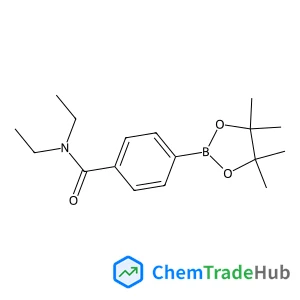
N,N-Diethyl-4-(4,4,5,5-tetramethyl-1,3,2-dioxaborolan-2-yl)benzamide
CAS番号:
325142-99-2
分子式:
C17H26BNO3
![Methyl 4-({[(2-methyl-2-propanyl)oxy]carbonyl}amino)bicyclo[2.2.2]octane-1-carboxylate structure](https://static.chemtradehub.com/structs/943/943845-74-7-b7e5.webp "Methyl 4-({[(2-methyl-2-propanyl)oxy]carbonyl}amino)bicyclo[2.2.2]octane-1-carboxylate structure")
おすすめサプライヤー




免責事項
このページに表示される学術雑誌情報は、参考および研究目的のみを目的としています。当社は雑誌出版社とは提携しておらず、投稿の取り扱いも行っておりません。出版に関するお問い合わせは、各雑誌出版社に直接ご連絡ください。
表示されている情報に誤りがある場合は、support@chemtradehub.com までご連絡ください。迅速に確認し、対応いたします。