


Sustainable synthesis of acetals from glycerol as potential additives for biofuels under solvent-free conditions
文献情報
出版日
2022-06-16
DOI
10.1039/D1RE00557J
インパクトファクター
4.239
著者
Gabriel Abranches Dias Castro, Ana Luíza Quintão Santos, Ángel Gabriel Sathicq, Valeria Palermo, Sergio Antonio Fernandes
原文を見る
要旨
Acetals formed from glycerol find applications in several areas, their use as fuel additives being the most promising, since it results in total integration in the biodiesel chain and eliminates one of the obstacles to its production. In order to convert glycerol into acetals, the use of p-sulfonic acid calix[4]arene supported on silica (CX4SO3HSi(n)) and microwave-assisted heating was proposed, and quantitative analysis was performed by 1H NMR. The effects of the main reaction parameters were evaluated, such as temperature, reaction time and the amount of heterogeneous catalyst, using benzaldehyde and glycerol as model substrates. From the optimized conditions (0.5 mmol of glycerol, 0.5 mmol of benzaldehyde, 5 wt% of the catalyst CX4SO3HSi(n), at 110 °C in 20 min), the generality of the reaction was evaluated, obtaining twelve products with yields ranging from 6 to 99%. The important aspects of this protocol are the following: solvent-free reaction, water as the sole waste, being metal-free, and shorter reaction times.
おすすめジャーナル

Green Chemistry

Physical Chemistry Chemical Physics

Molecules

Photochemical & Photobiological Sciences

Foundations of Chemistry

Current Pharmaceutical Biotechnology

Faraday Discussions

Journal of Enzyme inhibition and Medicinal Chemistry

Environmental Toxicology and Pharmacology

Journal of Medical Biochemistry
関連文献
Thymine relaxation after UV irradiation: the role of tautomerization and πσ* states
Jesús González-Vázquez, Leticia González, Elena Samoylova, Thomas Schultz
2009-03-13
Paper
DOI: 10.1039/B815602F
ZnO@Co hybrid nanotube arrays growth from electrochemical deposition: structural, optical, photocatalytic and magnetic properties
Li-Yuan Fan, Shu-Hong Yu
2009-03-24
Paper
DOI: 10.1039/B823379A
DFT-MD and vibrational anharmonicities of a phosphorylated amino acid. Success and failure
Alvaro Cimas
2010-02-24
Paper
DOI: 10.1039/B924025J
On the use and influence of electron-blocking interlayers in polymer light-emitting diodes
Peter A. Levermore, Jingsong Huang, Xuhua Wang, Donal D. C. Bradley
2009-03-06
Paper
DOI: 10.1039/B819200F
Holey nanosheets by patterning with UV/ozone
Christoph T. Nottbohm, Sebastian Wiegmann, André Beyer, Armin Gölzhäuser
2010-02-17
Paper
DOI: 10.1039/B923863H
Computer simulations of micelle fission
Juanjuan Gao, Shuangyang Li, Xianren Zhang, Wenchuan Wang
2010-02-11
Paper
DOI: 10.1039/B918449J
Microhydration of guanine⋯cytosine base pairs, a theoretical Study on the role of water in stability, structure and tautomeric equilibrium
Martin Kabeláč
2009-03-05
Paper
DOI: 10.1039/B819350A
DFT studies of the degradation mechanism of methyl mercury activated by a sulfur-rich ligand
Xichen Li, Rong-Zhen Liao, Wenchang Zhou, Guangju Chen
2010-01-28
Paper
DOI: 10.1039/B918402C
こちらもおすすめ
化合物よくある質問
噻奈普汀乙酯の物理化学的性質は何ですか?
CAS番号66981-77-9の噻奈普汀乙酯は、結晶性白色粉末であり、分子量は476.9 g/molです。この化合物は水に溶けにくく、一般的には有機溶媒で溶解し...
66981-77-9Ethyl 7-[(3-chloro-6...
化合物よくある質問
アミピシリン不純物Fとは何ですか?
アミピシリン不純物Fは、CAS番号124774-48-7の化合物です。これは、抗生物質アミピシリンの生産過程で生成される不純物の一つであり、(4S)-2-({[...
124774-48-7Ampicillin impurity ...
化合物よくある質問
イリジウム(I)ヘキサフルオロフォスファートの代替品はありますか?
イリジウム(I)ヘキサフルオロフォスファートの代替品として、他の有機金属化合物や非有機金属化合物が使用されることがあります。具体的には、ダイゾニウム塩や他の金属...
870077-94-43-Di-i-propylphosphi...
化合物よくある質問
含有3-(苯氧基甲基)苯硼酸频那醇酯の廃棄物はどのように処理すべきですか?
含有3-(苯氧基甲基)苯硼酸频那醇酯の廃棄物は、安全な方法で処理する必要があります。まず、廃棄物を適切な容器に収集し、避けて保管します。次に、専門の廃棄処理業者...
912569-68-74,4,5,5-Tetramethyl-...
化合物よくある質問
2-甲基辛-1-醇を取り扱う際の実験室安全事項は何ですか?
取り扱う際は、密閉のゴーグルと手袋を着用することが推奨されます。ドラフトチャンバーを使用し、漏洩時には速やかに取り扱いを中止し、適切な排気設備を使用してください...
818-81-52-Methyl-1-octanol
14066-05-8Scandium triperchlor...
化合物よくある質問
3α-アセトキノイドコレステロールエステルはどのように保存すればよいですか?
3α-アセトキノイドコレステロールエステルは、常温から低温(0-5℃)の暗所で保存し、密閉容器に入れることで安定性を保つことが推奨されます。また、湿気や酸素から...
30365-63-0Methyl (3alpha,5beta...
化合物よくある質問
2-ぶンジロキシ-4-(トリフルオロメチル)フェノルビノン酸の主な用途は何ですか?
2-ぶンジロキシ-4-(トリフルオロメチル)フェノルビノン酸は、化学合成の触媒としての使用や、医薬品の合成材料としての役割があります。また、特定の合成路線で使用...
1701435-39-3[2-(Benzyloxy)-4-(tr...
化合物よくある質問
(2S,3R)-2-氨基-3-甲基丁二酸はどのように合成されますか?
(2S,3R)-2-氨基-3-甲基丁二酸は、2-ヒドロキシ-3-メチル丁酸とアミノ化反応を行うことで合成されます。触媒としてジクロロメタンが使用され、選択性と収...
121570-10-3(2S,3R)-2-amino-3-me...
化合物よくある質問
1-Benzyl-2-phenyl-1H-imidazoleはどのように保存すればよいですか?
この化合物は常温で避けてください。直射日光を避け、密閉容器で保存し、湿気を防水の容器に入れて保管してください。
37734-89-71-Benzyl-2-phenyl-1H...
掲載誌
Reaction Chemistry & Engineering

CiteScore:
0
自己引用率:
8.8%
年間論文数:
284
Reaction Chemistry & Engineering is an interdisciplinary journal reporting cutting-edge research focused on enhancing the understanding and efficiency of reactions. Reaction engineering leverages the interface where fundamental molecular chemistry meets chemical engineering and technology. Challenges in chemistry can be overcome by the application of new technologies, while engineers may find improved solutions for process development from the latest developments in reaction chemistry. Reaction Chemistry & Engineering is a unique forum for researchers whose interests span the broad areas of chemical engineering and chemical sciences to come together in solving problems of importance to wider society. All papers should be written to be approachable by readers across the engineering and chemical sciences. Papers that consider multiple scales, from the laboratory up to and including plant scale, are particularly encouraged.
おすすめ化合物
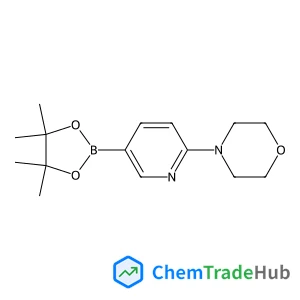
4-(5-(4,4,5,5-tetramethyl-1,3,2-dioxaborolan-2-yl)pyridin-2-yl)morpholine
CAS番号:
485799-04-0
分子式:
C15H23BN2O3
おすすめサプライヤー





免責事項
このページに表示される学術雑誌情報は、参考および研究目的のみを目的としています。当社は雑誌出版社とは提携しておらず、投稿の取り扱いも行っておりません。出版に関するお問い合わせは、各雑誌出版社に直接ご連絡ください。
表示されている情報に誤りがある場合は、support@chemtradehub.com までご連絡ください。迅速に確認し、対応いたします。