












ZnO@Co hybrid nanotube arrays growth from electrochemical deposition: structural, optical, photocatalytic and magnetic properties
文献情報
出版日
2009-03-24
DOI
10.1039/B823379A
インパクトファクター
3.676
著者
Li-Yuan Fan, Shu-Hong Yu
原文を見る
要旨
Well-aligned ZnO@Co hybrid nanotube arrays on conductive glass substrates have been obtained by an electrochemical deposition approach. Vertical-aligned ZnO nanotubes with sizes between 300 and 600 nm in diameter and wall thickness of ∼100 nm have been prepared by selective dissolution from the nanorods. The ZnO@Co heterostructures can be prepared by optimizing the deposition time and controlling the stability of Co2+ ions. Compared to the nanorod arrays, both nanotube arrays and the ZnO@Co heterostructures show enhanced photoluminescent properties. In addition, ZnO and ZnO@Co nanotubes show improved photocatalytic properties compared with the bare ZnO nanorod array, and the hybrid nanotubes exhibit better adsorptive properties than the bare ZnO nanotubes. Furthermore, the ZnO@Co hybrid nanotube arrays show ferromagnetism at room temperature.
関連文献
Spatially controlled self-assembly of gold nanoparticles encased in α-helical polypeptide nanospheres
Masa-aki Morikawa, Nobuo Kimizuka
2005-09-07
Communication
DOI: 10.1039/B507818K
First EXAFS studies on aurophilic interactions in solution
Héctor de la Riva, Aranzazu Pintado-Alba, Mark Nieuwenhuyzen, Christopher Hardacre, M. Cristina Lagunas
2005-09-08
Communication
DOI: 10.1039/B508863A
A total synthesis of guanacastepene C
Goverdhan Mehta, Kotapalli Pallavi, Jayant D. Umarye
2005-07-29
Communication
DOI: 10.1039/B506931A
Metal-directed ring-expansion in Schiff-base polypyrrolic macrocycles
Gonzalo Givaja, Alexander J. Blake, Claire Wilson, Martin Schröder, Jason B. Love
2005-07-29
Communication
DOI: 10.1039/B507729J
Stereoselective synthesis of chiral, non-racemic 1,2,3-tri- and 1,3-disubstituted ferrocene derivatives
Marianne Steurer, Karin Tiedl, Yaping Wang, Walter Weissensteiner
2005-09-07
Communication
DOI: 10.1039/B508761A
One-dimensional coordination polymers containing penta-supertetrahedral sulfide clusters linked by dipyridyl ligands
Jingli Xie, Xianhui Bu, Nanfeng Zheng, Pingyun Feng
2005-09-13
Communication
DOI: 10.1039/B508470A
Organometallic chemistry, biology and medicine: ruthenium arene anticancer complexes
2005-08-26
Feature Article
DOI: 10.1039/B508531B
Highly cytotoxic iron(ii) complexes with pentadentate pyridylligands as a new class of anti-tumor agents
Ella Lai-Ming Wong, Guo-Su Fang, Chi-Ming Che, Nianyong Zhu
2005-08-19
Communication
DOI: 10.1039/B507687K
New bidentate cationic and zwitterionic relatives of Crabtree's hydrogenation catalyst
Judy Cipot, Robert McDonald, Mark Stradiotto
2005-09-07
Communication
DOI: 10.1039/B510253G
A remarkably effective catalyst for the asymmetric transfer hydrogenation of aromatic ketones in water and air
Xiaofeng Wu, Daniele Vinci, Takao Ikariya, Jiangliang Xiao
2005-07-29
Communication
DOI: 10.1039/B507276J
こちらもおすすめ
化合物よくある質問
環戊烷-1,3-二甲酸甲酯はどのように合成されますか?
環戊烷-1,3-二甲酸甲酯は、環戊烷と塩酸によるヒンデンブルク反応を経由して合成されます。この反応では、環戊烷が塩酸と作用し、1,3-ジカルボキシ基が導入されま...
2435-36-1Dimethyl 1,3-cyclope...
化合物よくある質問
4-メトキシ-1,2,3-スチアゼ-3,5-ジオンとは何ですか?
4-メトキシ-1,2,3-スチアゼ-3,5-ジオンは、CAS番号107843-77-6の化合物で、(E)-ベンジル3-(3,4-ジヒドロキシフェニル) acry...
107843-77-6(E)-Benzyl 3-(3,4-di...
化合物よくある質問
プロスタグランジンA2について「に適用される法規ガイドラインは何ですか?'
プロスタグランジンA2 (CAS番号: 41691-92-3) は、化学物質の安全管理に関する規制として、GHS (危険物質の国際的ハザード分類・ラベル付けシス...
41691-92-316,16-DIMETHYL PROST...
化合物よくある質問
4-アミノ-1-ナフタレン sulfonic 酸についての物理化学的性質は何ですか?
4-アミノ-1-ナフタレン sulfonic 酸のCAS番号は84-86-6です。この化合物は結晶性で、分子量は212.15 g/molです。アルコールや水など...
84-86-64-Amino-1-naphthalen...
化合物よくある質問
N-GlcNAc-生物素を取り扱う際の実験室安全事項は何ですか?
N-GlcNAc-生物素は吸収性があり、皮膚や目への接触を避けることが重要です。PPE(個体保護具)は使用し、ドラフトチャンバーは必要に応じて使用します。漏洩時...
1272755-69-72-Acetamido-2-deoxy-...
化合物よくある質問
3-アミノメチルフローラノピペリジン-1-カルボニル酸テルブチルエステルとは何ですか?
CAS番号1209781-11-2の3-アミノメチルフローラノピペリジン-1-カルボニル酸テルブチルエステルは、有機化合物の一種で、化学式はC10H17FNO3...
1209781-11-22-Methyl-2-propanyl ...
化合物よくある質問
6-溴-1-甲基-1H-ベンゾ[d][1,2,3]三氮唑はどのように合成されますか?
6- bromo-1-methyl-1H-benzotriazoleは、ブロモフリオリンと1-メチル-1H-ベンゾ[d][1,2,3]三氮唑の反応により合成され...
944718-32-56-Bromo-1-methyl-1H-...
化合物よくある質問
4-硫代尿苷はどのように合成されますか?
4-硫代尿苷は、尿素とD-リボシルヒドロキシアルデヒドを用いてスルホン化反応を経て合成されます。通常は塩酸ヒドロキシチオニルスルホン酸などの触媒を使用し、選択性...
6741-73-71-(4-thio-beta-D-rib...
化合物よくある質問
ブレインナトリユリックペプチド32ラットとは何ですか?
ブレインナトリユリックペプチド32ラット(CAS番号: 133448-20-1)は、心臓で作られるホルモンの一つで、心不全の診断や予後評価に使用されます。
133448-20-1Brain Natriuretic Pe...
化合物よくある質問
1-(3-氮杂啶)-4-羟基哌啶双盐酸盐の物理化学的性質は何ですか?
CAS番号810680-60-5の1-(3-氮杂啶)-4-羟基哌啶双盐酸盐は、白色の結晶性粉末である。分子量は360.84 g/molで、水に溶けやすい。反応活...
810680-60-51-(3-Azetidinyl)-4-p...
掲載誌
Physical Chemistry Chemical Physics

CiteScore:
5.5
自己引用率:
10.3%
年間論文数:
3036
Physical Chemistry Chemical Physics (PCCP) is an international journal co-owned by 19 physical chemistry and physics societies from around the world. This journal publishes original, cutting-edge research in physical chemistry, chemical physics and biophysical chemistry. To be suitable for publication in PCCP, articles must include significant innovation and/or insight into physical chemistry; this is the most important criterion that reviewers and Editors will judge against when evaluating submissions. The journal has a broad scope and welcomes contributions spanning experiment, theory, computation and data science. Topical coverage includes spectroscopy, dynamics, kinetics, statistical mechanics, thermodynamics, electrochemistry, catalysis, surface science, quantum mechanics, quantum computing and machine learning. Interdisciplinary research areas such as polymers and soft matter, materials, nanoscience, energy, surfaces/interfaces, and biophysical chemistry are welcomed if they demonstrate significant innovation and/or insight into physical chemistry. Joined experimental/theoretical studies are particularly appreciated when complementary and based on up-to-date approaches.
おすすめ化合物
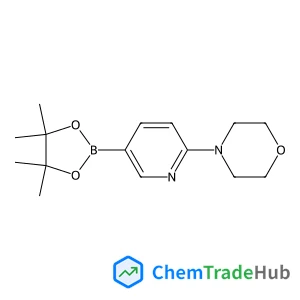
4-(5-(4,4,5,5-tetramethyl-1,3,2-dioxaborolan-2-yl)pyridin-2-yl)morpholine
CAS番号:
485799-04-0
分子式:
C15H23BN2O3
おすすめサプライヤー



免責事項
このページに表示される学術雑誌情報は、参考および研究目的のみを目的としています。当社は雑誌出版社とは提携しておらず、投稿の取り扱いも行っておりません。出版に関するお問い合わせは、各雑誌出版社に直接ご連絡ください。
表示されている情報に誤りがある場合は、support@chemtradehub.com までご連絡ください。迅速に確認し、対応いたします。