












Inspired by mussel adhesive protein: hydrophilic cationic copoly(2-oxazoline)s carrying catecholic side chains
文献情報
出版日
2021-08-24
DOI
10.1039/D1PY00679G
インパクトファクター
5.582
著者
Nils Lüdecke, Helmut Schlaad
原文を見る
要旨
A set of new functionalized poly(2-oxazoline) homopolymers and copolymers carrying protected catecholic side chains were prepared by microwave-assisted cationic ring-opening (co)polymerization. The copolymerizations of 2-ethyl-2-oxazoline with either 2-(3,4-dimethoxyphenyl)-, 2-(3,4-dimethoxybenzyl)-, or 2-(3,4-dimethoxycinnamyl)-2-oxazoline (comonomer ratio 90 : 10) produced gradient or random copolymers with narrow molar mass distributions. During the copolymerization with the 2-(3,4-dimethoxycinnamyl)-2-oxazoline, however, chain coupling reactions occurred at monomer conversions of >50%, supposedly via Michael-type addition of intermediately formed ketene N,O-acetal end groups to 3,4-dimethoxycinnamyl amide side chains. A poly[(2-ethyl-2-oxazoline)-grad-(2-(3,4-dimethoxyphenyl)-2-oxazoline)] was examplarily subjected to partial demethylation and acidic hydrolysis to give a hydrophilic copolymer carrying both catecholic and cationic units, which is designed as a bioinspired adhesive copolymer mimicking mussel adhesive protein.
関連文献
Levoglucosan and levoglucosenone as bio-based platforms for polymer synthesis
Melissa K. Stanfield, Rhiannon S. Terry, Jason A. Smith, Stuart C. Thickett
2023-10-23
Minireview
DOI: 10.1039/D3PY01019H
Glycerol selective oxidation to lactic acid over platinum–vanadium bimetallic catalysts supported on activated carbon
Hanumanth Reddy Pemmana, Ramu Reddi, Ramagopal V. S. Uppaluri, Nageswara Rao Peela
2023-09-27
Paper
DOI: 10.1039/D3RE00425B
Systematic metabolic engineering of Klebsiella oxytoca for production of 1,3-propanediol from glucose
Zhifei Chen, Hongyu Liu, Xiao Han, Ping Xu, Fei Tao
2023-10-27
Paper
DOI: 10.1039/D3RE00501A
Photo-responsive disassembly of supramolecular polymer bottlebrushes in water
Luke Harvey, Jean-Michel Guigner, Laurent Bouteiller, Erwan Nicol, Olivier Colombani
2023-10-12
Paper
DOI: 10.1039/D3PY00963G
Efficient and labor-saving Ru/C catalysts for the transformation of levulinic acid into γ-valerolactone under mild reaction conditions
Zaira Ruiz-Bernal, M. Ángeles Lillo-Ródenas, M. Carmen Román-Martínez
2023-11-08
Paper
DOI: 10.1039/D3RE00497J
こちらもおすすめ
化合物よくある質問
3-イチチルビフェニルはどのように合成されますか?
3-イチチルビフェニルは、ビフェニルとイチプロピオニトリルを回収率約90%で反応させて合成されます。触媒は通常、亜リチウムホウ素を用います。
5668-93-93-Ethylbiphenyl
化合物よくある質問
8-溴-5-三氟甲基喹啉はどのように合成されますか?
8-溴-5-三氟甲基喹啉は、5-トリフルオロメチル-2-メチル-1,3-ベンゼンジオールをブロモエタノールと反応させて生成します。この反応は塩基性条件下で行われ...
917251-92-48-Bromo-5-(trifluoro...
化合物よくある質問
ジメチル4-(4,4,5,5-テトラメチル-1,3,2-ドioxaborolan-2-基)-2,6-ピリジンジカルボイル酸フェニルアミニドの代替品はありますか?
ジメチル4-(4,4,5,5-テトラメチル-1,3,2-ドioxaborolan-2-基)-2,6-ピリジンジカルボイル酸フェニルアミニドの代替品としては、4-...
741709-66-0Dimethyl 4-(4,4,5,5-...
化合物よくある質問
N-(3,5-ヘキサクロロ-4-ピリドインイル)-8-メチオキシ-5-キノリンカーボン酸の市場動向や研究トレンドはどのようなものでしょうか?
N-(3,5-ヘキサクロロ-4-ピリドインイル)-8-メチオキシ-5-キノリンカーボン酸の市場動向は、主に産業用途での需要により影響を受けます。研究トレンドとし...
199871-63-1N-(3,5-Dichloro-4-py...
化合物よくある質問
イソステアロイルグリセリルは安全ですか?
イソステアロイルグリセリルは一般的に安全性が高いとされていますが、過度な使用や個人差により皮�owsん炎などの反応が起こる可能性があります。使用前に医師に相談す...
222723-55-92-[(5Z,8Z,11Z,14Z)-5...
化合物よくある質問
1-(二苯甲基)-3,3-二氟-氮杂环丁烷の市場動向や研究トレンドはどうですか?
1-(二苯甲基)-3,3-二氟-氮杂环丁烷の市場動向は、医薬品や合成化学の研究分野で注目を集めています。新興研究は、該当化合物の合成改良と生体内での作用メカニズ...
288315-02-61-Benzhydryl-3,3-dif...
化合物よくある質問
3-チオフェンスチオールの物理化学的性質は何ですか?
3-チオフェンスチオールのCAS番号は7774-73-4です。結晶性の白色粉末で、分子量は122.17です。この化合物は水に微溶解し、エタノールやジクロロメタン...
7774-73-43-Thiophenethiol
化合物よくある質問
2-Methyl-2-propanyl (2S)-2-(aminomethyl)-1-piperidinecarboxylateは安全ですか?
2-Methyl-2-propanyl (2S)-2-(aminomethyl)-1-piperidinecarboxylateは一定の安全性基準を満たしていま...
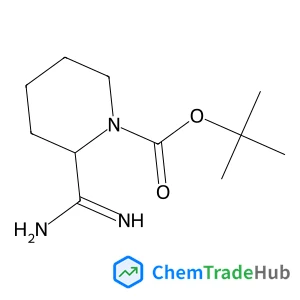
475105-35-22-Methyl-2-propanyl ...
化合物よくある質問
CAS番号1316822-90-8の化合物は安全ですか?
CAS番号1316822-90-8の化合物は安全性に関しては評価が不足していますが、一般的には生物学的に活性な物質であり、取り扱いには適切な安全防護措置が必要で...
1316822-90-8Gal beta(1-3)[Neu5Ac...
化合物よくある質問
Tert-butyl 2-(2-羟基乙基)哌嗪-1-羧酸はどのように保存すればよいですか?
Tert-butyl 2-(2-羟基乙基)哌嗪-1-羧酸は、冷暗所で保存し、直射日光から遠ざけてください。容器は密閉し、高湿度や高温を避けて保管してください。
517866-79-4Tert-butyl 2-(2-hydr...
掲載誌
Polymer Chemistry

CiteScore:
8.6
自己引用率:
7.3%
年間論文数:
457
Polymer Chemistry welcomes submissions in all areas of polymer science that have a strong focus on macromolecular chemistry. Manuscripts may cover a broad range of fields, yet no direct application focus is required.
おすすめ化合物
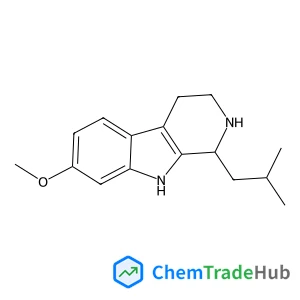
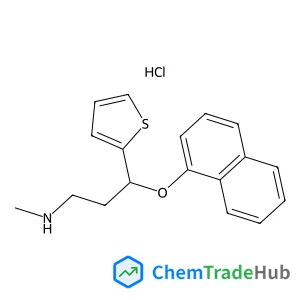
N-Methyl-3-(1-naphthyloxy)-3-(2-thienyl)-1-propanamine hydrochloride (1:1)
CAS番号:
1188266-11-6
分子式:
C18H20ClNOS
おすすめサプライヤー





免責事項
このページに表示される学術雑誌情報は、参考および研究目的のみを目的としています。当社は雑誌出版社とは提携しておらず、投稿の取り扱いも行っておりません。出版に関するお問い合わせは、各雑誌出版社に直接ご連絡ください。
表示されている情報に誤りがある場合は、support@chemtradehub.com までご連絡ください。迅速に確認し、対応いたします。