












Ultrafast nonequilibrium dynamics of short-range protein electron transfer in flavodoxin
文献情報
出版日
2021-11-18
DOI
10.1039/D1CP04445A
インパクトファクター
3.676
著者
Jie Yang, Yifei Zhang, Ting-Fang He, Yangyi Lu, Lijuan Wang, Bei Ding
原文を見る
要旨
Short-range protein electron transfer (ET) is ubiquitous in biology and is often observed in photosynthesis, photoreceptors and photoenzymes. These ET processes occur on an ultrafast timescale from femtoseconds to picoseconds at a short donor–acceptor distance within 10 Å, and thus couple with local environmental fluctuations. Here, we use oxidized Anabaena flavodoxin as a model system and have systematically studied the photoinduced redox cycle of the wild type and seven mutant proteins by femtosecond spectroscopy. We observed a series of ultrafast dynamics from the initial charge separation in 100–200 fs, subsequent charge recombination in 1–2 ps and final vibrational cooling process of the products in 3–6 ps. We further characterized the active-site solvation and observed the relaxations in 1–200 ps, indicating a nonergodic ET dynamics. With our new ET model, we uncovered a minor outer (solvent) reorganization energy and a large inner (donor and acceptor) reorganization energy, suggesting a frozen active site in the initial ultrafast ET while the back ET couples with the environment relaxations. The vibronically coupled back ET dynamics was first reported in D. vulgaris flavodoxin and here is observed in Anabaena flavodoxin again, completely due to the faster ET dynamics than the cooling relaxations. We also compared the two flavodoxin structures, revealing a stronger coupling with the donor tyrosine in Anabaena. All ultrafast ET dynamics are from the large donor–acceptor couplings and the minor activation barriers due to the reaction free energies being close to the inner reorganization energies. These observations should be general to many redox reactions in flavoproteins.
関連文献
Elastic properties and short-range structural order in mixed network former glasses
Weimin Wang, Randilynn Christensen, Brittany Curtis, David Hynek, Sydney Keizer, James Wang, Steve Feller, Steve W. Martin, John Kieffer
2017-05-15
Paper
DOI: 10.1039/C6CP08939A
Isomer-dependent fragmentation dynamics of inner-shell photoionized difluoroiodobenzene
Cédric Bomme, Evgeny Savelyev, Hui Xiong, Rajesh Kushawaha, Rebecca Boll, Kasra Amini, Timur Osipov, David Kilcoyne, Artem Rudenko, Nora Berrah, Daniel Rolles
2017-05-11
Communication
DOI: 10.1039/C7CP01379E
Competing pathways in the near-UV photochemistry of acetaldehyde
Benjamin W. Toulson, Kara M. Kapnas, Dmitry A. Fishman, Craig Murray
2017-05-24
Paper
DOI: 10.1039/C7CP02573D
Structural and electronic properties of defects at grain boundaries in CuInSe2
D. Lamoen
2017-05-12
Paper
DOI: 10.1039/C7CP02033C
Light-induced antibiotic release from a coumarin-caged compound on the ultrafast timescale
L.-M. Herzig, I. Elamri, H. Schwalbe, J. Wachtveitl
2017-05-19
Paper
DOI: 10.1039/C7CP02030A
Ionic hydration-induced evolution of decane–water interfacial tension
Boyao Wen, Chengzhen Sun, Bofeng Bai
2017-05-08
Paper
DOI: 10.1039/C7CP01826F
Investigation of interfacial thermal transport across graphene and an organic semiconductor using molecular dynamics simulations
Xinyu Wang, Jingchao Zhang, Yue Chen, Paddy K. L. Chan
2017-05-19
Paper
DOI: 10.1039/C7CP01958K
Does Z′ equal 1 or 2? Enhanced powder NMR crystallography verification of a disordered room temperature crystal structure of a p38 inhibitor for chronic obstructive pulmonary disease
Cory M. Widdifield, Sten O. Nilsson Lill, Anders Broo, Maria Lindkvist, Anna Pettersen, Anna Svensk Ankarberg, Peter Aldred, Staffan Schantz, Lyndon Emsley
2017-06-02
Paper
DOI: 10.1039/C7CP02349A
A vacuum ultraviolet photoionization study on high-temperature decomposition of JP-10 (exo-tetrahydrodicyclopentadiene)
Long Zhao, Tao Yang, Ralf I. Kaiser, Tyler P. Troy, Bo Xu, Musahid Ahmed, Juan Alarcon, Daniel Belisario-Lara, Alexander M. Mebel, Yan Zhang, Chuangchuang Cao, Jiabiao Zou
2017-05-05
Paper
DOI: 10.1039/C7CP01571B
Identification of the protonation site of gaseous triglycine: the cis-peptide bond conformation as the global minimum
Hongbao Li, Jun Jiang
2017-05-15
Paper
DOI: 10.1039/C7CP01997A
こちらもおすすめ
化合物よくある質問
2-ヒドロキシ-5-ニトロベンジンブロモイドの代替品はありますか?
2-ヒドロキシ-5-ニトロベンジンブロモイドは特定の化学反応に適しているため、代替品は限られています。しかし、同様の構造を持つ2-ヒドロキシ-4-ニトロベンジン...
772-33-82-(Bromomethyl)-4-ni...
化合物よくある質問
N-(2-ブロモフェニル)-1-チロール-3-オキソ-3-(ピペリジニル)プロペン-2-イル)ベンゼンアミドを取り扱う際の実験室安全事項は何ですか?
N-(2-ブロモフェニル)-1-チロール-3-オキソ-3-(ピペリジニル)プロペン-2-イル)ベンゼンアミドは有毒で、皮膚や粘膜に刺激を与える可能性があります。...
1800044-77-2N-[(1Z)-1-(2-Bromoph...
化合物よくある質問
1,3プロパンジオール,2-[2-(2アミノ-6クロロ-9Hピリミジン-9-イル)エチル-1,1,2,2-D4]-2,3-ジアセタートの市場動向や研究トレンドはどうですか?
この化合物は、新規治療薬の開発に注目されています。市場では、その有効性と安全性が評価され、研究分野では、分子生物学と医薬化学の新たな発見が期待されています。
1020718-81-31,3-Propanediol, 2-[...
579-44-2Ethanone, 2-hydroxy-...
化合物よくある質問
Succinimidyl-alanyl-phenylalanyl-prolyl-phenylalanine 4-nitroanilide はどの業界で使用されていますか?
Succinimidyl-alanyl-phenylalanyl-prolyl-phenylalanine 4-nitroanilide は主に医薬品開発やポ...
128802-73-3succinimidyl-alanyl-...
化合物よくある質問
メチル6-アミノ-5-クロロピリジン-2-カーボイル酸について、適用される法規ガイドラインは何ですか?
メチル6-アミノ-5-クロロピリジン-2-カーボイル酸(CAS番号: 1256794-05-4)の使用には、GHS( Globally Harmonized S...
1256794-05-4Methyl 6-amino-5-chl...
化合物よくある質問
エチル4-(シクロ Pentagonyl)アミノ-2-メチル硫化基ピリミジン-5-カルボキシレートを取り扱う際の実験室安全事項は何ですか?
取り扱いには、耐薬品性の容器を使用し、通気性の良い場所で操作することを推奨します。漏れ時は、SDS(安全データシート)を参照して適切な措置を取ること。手洗いと洗...
211245-62-4ethyl 4-(cyclopentyl...
化合物よくある質問
(S)-3-ベンZYルピペリジン塩酸塩とは何ですか?
(S)-3-ベンZYルピペリジン塩酸塩は、CAS番号1258940-00-9で表される化合物です。これは、(S)-3-苯基哌啶的盐酸盐であり、主に医薬品の原料と...
1258940-00-9(S)-3-Phenylpiperidi...
化合物よくある質問
3,5-二甲基金剛胺の主な用途は何ですか?
3,5-二甲基金剛胺は、主に医薬品の原料として使用され、また抗うつ薬や抗アルツハイマー薬の開発に利用されます。さらに、化粧品や食品添加物の製造でも重要な役割を果...
19988-45-52-(2,3-Dihydroxyphen...
化合物よくある質問
ビス(4-メチル-2-ペンチル)フェニルカルボン酸エステルの代替品はありますか?
ビス(4-メチル-2-ペンチル)フェニルカルボン酸エステル (CAS番号: 1398066-13-1) の代替品には、ビス(2-エチルヘキシル)フェノールカルボ...
1398066-13-1Bis(4-methyl-2-penty...
掲載誌
Physical Chemistry Chemical Physics

CiteScore:
5.5
自己引用率:
10.3%
年間論文数:
3036
Physical Chemistry Chemical Physics (PCCP) is an international journal co-owned by 19 physical chemistry and physics societies from around the world. This journal publishes original, cutting-edge research in physical chemistry, chemical physics and biophysical chemistry. To be suitable for publication in PCCP, articles must include significant innovation and/or insight into physical chemistry; this is the most important criterion that reviewers and Editors will judge against when evaluating submissions. The journal has a broad scope and welcomes contributions spanning experiment, theory, computation and data science. Topical coverage includes spectroscopy, dynamics, kinetics, statistical mechanics, thermodynamics, electrochemistry, catalysis, surface science, quantum mechanics, quantum computing and machine learning. Interdisciplinary research areas such as polymers and soft matter, materials, nanoscience, energy, surfaces/interfaces, and biophysical chemistry are welcomed if they demonstrate significant innovation and/or insight into physical chemistry. Joined experimental/theoretical studies are particularly appreciated when complementary and based on up-to-date approaches.
おすすめ化合物
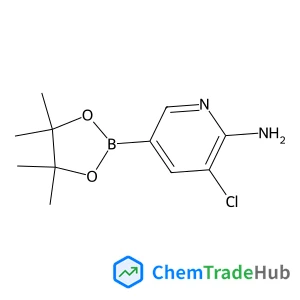
3-Chloro-5-(4,4,5,5-tetramethyl-1,3,2-dioxaborolan-2-yl)-2-pyridinamine
CAS番号:
1032758-99-8
分子式:
C11H16BClN2O2
おすすめサプライヤー




免責事項
このページに表示される学術雑誌情報は、参考および研究目的のみを目的としています。当社は雑誌出版社とは提携しておらず、投稿の取り扱いも行っておりません。出版に関するお問い合わせは、各雑誌出版社に直接ご連絡ください。
表示されている情報に誤りがある場合は、support@chemtradehub.com までご連絡ください。迅速に確認し、対応いたします。