












Matrix effects on hydrogen bonding and proton transfer in fluoropyridine – HCl complexes
文献情報
出版日
2021-12-23
DOI
10.1039/D1CP04110J
インパクトファクター
3.676
著者
Camilla Soares, Anna R. Ley, Brittany C. Zehner, Patrick W. Treacy, James A. Phillips
原文を見る
要旨
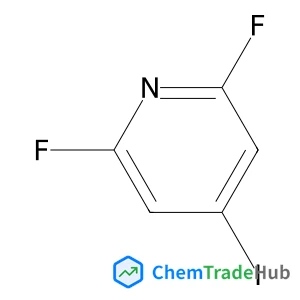
We report an extensive computational and spectroscopic study of several fluoropyridine–HCl complexes, and the parent, pyridine–HCl system. Matrix-IR spectra for pentafluoropyridine–HCl, 2,6-difluororpyridine–HCl, and 3,5-difluororpyridine–HCl in solid neon exhibit shifts for the H–Cl stretching band that parallel the effects of fluorination on hydrogen-bond strength. Analogous spectral shifts observed across various host environments (solid neon, argon, and nitrogen) for pentafluoropyridine–HCl and 2,6-difluororpyridine–HCl convey a systematically varying degree of matrix stabilization on the hydrogen bonds in these complexes. An extended quantum-chemical study of pyridine–HCl and eight fluorinated analogs, including 2-, 3-, and 4-fluoropyridine–HCl, 2,6- and 3,5-difluororpyridine–HCl, 2,4,6- and 3,4,5-trifluropyridine–HCl, as well as pentafluoropyridine–HCl, was also performed. Equilibrium structures and binding energies for the gas-phase complexes illustrate two clear trends in how fluorine substitution affects hydrogen bond strength; increasing fluorination weakens these interactions, yet substitution at the 2- and 6-positions has the most pronounced effect. Bonding analyses for a select subset of these systems reveal shifts in electron density that accompany hydrogen bonding, and most notably, the values of the electron density at the N–H bond critical points among the stronger systems in this subset significantly exceed those typical for moderately strong hydrogen-bonds. We also explored the effects of dielectric media on the structural and bonding properties of these systems. For pyridine–HCl, 3-fluoropyridine–HCl, and 3,5-difluororpyridine–HCl, a transition to proton transfer-type structures is observed at ε-values of 1.2, 1.5, and 2.0, respectively. This is signaled by key structural changes, as well as an increase in the negative charge on the chorine, and dramatic shifts in topological properties of the H–Cl and N–H bonds. In the case of pentafluoropyridine–HCl, and 2,6-difluororpyridine–HCl, we do not predict proton transfer in dielectric media up to ε = 20.0. However, there are clear indications that the media enhance hydrogen-bond strength, and moreover, these observations are completely consistent with the experimental IR spectra.
関連文献
Au36(SePh)24 nanomolecules: synthesis, optical spectroscopy and theoretical analysis
Milan Rambukwella, Anish Ravishanker, Alessandro Fortunelli, Mauro Stener, Amala Dass
2018-05-08
Paper
DOI: 10.1039/C8CP01564C
Basic photophysical analysis of a thermally activated delayed fluorescence copper(i) complex in the solid state: theoretical estimations from a polarizable continuum model (PCM)-tuned range-separated density functional approach
Lingling Lv, Kun Yuan, Yongcheng Wang
2018-02-02
Paper
DOI: 10.1039/C7CP08264A
Revealing the formation and electrochemical properties of bis(trifluoromethanesulfonyl)imide intercalated graphite with first-principles calculations
Chol-Jun Yu, Un-Song Ri, Gum-Chol Ri, Jin-Song Kim
2018-05-10
Paper
DOI: 10.1039/C8CP01468J
Virtually imprinted polymers (VIPs): understanding molecularly templated materials via molecular dynamics simulations
F. A. Moura, P. Alves da Silva Autreto, D. S. Galvão
2018-02-19
Paper
DOI: 10.1039/C7CP08284C
Magnetism of NaFePO4 and related polyanionic compounds
Oier Arcelus, Sergey Nikolaev, Javier Carrasco
2018-04-27
Paper
DOI: 10.1039/C8CP01961D
Oxygen-induced high diffusion rate of magnesium dopants in GaN/AlGaN based UV LED heterostructures
Paweł Piotr Michałowski, Sebastian Złotnik, Jakub Sitek, Krzysztof Rosiński, Mariusz Rudziński
2018-05-01
Paper
DOI: 10.1039/C8CP01470A
Phonon transport in Janus monolayer MoSSe: a first-principles study
2018-02-15
Paper
DOI: 10.1039/C8CP00350E
Fingerprints of electronic, spin and structural dynamics from resonant inelastic soft X-ray scattering in transient photo-chemical species
Jesper Norell, Raphael M. Jay, Markus Hantschmann, Meiyuan Guo, Philippe Wernet, Michael Odelius
2018-02-20
Paper
DOI: 10.1039/C7CP08326B
UV absorption of Criegee intermediates: quantitative cross sections from high-level ab initio theory
Š. Sršeň, D. Hollas, P. Slavíček
2018-01-31
Paper
DOI: 10.1039/C8CP00199E
The structure–electrochemical property relationship of quinone electrodes for lithium-ion batteries
Licheng Miao, Luojia Liu, Zhenfeng Shang, Yixin Li, Yong Lu, Fangyi Cheng, Jun Chen
2018-04-17
Paper
DOI: 10.1039/C8CP00597D
こちらもおすすめ
化合物よくある質問
間溴苯甲酰腈の市場動向や研究トレンドはどうですか?
間 brom 苯甲酰腈は、合成化学や薬物化学において重要な Intermediate として使用されています。市場動向としては、その合成性と機能性により、研究開...
24999-51-7(3-Bromophenyl)(oxo)...
287966-62-5Desulfo Glucoraphani...
化合物よくある質問
Methyl 2-amino-5-(trifluoromethyl)benzoateに適用される法規ガイドラインは何ですか?
CAS番号117324-58-0の塩酸メチル2アミノ-5-トリフルオロメチルベンゼートは、GHS分類により腐食性物質と判定されます。REACH規則では、製造、販...
117324-58-0Methyl 2-amino-5-(tr...
化合物よくある質問
3-ブロモ-1,3,4,5-四水化-2H-1-ベンザアゼピン-2-オンは安全ですか?
毒性があるため、適切な安全対策が必須です。皮膚や粘膜への刺激性が強く、吸入や誤飲により健康被害を引き起こす可能性があります。取扱時にはガスマスクや手袋、眼鏡を使...
86499-96-93-Bromo-1,3,4,5-tetr...
化合物よくある質問
三氟甲基ピリジン-2-甲アミン塩酸塩は安全ですか?
三氟甲基ピリジン-2-甲アミン塩酸塩は安全性に注意が必要です。毒性は低レベルですが、直接的接触や吸入は避けるべきです。適切な手袋や防塵マスクを着用し、密閉された...
871826-12-9(5-(Trifluoromethyl)...
化合物よくある質問
1-エチル-4-(4-硝基フェニル)ピペリジンは安全ですか?
1-エチル-4-(4-硝基フェニル)ピペリジンは有毒であり、取扱には注意が必要です。保管や作業中に手袋を着用し、目や皮膚に接触しないように注意する必要があります...
115619-00-61-Ethyl-4-(4-nitroph...
化合物よくある質問
1,1-ジメトキシプロパン-2-オンは安全ですか?
1,1-ジメトキシプロパン-2-オンは一般的に低毒性ですが、皮膚や目への刺激性があるため、取扱いには注意が必要です。蒸気や液体の吸入には有害な可能性があり、適切...
6342-56-91,1-dimethoxypropan-...
化合物よくある質問
コバルト(II) 3,3'-{[(1S,2S)-1,2-ジメチルフENCYCLICALE-1,2-エチエンジイル]ビス[ニトロリルメチルイリデン]}ビス[4-オキソ-2-ペンテン-2-olate]について「に適用される法規ガイドラインは何ですか?
この化合物はCAS番号259259-80-8に対応しています。GHS分類では、毒性、燃焼性、反応性、炎症性を考慮に入れ、適切な危険性分類が行われます。REACH...
259259-80-8Cobalt(2+) (2E,2'E)-...
化合物よくある質問
「カーバミル酸, N-[8-[[2-[[2-(2,6-ジオキソ-3-ピペリジニル)-2,3-ジオキソ-1,3-ジヒドロ-1H-イソイソインドール-4-イルオキシ]アセチル]アミノ]オクチル]-1,1-ジメチレチルエステル」はどのように保存すればよいですか?
この化合物は、冷却庫で-20℃の温度、乾燥した容器に保管し、直日光から保護する必要があります。湿度の高い環境や高温は避けてください。
1950635-34-32-Methyl-2-propanyl ...
1433975-21-3FMoc-D-4-Aph(tBu-CbM...
掲載誌
Physical Chemistry Chemical Physics

CiteScore:
5.5
自己引用率:
10.3%
年間論文数:
3036
Physical Chemistry Chemical Physics (PCCP) is an international journal co-owned by 19 physical chemistry and physics societies from around the world. This journal publishes original, cutting-edge research in physical chemistry, chemical physics and biophysical chemistry. To be suitable for publication in PCCP, articles must include significant innovation and/or insight into physical chemistry; this is the most important criterion that reviewers and Editors will judge against when evaluating submissions. The journal has a broad scope and welcomes contributions spanning experiment, theory, computation and data science. Topical coverage includes spectroscopy, dynamics, kinetics, statistical mechanics, thermodynamics, electrochemistry, catalysis, surface science, quantum mechanics, quantum computing and machine learning. Interdisciplinary research areas such as polymers and soft matter, materials, nanoscience, energy, surfaces/interfaces, and biophysical chemistry are welcomed if they demonstrate significant innovation and/or insight into physical chemistry. Joined experimental/theoretical studies are particularly appreciated when complementary and based on up-to-date approaches.
おすすめ化合物
![5-(2-Phenylpyrazolo[1,5-a]pyridin-3-yl)-2H-pyrazolo[3,4-c]pyridazin-3-amine structure](https://static.chemtradehub.com/structs/865/865362-74-9-0091.webp "5-(2-Phenylpyrazolo[1,5-a]pyridin-3-yl)-2H-pyrazolo[3,4-c]pyridazin-3-amine structure")
おすすめサプライヤー




免責事項
このページに表示される学術雑誌情報は、参考および研究目的のみを目的としています。当社は雑誌出版社とは提携しておらず、投稿の取り扱いも行っておりません。出版に関するお問い合わせは、各雑誌出版社に直接ご連絡ください。
表示されている情報に誤りがある場合は、support@chemtradehub.com までご連絡ください。迅速に確認し、対応いたします。