












Early thermal decay of energetic hydrogen- and nitro-free furoxan compounds: the case of DNTF and BTF
文献情報
出版日
2021-12-01
DOI
10.1039/D1CP02881B
インパクトファクター
3.676
著者
Shuangfei Zhu, Wei Yang, Qiang Gan, Nianshou Cheng, Changgen Feng
原文を見る
要旨
Exploration of the initial reactions of H-free and nitro-free energetic materials could enrich our understanding of the thermal decomposition mechanism of various energetic materials (EMs). In this work, two furoxan compounds, 3,4-dinitrofurazanfuroxan (DNTF) and benzotrifuroxan (BTF), were investigated to shed light on the decay mechanism of furoxan compounds based on the combination of self-consistent charge density functional tight binding and molecular dynamics simulations. The results show that DNTF and BTF decay via a unimolecular mechanism, and the transformation of the furoxan ring into a nitro group is suggested as a novel initial channel. Five initial steps of DNTF thermal decomposition are observed, including NO2 loss and the N(O)–O bond cleavage of the central and peripheral rings. The bond cleavage of peripheral rings dominates the decay at low temperatures, while the central ring opening and C–NO2 dissociation govern the high temperature decay. Besides, NO2, CO and NO fragments are mainly yielded at high temperatures, while CO3N2 is dominant at low temperatures. The three-stage characteristic of the exothermic BTF decay is described under programmed heating conditions for the first time. Four initial steps of BTF thermal decomposition were identified, including furoxan ring opening reactions and the breakage of the 6-membered ring C–C bond. The cleavage of the N(O)–O bond is dominant in the initial step of BTF decomposition under different heating conditions, and the frequency increases with increasing temperature. In addition, the amounts of CON, ON and CO are higher at high temperatures, while C2O2N2 shows an opposite trend. The findings of this work provide deep insights into the complicated sensitivity mechanism of EMs.
関連文献
Poly(vinylidene fluoride)/poly(3-methylthiophene) core–shell nanocomposites with improved structural and electronic properties of the conducting polymer component
Nikolay A. Ogurtsov, Valery N. Bliznyuk, Andrii V. Mamykin, Oleksandr L. Kukla, Yuri P. Piryatinski, Alexander A. Pud
2018-02-05
Paper
DOI: 10.1039/C7CP07604E
Ammonolysis of ketene as a potential source of acetamide in the troposphere: a quantum chemical investigation
Saptarshi Sarkar, Subhasish Mallick, Pradeep Kumar, Biman Bandyopadhyay
2018-04-25
Paper
DOI: 10.1039/C8CP01650J
“On demand” triggered crystallization of CaCO3 from solute precursor species stabilized by the water-in-oil microemulsion
Teresa Roncal-Herrero, Alejandro Fernandez-Martinez, Adriana Matamoros-Veloza, Roland Kröger
2018-05-10
Paper
DOI: 10.1039/C8CP00540K
Viable aromatic BenHn stars enclosing a planar hypercoordinate boron or late transition metal
Xue-Feng Zhao, Jia-Jia Li, Hai-Ru Li, Caixia Yuan, Xinxin Tian, Si-Dian Li, Yan-Bo Wu, Zhi-Xiang Wang
2018-02-19
Paper
DOI: 10.1039/C7CP06955C
Unexpected protonation state of Glu197 discovered from simulations of tacrine in butyrylcholinesterase
Xiao Wan, Yuan Yao, Lei Fang, Junjun Liu
2018-05-08
Paper
DOI: 10.1039/C8CP01566J
Radiation-induced disorder in compressed lanthanide zirconates
Sulgiye Park, Cameron L. Tracy, Fuxiang Zhang, Changyong Park, Sergey N. Tkachev, Maik Lang, Rodney C. Ewing
2018-02-12
Paper
DOI: 10.1039/C7CP08664D
Solvation-controlled lithium-ion complexes in a nonflammable solvent containing ethylene carbonate: structural and electrochemical aspects
Michiru Sogawa, Hikaru Kawanoue, Yanko Marinov Todorov, Daisuke Hirayama, Hideyuki Mimura, Nobuko Yoshimoto, Masayuki Morita, Kenta Fujii
2018-02-09
Paper
DOI: 10.1039/C7CP08511G
Phenothiazine-based small-molecule organic solar cells with power conversion efficiency over 7% and open circuit voltage of about 1.0 V using solvent vapor annealing
Yogajivan Rout, Rajneesh Misra, Rahul Singhal, Subhayan Biswas, Ganesh D. Sharma
2018-01-30
Paper
DOI: 10.1039/C7CP08308D
Isomer-specific detection in the UV photodissociation of the propargyl radical by chirped-pulse mm-wave spectroscopy in a pulsed quasi-uniform flow
Bernadette M. Broderick, Nicolas Suas-David, Nureshan Dias, Arthur G. Suits
2017-11-13
Paper
DOI: 10.1039/C7CP06211G
こちらもおすすめ
化合物よくある質問
間溴苯甲酰腈の市場動向や研究トレンドはどうですか?
間 brom 苯甲酰腈は、合成化学や薬物化学において重要な Intermediate として使用されています。市場動向としては、その合成性と機能性により、研究開...
24999-51-7(3-Bromophenyl)(oxo)...
287966-62-5Desulfo Glucoraphani...
化合物よくある質問
Methyl 2-amino-5-(trifluoromethyl)benzoateに適用される法規ガイドラインは何ですか?
CAS番号117324-58-0の塩酸メチル2アミノ-5-トリフルオロメチルベンゼートは、GHS分類により腐食性物質と判定されます。REACH規則では、製造、販...
117324-58-0Methyl 2-amino-5-(tr...
化合物よくある質問
3-ブロモ-1,3,4,5-四水化-2H-1-ベンザアゼピン-2-オンは安全ですか?
毒性があるため、適切な安全対策が必須です。皮膚や粘膜への刺激性が強く、吸入や誤飲により健康被害を引き起こす可能性があります。取扱時にはガスマスクや手袋、眼鏡を使...
86499-96-93-Bromo-1,3,4,5-tetr...
化合物よくある質問
三氟甲基ピリジン-2-甲アミン塩酸塩は安全ですか?
三氟甲基ピリジン-2-甲アミン塩酸塩は安全性に注意が必要です。毒性は低レベルですが、直接的接触や吸入は避けるべきです。適切な手袋や防塵マスクを着用し、密閉された...
871826-12-9(5-(Trifluoromethyl)...
化合物よくある質問
1-エチル-4-(4-硝基フェニル)ピペリジンは安全ですか?
1-エチル-4-(4-硝基フェニル)ピペリジンは有毒であり、取扱には注意が必要です。保管や作業中に手袋を着用し、目や皮膚に接触しないように注意する必要があります...
115619-00-61-Ethyl-4-(4-nitroph...
化合物よくある質問
1,1-ジメトキシプロパン-2-オンは安全ですか?
1,1-ジメトキシプロパン-2-オンは一般的に低毒性ですが、皮膚や目への刺激性があるため、取扱いには注意が必要です。蒸気や液体の吸入には有害な可能性があり、適切...
6342-56-91,1-dimethoxypropan-...
化合物よくある質問
コバルト(II) 3,3'-{[(1S,2S)-1,2-ジメチルフENCYCLICALE-1,2-エチエンジイル]ビス[ニトロリルメチルイリデン]}ビス[4-オキソ-2-ペンテン-2-olate]について「に適用される法規ガイドラインは何ですか?
この化合物はCAS番号259259-80-8に対応しています。GHS分類では、毒性、燃焼性、反応性、炎症性を考慮に入れ、適切な危険性分類が行われます。REACH...
259259-80-8Cobalt(2+) (2E,2'E)-...
化合物よくある質問
「カーバミル酸, N-[8-[[2-[[2-(2,6-ジオキソ-3-ピペリジニル)-2,3-ジオキソ-1,3-ジヒドロ-1H-イソイソインドール-4-イルオキシ]アセチル]アミノ]オクチル]-1,1-ジメチレチルエステル」はどのように保存すればよいですか?
この化合物は、冷却庫で-20℃の温度、乾燥した容器に保管し、直日光から保護する必要があります。湿度の高い環境や高温は避けてください。
1950635-34-32-Methyl-2-propanyl ...
1433975-21-3FMoc-D-4-Aph(tBu-CbM...
掲載誌
Physical Chemistry Chemical Physics

CiteScore:
5.5
自己引用率:
10.3%
年間論文数:
3036
Physical Chemistry Chemical Physics (PCCP) is an international journal co-owned by 19 physical chemistry and physics societies from around the world. This journal publishes original, cutting-edge research in physical chemistry, chemical physics and biophysical chemistry. To be suitable for publication in PCCP, articles must include significant innovation and/or insight into physical chemistry; this is the most important criterion that reviewers and Editors will judge against when evaluating submissions. The journal has a broad scope and welcomes contributions spanning experiment, theory, computation and data science. Topical coverage includes spectroscopy, dynamics, kinetics, statistical mechanics, thermodynamics, electrochemistry, catalysis, surface science, quantum mechanics, quantum computing and machine learning. Interdisciplinary research areas such as polymers and soft matter, materials, nanoscience, energy, surfaces/interfaces, and biophysical chemistry are welcomed if they demonstrate significant innovation and/or insight into physical chemistry. Joined experimental/theoretical studies are particularly appreciated when complementary and based on up-to-date approaches.
おすすめ化合物
![2,4,5-Trichloro-7H-pyrrolo[2,3-d]pyrimidine structure](https://static.chemtradehub.com/structs/105/1053228-28-6-fba3.webp "2,4,5-Trichloro-7H-pyrrolo[2,3-d]pyrimidine structure")
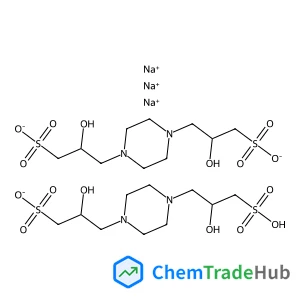
3,3'-(Piperazine-1,4-diyl)bis(2-hydroxypropane-1-sulfonic acid) Sodium Salt
CAS番号:
108321-08-0
分子式:
C20H41N4Na3O16S4
![5-Methoxy-1H-pyrrolo[3,2-b]pyridine structure](https://static.chemtradehub.com/structs/172/17288-40-3-a8d1.webp "5-Methoxy-1H-pyrrolo[3,2-b]pyridine structure")
おすすめサプライヤー





免責事項
このページに表示される学術雑誌情報は、参考および研究目的のみを目的としています。当社は雑誌出版社とは提携しておらず、投稿の取り扱いも行っておりません。出版に関するお問い合わせは、各雑誌出版社に直接ご連絡ください。
表示されている情報に誤りがある場合は、support@chemtradehub.com までご連絡ください。迅速に確認し、対応いたします。