












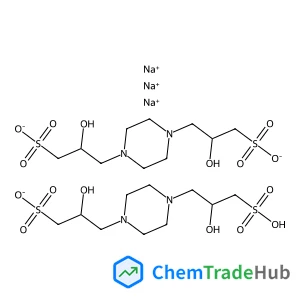
3,3'-(Piperazine-1,4-diyl)bis(2-hydroxypropane-1-sulfonic acid) Sodium Salt
CAS番号:
108321-08-0
分子式:
C20H41N4Na3O16S4
Madhabi Bhattacharjee, Nabendu B. Pramanik, Nikhil K. Singha, Dhruba J. Haloi
Modified chitosan (CS) has kindled considerable research interest in the last few decades due to its outstanding biological, chemical and physical properties. Generally, CS can be re-formed with different structural modifications by using various functional groups. Due to the addition of these functional groups, the physicochemical properties of CS can be enhanced without hampering the degree of polymerization inherent in the CS. Different techniques were employed for the modification of CS. Among these, modifications via reversible-deactivation radical polymerization (RDRP) are found to be the most efficient. RDRP techniques mostly include atom transfer radical polymerization (ATRP), reversible addition–fragmentation chain transfer polymerization (RAFT) and nitroxide-mediated polymerization (NMP). These methods provide tailored modifications of CS with controlled molecular weight and dispersity (Đ) leading to better mechanical properties compared to the modifications performed via conventional methods. Various analytical techniques such as FT-IR, UV-Vis, 1H-NMR, 13C-NMR, XRD, SEM, TEM, TGA, DSC, GPC, etc. are employed to characterize and elucidate the physico-chemical properties of these modified polymers. These modifications make CS a strong candidate for different applications in diverse fields of pharmaceuticals, biomedicine, water treatment, etc. This review covers the recent advances in the syntheses, properties and applications of modified CS via RDRP techniques.
Dexiang Gao, Xingyu Tang, Xuan Wang, Xin Yang, Peijie Zhang, Guangwei Che, Jun Han, Takanori Hattori, Yajie Wang, Xiao Dong, Haiyan Zheng, Kuo Li, Ho-kwang Mao
DOI: 10.1039/D1CP02913D
Patrick R. Batista, Tatiana C. Penna, Lucas C. Ducati, Thiago C. Correra
DOI: 10.1039/D1CP01495A
Donghui Wang, Qingxiao Zhou, Dawei Kang, Tongwei Li, Guangxiong Hu, Haisheng Li
DOI: 10.1039/D1CP01292D
Nhu Pailes Nguyen, Tyler P. Farr, H. Evan Bush, Andrea Ambrosini, Peter G. Loutzenhiser
DOI: 10.1039/D1CP03303D
Akash Banerjee, Chien Yu Lu, Meenakshi Dutt
DOI: 10.1039/D1CP04205J
Yong-Lei Wang, Bin Li
DOI: 10.1039/D1CP02662C
Peter R. Birkin, Jack J. Youngs, Tadd T. Truscott, Silvana Martini
DOI: 10.1039/D1CP03655F
David E. Korenchan, Jiaqi Lu, Malcolm H. Levitt, Alexej Jerschow
DOI: 10.1039/D1CP03085J
Rita Prosmiti
DOI: 10.1039/D1CP04935F
Rishu Khurana, Ashima Bajaj, Md. Ehesan Ali
DOI: 10.1039/D1CP04807D
間 brom 苯甲酰腈は、合成化学や薬物化学において重要な Intermediate として使用されています。市場動向としては、その合成性と機能性により、研究開...
CAS番号117324-58-0の塩酸メチル2アミノ-5-トリフルオロメチルベンゼートは、GHS分類により腐食性物質と判定されます。REACH規則では、製造、販...
毒性があるため、適切な安全対策が必須です。皮膚や粘膜への刺激性が強く、吸入や誤飲により健康被害を引き起こす可能性があります。取扱時にはガスマスクや手袋、眼鏡を使...
三氟甲基ピリジン-2-甲アミン塩酸塩は安全性に注意が必要です。毒性は低レベルですが、直接的接触や吸入は避けるべきです。適切な手袋や防塵マスクを着用し、密閉された...
1-エチル-4-(4-硝基フェニル)ピペリジンは有毒であり、取扱には注意が必要です。保管や作業中に手袋を着用し、目や皮膚に接触しないように注意する必要があります...
1,1-ジメトキシプロパン-2-オンは一般的に低毒性ですが、皮膚や目への刺激性があるため、取扱いには注意が必要です。蒸気や液体の吸入には有害な可能性があり、適切...
この化合物はCAS番号259259-80-8に対応しています。GHS分類では、毒性、燃焼性、反応性、炎症性を考慮に入れ、適切な危険性分類が行われます。REACH...
この化合物は、冷却庫で-20℃の温度、乾燥した容器に保管し、直日光から保護する必要があります。湿度の高い環境や高温は避けてください。

Polymer Chemistry welcomes submissions in all areas of polymer science that have a strong focus on macromolecular chemistry. Manuscripts may cover a broad range of fields, yet no direct application focus is required.
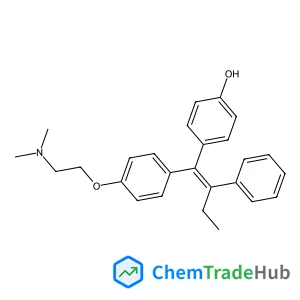
![(3R)-3-(3-Fluorophenyl)-3-({[(2-methyl-2-propanyl)oxy]carbonyl}amino)propanoic acid structure](https://static.chemtradehub.com/structs/500/500789-04-8-20dd.webp "(3R)-3-(3-Fluorophenyl)-3-({[(2-methyl-2-propanyl)oxy]carbonyl}amino)propanoic acid structure")

![1,1'-[(E)-1,2-Ethenediyl]bis(4-bromobenzene) structure](https://static.chemtradehub.com/structs/188/18869-30-2-c907.webp "1,1'-[(E)-1,2-Ethenediyl]bis(4-bromobenzene) structure")



