












Room temperature synthesis of block copolymer nano-objects with different morphologies via ultrasound initiated RAFT polymerization-induced self-assembly (sono-RAFT-PISA)
文献情報
出版日
2020-05-04
DOI
10.1039/D0PY00461H
インパクトファクター
5.582
著者
Jing Wan, Bo Fan, Yiyi Liu, Tina Hsia, Kaiyuan Qin, Tanja Junkers, Boon M. Teo, San H. Thang
原文を見る
要旨
Polymerization-induced self-assembly (PISA), which allows scalable synthesis of nano-objects, has drawn significant research attention in the past decade. However, the initiation methods in most of the current reported PISA are still restricted to thermal or photo processes. Sonolysis of a water molecule by high frequency ultrasound to generate a hydroxyl radical and to initiate polymerization has the potential to be a new “initiator-free” synthesis technique. Despite ultrasound-initiated polymerization-induced self-assembly (sono-PISA) being reported, only spherical micelle morphology was achieved. We demonstrate here the first room temperature synthesis of diblock copolymer nano-objects with different morphologies using ultrasound (990 kHz) initiated reversible addition–fragmentation chain transfer PISA (sono-RAFT-PISA) in an aqueous system. It was found that the morphologies of the block copolymer nano-objects prepared by sono-RAFT-PISA were different from those prepared by conventional thermal-PISA. Furthermore, the impacts of ultrasound and presence of a cross-linker on the nano-object morphology were investigated. It was observed that the stability of worm-like micelles will be affected by ultrasound but could be strengthened via core-cross-linking (CCL). Overall, the externally-regulatable, easily scalable and sustainable “green” features of ultrasound have the potential to promote the application of sono-PISA for the fabrication of nano-objects.
関連文献
SAR study of 4-arylazo-3,5-diamino-1H-pyrazoles: identification of small molecules that induce dispersal of Pseudomonas aeruginosa biofilms
Charlotte U. Jansen, Jesper Uhd, Jens B. Andersen, Louise D. Hultqvist, Tim H. Jakobsen, Martin Nilsson, Michael Givskov, Tim Tolker-Nielsen, Katrine M. Qvortrup
2021-09-03
Research Article
DOI: 10.1039/D1MD00275A
Macrocyclic peptides that inhibit Wnt signalling via interaction with Wnt3a
Manuel E. Otero-Ramirez, Kyoko Matoba, Emiko Mihara, Junichi Takagi, Hiroaki Suga
2020-03-24
Paper
DOI: 10.1039/D0CB00016G
Challenges and opportunities of pharmaceutical cocrystals: a focused review on non-steroidal anti-inflammatory drugs
Utsav Garg, Yasser Azim
2021-02-09
Review Article
DOI: 10.1039/D0MD00400F
Profiling MAP kinase cysteines for targeted covalent inhibitor design
Ruibin Liu, Neha Verma, Jack A. Henderson, Shaoqi Zhan, Jana Shen
2021-11-03
Research Article
DOI: 10.1039/D1MD00277E
SF5- and SCF3-substituted tetrahydroquinoline compounds as potent bactericidal agents against multidrug-resistant persister Gram-positive bacteria
Neetu Dayal
2021-08-10
Research Article
DOI: 10.1039/D1MD00211B
Indole – a promising pharmacophore in recent antiviral drug discovery
Atukuri Dorababu
2020-11-06
Review Article
DOI: 10.1039/D0MD00288G
こちらもおすすめ
化合物よくある質問
カルボニル基が付いた5-氰基-1-{[(2-メチル-2-プロpanyl)オキシ]カーボンイル}1H-吲哚-2-イリド-2-ボリン酸はどのように保存すればよいですか?
カルボニル基が付いた5-氰基-1-{[(2-メチル-2-プロpanyl)オキシ]カーボンイル}1H-吲哚-2-イリド-2-ボリン酸は、直射日光を避けて室温(15...
475102-15-9(5-Cyano-1-{[(2-meth...
化合物よくある質問
tert-ブチル2-クロロメチルピリジン-3-基炭酸エステルの市場動向や研究トレンドはどうですか?
この化合物は合成化学分野において、特にピリジン化合物の合成や改良に用いられます。最近の研究では、ピリジン化合物の新規合成法や特性の改良が注目されています。市場動...
1203498-98-9tert-Butyl 2-chloro-...
化合物よくある質問
聚二季戊四醇六丙烯酸酯はどの業界で使用されていますか?
聚二季戊四醇六丙烯酸酯は、医薬品、ポリマー、センサー、半導体などの業界で広く使用されています。特にポリマー業界では硬化剤として、医薬分野では医療機器の製造に使用...
29570-58-93-(Acryloyloxy)-2-({...
化合物よくある質問
1-氯-5-硝基异喹啉の市場動向や研究トレンドはどうですか?
1-氯-5-硝基异喹啉は、薬理学や合成化学の研究分野で注目されています。市場動向としては、その生物学的な活性や合成可能性を評価する研究が増えています。また、代替...
58142-97-51-Chloro-5-nitroisoq...
化合物よくある質問
2-チロール-5-メチルスルフェニル-3-trifルオルメチルベンゼンはどのように合成されますか?
2-チロール-5-メチルスルフェニル-3-trifルオルメチルベンゼンは、トリフルオロメチル化反応と硫化反応を経て合成されます。通常、トリフルオロメチル化剤と硫...
957066-04-51-Chloro-4-(methylsu...
化合物よくある質問
p-トールイルマグネシウムブロミドの物理化学的性質は何ですか?
p-トールイルマグネシウムブロミドのCAS番号は4294-57-9です。この化合物は白色の結晶性粉末で、分子量は204.32です。溶剤中で良好に溶解しますが、水...
4294-57-9p-Tolylmagnesium bro...
化合物よくある質問
1-(5-甲基-2-硫化素基)プロパン-1-酮の市場動向や研究トレンドはどうですか?
1-(5-甲基-2-硫化素基)プロパン-1-酮の市場動向は、化学産業全体の需要に影響を受けますが、最近では pharmaceutical 分野での応用が注目され...
59303-13-81-(5-Methyl-2-thieny...
化合物よくある質問
十一碳烯酰甘氨酸を取り扱う際の実験室安全事項は何ですか?
十一碳烯酰甘氨酸は吸入や皮膚から吸収されることがあり、取り扱う際には防塵マスクと手袋を使用してください。ドラフトチャンバーを用いて漏洩を処理し、適切なSDS(S...
54301-26-7N-10-Undecenoylglyci...
化合物よくある質問
1H,1H-全氟-3,6-二氧杂葵-1-醇を取り扱う際の実験室安全事項は何ですか?
この化合物は吸入や皮膚吸収による毒性があるため、防塵マスク、ゴーグル、防護手袋を使用する必要があります。ドラフトチャンバーでの操作が必要です。漏洩時には即座に換...
152914-73-32,2-Difluoro-2-[1,1,...
化合物よくある質問
3-(4-(フルオロメチルオキシ)フェニル)-1,2,4-オキサジアゾール-5-カルボハイドライドは安全ですか?
安全性は化合物の使用方法によります。直接的な毒性は報告されていませんが、吸入や皮膚接触には注意が必要です。適切な防護服を着用し、換気を図ることを推奨します。
883028-82-83-(4-(Trifluorometho...
掲載誌
Polymer Chemistry

CiteScore:
8.6
自己引用率:
7.3%
年間論文数:
457
Polymer Chemistry welcomes submissions in all areas of polymer science that have a strong focus on macromolecular chemistry. Manuscripts may cover a broad range of fields, yet no direct application focus is required.
おすすめ化合物
![Benzo[b]naphtho[2,1-d]thiophene structure](https://static.chemtradehub.com/structs/239/239-35-0-ff90.webp "Benzo[b]naphtho[2,1-d]thiophene structure")

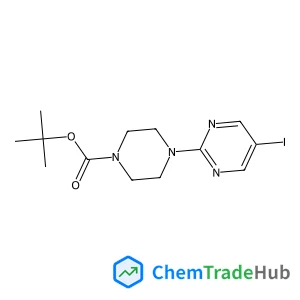
2-Methyl-2-propanyl 4-(5-iodo-2-pyrimidinyl)-1-piperazinecarboxylate
CAS番号:
1027616-32-5
分子式:
C13H19IN4O2
おすすめサプライヤー




免責事項
このページに表示される学術雑誌情報は、参考および研究目的のみを目的としています。当社は雑誌出版社とは提携しておらず、投稿の取り扱いも行っておりません。出版に関するお問い合わせは、各雑誌出版社に直接ご連絡ください。
表示されている情報に誤りがある場合は、support@chemtradehub.com までご連絡ください。迅速に確認し、対応いたします。