












Evaluation of charge-transfer rates in fullerene-based donor–acceptor dyads with different density functional approximations
文献情報
出版日
2021-02-05
DOI
10.1039/D0CP06510B
インパクトファクター
3.676
著者
Pau Besalú-Sala, Josep M. Luis, Miquel Solà
原文を見る
要旨
The shift towards renewable energy is one of the main challenges of this generation. Dye-sensitized solar cells (DSSCs), based on donor–acceptor architectures, can help in this transition as they present excellent photovoltaic efficiencies yet cheap and simple manufacturing. For molecular heterojunction DSSCs, donor–acceptor pairs are linked in a covalent manner, which facilitates their tailoring and rational design. Nevertheless, reliable computational characterization of charge transfer rate constants (kCT) is needed to speed this development process up. In this context, the performance of time-dependent density functional theory for the calculation of kCT values in donor–acceptor fullerene-based dyads has not been benchmarked yet. Herein, we present a detailed analysis on the performance of seven well-known density functional approximations (DFAs) for this type of system, focusing on several parameters such as the reorganization energies (λ), electronic couplings (VDA), and Gibbs energies (ΔG0CT), as well as the final rate constants. The amount of exact exchange at short range (SR) and long range (LR) electron–electron distances (and the transition from the SR to LR) turned out to be key for the success of the prediction. The tuning of these parameters improves significantly the performance of current DFAs.
関連文献
Diffusive and non-diffusive photo-induced proton coupled electron transfer from hydrogen bonded phenols to meso-tetrakis-5,10,15,20-pentafluorophenyl porphyrin
P. Hemant Kumar, Y. Venkatesh, S. Prashanthi, D. Siva, B. Ramakrishna, Prakriti Ranjan Bangal
2014-09-09
Paper
DOI: 10.1039/C4CP02505A
Nanoparticle catalysts for proton exchange membrane fuel cells: can surfactant effects be beneficial for electrocatalysis?
J. E. Newton, J. A. Preece, N. V. Rees, S. L. Horswell
2014-05-07
Paper
DOI: 10.1039/C4CP00991F
Dynamic and thermodynamic characteristics associated with the glass transition of amorphous trehalose–water mixtures
Lindong Weng, Gloria D. Elliott
2014-04-25
Paper
DOI: 10.1039/C3CP55418J
Probing the kinetic energy-release dynamics of H-atom products from the gas-phase reaction of O(3P) with vinyl radical C2H3
Su-Chan Jang, Jong-Ho Choi
2014-10-01
Paper
DOI: 10.1039/C4CP03046J
Remarkable changes in the photoluminescent properties of Y2Ce2O7:Eu3+ red phosphors through modification of the cerium oxidation states and oxygen vacancy ordering
Athira K. V. Raj, P. Prabhakar Rao, T. S. Sreena, S. Sameera, Vineetha James, U. A. Renju
2014-09-17
Paper
DOI: 10.1039/C4CP03311F
Ammonia-modified Co(ii) sites in zeolites: IR spectroscopy and spin-resolved charge transfer analysis of NO adsorption complexes
Kinga Góra-Marek, Adam Stępniewski, Mariusz Radoń, Ewa Broclawik
2014-09-11
Paper
DOI: 10.1039/C4CP03350G
Lithium cation conducting TDI anion-based ionic liquids
Leszek Niedzicki, Ewelina Karpierz, Maciej Zawadzki, Maciej Dranka, Marta Kasprzyk, Aldona Zalewska, Marek Marcinek, Janusz Zachara, Urszula Domańska, Władysław Wieczorek
2014-03-17
Paper
DOI: 10.1039/C3CP55354J
Seaurchin-like hierarchical NiCo2O4@NiMoO4 core–shell nanomaterials for high performance supercapacitors
Qiang Zhang, Yanghua Deng, Zhonghua Hu, Yafei Liu, Mingming Yao, Peipei Liu
2014-09-12
Paper
DOI: 10.1039/C4CP02928C
Advanced oxygen reduction reaction catalyst based on nitrogen and sulfur co-doped graphene in alkaline medium
Yongfeng Li, Meng Li, Liqing Jiang, Lin Lin, Lili Cui, Xingquan He
2014-09-09
Paper
DOI: 10.1039/C4CP02528H
Epitope mapping of imidazolium cations in ionic liquid–protein interactions unveils the balance between hydrophobicity and electrostatics towards protein destabilisation
Micael Silva, Angelo Miguel Figueiredo, Eurico J. Cabrita
2014-09-23
Paper
DOI: 10.1039/C4CP03534H
こちらもおすすめ
化合物よくある質問
3-イチチルビフェニルはどのように合成されますか?
3-イチチルビフェニルは、ビフェニルとイチプロピオニトリルを回収率約90%で反応させて合成されます。触媒は通常、亜リチウムホウ素を用います。
5668-93-93-Ethylbiphenyl
化合物よくある質問
8-溴-5-三氟甲基喹啉はどのように合成されますか?
8-溴-5-三氟甲基喹啉は、5-トリフルオロメチル-2-メチル-1,3-ベンゼンジオールをブロモエタノールと反応させて生成します。この反応は塩基性条件下で行われ...
917251-92-48-Bromo-5-(trifluoro...
化合物よくある質問
ジメチル4-(4,4,5,5-テトラメチル-1,3,2-ドioxaborolan-2-基)-2,6-ピリジンジカルボイル酸フェニルアミニドの代替品はありますか?
ジメチル4-(4,4,5,5-テトラメチル-1,3,2-ドioxaborolan-2-基)-2,6-ピリジンジカルボイル酸フェニルアミニドの代替品としては、4-...
741709-66-0Dimethyl 4-(4,4,5,5-...
化合物よくある質問
N-(3,5-ヘキサクロロ-4-ピリドインイル)-8-メチオキシ-5-キノリンカーボン酸の市場動向や研究トレンドはどのようなものでしょうか?
N-(3,5-ヘキサクロロ-4-ピリドインイル)-8-メチオキシ-5-キノリンカーボン酸の市場動向は、主に産業用途での需要により影響を受けます。研究トレンドとし...
199871-63-1N-(3,5-Dichloro-4-py...
化合物よくある質問
イソステアロイルグリセリルは安全ですか?
イソステアロイルグリセリルは一般的に安全性が高いとされていますが、過度な使用や個人差により皮�owsん炎などの反応が起こる可能性があります。使用前に医師に相談す...
222723-55-92-[(5Z,8Z,11Z,14Z)-5...
化合物よくある質問
1-(二苯甲基)-3,3-二氟-氮杂环丁烷の市場動向や研究トレンドはどうですか?
1-(二苯甲基)-3,3-二氟-氮杂环丁烷の市場動向は、医薬品や合成化学の研究分野で注目を集めています。新興研究は、該当化合物の合成改良と生体内での作用メカニズ...
288315-02-61-Benzhydryl-3,3-dif...
化合物よくある質問
3-チオフェンスチオールの物理化学的性質は何ですか?
3-チオフェンスチオールのCAS番号は7774-73-4です。結晶性の白色粉末で、分子量は122.17です。この化合物は水に微溶解し、エタノールやジクロロメタン...
7774-73-43-Thiophenethiol
化合物よくある質問
2-Methyl-2-propanyl (2S)-2-(aminomethyl)-1-piperidinecarboxylateは安全ですか?
2-Methyl-2-propanyl (2S)-2-(aminomethyl)-1-piperidinecarboxylateは一定の安全性基準を満たしていま...
475105-35-22-Methyl-2-propanyl ...
化合物よくある質問
CAS番号1316822-90-8の化合物は安全ですか?
CAS番号1316822-90-8の化合物は安全性に関しては評価が不足していますが、一般的には生物学的に活性な物質であり、取り扱いには適切な安全防護措置が必要で...
1316822-90-8Gal beta(1-3)[Neu5Ac...
化合物よくある質問
Tert-butyl 2-(2-羟基乙基)哌嗪-1-羧酸はどのように保存すればよいですか?
Tert-butyl 2-(2-羟基乙基)哌嗪-1-羧酸は、冷暗所で保存し、直射日光から遠ざけてください。容器は密閉し、高湿度や高温を避けて保管してください。
517866-79-4Tert-butyl 2-(2-hydr...
掲載誌
Physical Chemistry Chemical Physics

CiteScore:
5.5
自己引用率:
10.3%
年間論文数:
3036
Physical Chemistry Chemical Physics (PCCP) is an international journal co-owned by 19 physical chemistry and physics societies from around the world. This journal publishes original, cutting-edge research in physical chemistry, chemical physics and biophysical chemistry. To be suitable for publication in PCCP, articles must include significant innovation and/or insight into physical chemistry; this is the most important criterion that reviewers and Editors will judge against when evaluating submissions. The journal has a broad scope and welcomes contributions spanning experiment, theory, computation and data science. Topical coverage includes spectroscopy, dynamics, kinetics, statistical mechanics, thermodynamics, electrochemistry, catalysis, surface science, quantum mechanics, quantum computing and machine learning. Interdisciplinary research areas such as polymers and soft matter, materials, nanoscience, energy, surfaces/interfaces, and biophysical chemistry are welcomed if they demonstrate significant innovation and/or insight into physical chemistry. Joined experimental/theoretical studies are particularly appreciated when complementary and based on up-to-date approaches.
おすすめ化合物
![1-(1-Benzyl-1,2,3,6-tetrahydropyridin-4-yl)-1H-benzo[d]imidazol-2(3H)-one structure](https://static.chemtradehub.com/structs/603/60373-71-9-7dfb.webp "1-(1-Benzyl-1,2,3,6-tetrahydropyridin-4-yl)-1H-benzo[d]imidazol-2(3H)-one structure")
1-(1-Benzyl-1,2,3,6-tetrahydropyridin-4-yl)-1H-benzo[d]imidazol-2(3H)-one
CAS番号:
60373-71-9
分子式:
C19H19N3O

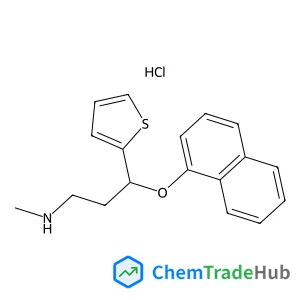
N-Methyl-3-(1-naphthyloxy)-3-(2-thienyl)-1-propanamine hydrochloride (1:1)
CAS番号:
1188266-11-6
分子式:
C18H20ClNOS
おすすめサプライヤー







免責事項
このページに表示される学術雑誌情報は、参考および研究目的のみを目的としています。当社は雑誌出版社とは提携しておらず、投稿の取り扱いも行っておりません。出版に関するお問い合わせは、各雑誌出版社に直接ご連絡ください。
表示されている情報に誤りがある場合は、support@chemtradehub.com までご連絡ください。迅速に確認し、対応いたします。