













Remarkable changes in the photoluminescent properties of Y2Ce2O7:Eu3+ red phosphors through modification of the cerium oxidation states and oxygen vacancy ordering
文献情報
出版日
2014-09-17
DOI
10.1039/C4CP03311F
インパクトファクター
3.676
著者
Athira K. V. Raj, P. Prabhakar Rao, T. S. Sreena, S. Sameera, Vineetha James, U. A. Renju
原文を見る
要旨
A new series of red phosphors based on Eu3+-doped yttrium cerate [Y1.9Ce2O7:0.1Eu3+, Y2Ce1.9O7:0.1Eu3+ and Y2Ce2−xO7:xEu3+ (x = 0.05, 0.10, 0.15, 0.20, 0.25 and 0.50)] was prepared via a conventional solid-state method. The influence of the substitution of Eu3+ at the aliovalent site on the photoluminescent properties was determined by powder X-ray diffraction, FT Raman spectroscopy, X-ray photoelectron spectroscopy, transmission electron microscopy, scanning electron microscopy with energy-dispersive spectroscopy, UV-visible absorption spectroscopy, photoluminescence spectroscopy and lifetime measurements. The substitution of Eu3+ at the Ce4+ site induces a structural transition from a defect fluorite to a C-type structure, which increases the oxygen vacancy ordering and the distortion of the Eu3+ environment, and decreases the formation of Ce3+ states. In contrast, phosphors with isovalent substitution at the Y3+ site exhibit the biphasic nature of defect fluorite and a C-type structure, thereby increasing the number of Ce3+ oxidation states. These modifications resulted in remarkable changes in the photoluminescent properties of Y2Ce1.9O7:0.1Eu3+ red phosphors, with emission intensities 3.8 times greater than those of the Ce0.9O2:0.1Eu3+ and Y1.9Ce2O7:0.1Eu3+. The photoluminescent properties of Y2Ce2−xO7:xEu3+ were studied at different Eu3+ concentrations under excitation with blue light. These phosphors emit intense red light due to the 5D0–7F2 transition under excitation at 466 nm and no concentration quenching is observed with up to 50 mol% Eu3+. They show increased lifetimes in the range 0.62–0.72 ms at Eu3+ concentrations. The cation ordering linked to the oxygen vacancy ordering led to the uniform distribution of Eu3+ ions in the lattice, thus allowing higher doping concentrations without quenching and consequently increasing the lifetime of the 5D0 states. Our results demonstrate that significant improvements in the photoluminescence properties can be achieved by the structural alteration of a fluorite CeO2 to a C-type lattice.
関連文献
Strongly red-fluorescent novel donor–π-bridge–acceptor–π-bridge–donor (D–π–A–π–D) type 2,1,3-benzothiadiazoles with enhanced two-photon absorption cross-sections
Shin-ichiro Kato, Taisuke Matsumoto, Tsutomu Ishi-i, Thies Thiemann, Motoyuki Shigeiwa, Hideki Gorohmaru, Shuichi Maeda, Yoshiro Yamashita, Shuntaro Mataka
2004-09-07
Communication
DOI: 10.1039/B410016F
BINOL catalyzed enantioselective addition of titanium phenylacetylide to aromatic ketones
Pier Giorgio Cozzi, Silvia Alesi
2004-09-21
Communication
DOI: 10.1039/B408654F
Intramolecular nucleophilic carbonyl trapping of α-ketenyl radicals by an amino group
Mami Tojino, Yoshitaka Uenoyama, Takahide Fukuyama, Ilhyong Ryu
2004-09-14
Communication
DOI: 10.1039/B408746A
Single-walled carbon nanotubes acquire a specific lectin-affinity through supramolecular wrapping with lactose-appended schizophyllan
Teruaki Hasegawa, Tomohisa Fujisawa, Munenori Numata, Mariko Umeda, Takahiro Matsumoto, Taro Kimura, Shiro Okumura, Kazuo Sakurai, Seiji Shinkai
2004-08-20
Communication
DOI: 10.1039/B407409B
The isomerisation of (Z)-3-[2H1]-phenylprop-2-enone as a measure of the rate of hydroperoxide addition in Weitz–Scheffer and Juliá–Colonna epoxidations
David R. Kelly, Eva Caroff, Robert W. Flood, William Heal, Stanley M. Roberts
2004-08-25
Communication
DOI: 10.1039/B404389H
New reactions in water: metal-free conversion of alcohols and ketones into α-iodoketones
José Barluenga, María Marco-Arias, Francisco González-Bobes, Alfredo Ballesteros, José M. González
2004-10-04
Communication
DOI: 10.1039/B411227J
Synthesis and in vitro photodynamic activity of new hexadeca-carboxy phthalocyanines
Chi-Fung Choi, Po-Ting Tsang, Jian-Dong Huang, Elaine Y. M. Chan, Wing-Hung Ko, Wing-Ping Fong, Dennis K. P. Ng
2004-08-25
Communication
DOI: 10.1039/B405868B
A very large Rh–Rh bond shortening on excitation of the [Rh2(1,8-diisocyano-p-menthane)4]2+ ion by time-resolved synchrotron X-ray diffraction
Yu-Sheng Chen, Tim Graber
2004-08-19
Communication
DOI: 10.1039/B409463H
Photo-reversible Pb2+-complexation of thermosensitive poly(N-isopropyl acrylamide-co-spiropyran acrylate) in water
Takayuki Suzuki, Tatsuya Kato, Hiraku Shinozaki
2004-08-13
Communication
DOI: 10.1039/B407342H
Motion of methanol adsorbed in porous coordination polymer with paramagnetic metal ions
Satoshi Horike, Ryotaro Matsuda, Ryo Kitaura, Susumu Kitagawa, Takahiro Iijima, Kazunaka Endo, Yoshiki Kubota, Masaki Takata
2004-08-20
Communication
DOI: 10.1039/B406883A
こちらもおすすめ
化合物よくある質問
カルボニル基が付いた5-氰基-1-{[(2-メチル-2-プロpanyl)オキシ]カーボンイル}1H-吲哚-2-イリド-2-ボリン酸はどのように保存すればよいですか?
カルボニル基が付いた5-氰基-1-{[(2-メチル-2-プロpanyl)オキシ]カーボンイル}1H-吲哚-2-イリド-2-ボリン酸は、直射日光を避けて室温(15...
475102-15-9(5-Cyano-1-{[(2-meth...
化合物よくある質問
tert-ブチル2-クロロメチルピリジン-3-基炭酸エステルの市場動向や研究トレンドはどうですか?
この化合物は合成化学分野において、特にピリジン化合物の合成や改良に用いられます。最近の研究では、ピリジン化合物の新規合成法や特性の改良が注目されています。市場動...
1203498-98-9tert-Butyl 2-chloro-...
化合物よくある質問
聚二季戊四醇六丙烯酸酯はどの業界で使用されていますか?
聚二季戊四醇六丙烯酸酯は、医薬品、ポリマー、センサー、半導体などの業界で広く使用されています。特にポリマー業界では硬化剤として、医薬分野では医療機器の製造に使用...
29570-58-93-(Acryloyloxy)-2-({...
化合物よくある質問
1-氯-5-硝基异喹啉の市場動向や研究トレンドはどうですか?
1-氯-5-硝基异喹啉は、薬理学や合成化学の研究分野で注目されています。市場動向としては、その生物学的な活性や合成可能性を評価する研究が増えています。また、代替...
58142-97-51-Chloro-5-nitroisoq...
化合物よくある質問
2-チロール-5-メチルスルフェニル-3-trifルオルメチルベンゼンはどのように合成されますか?
2-チロール-5-メチルスルフェニル-3-trifルオルメチルベンゼンは、トリフルオロメチル化反応と硫化反応を経て合成されます。通常、トリフルオロメチル化剤と硫...
957066-04-51-Chloro-4-(methylsu...
化合物よくある質問
p-トールイルマグネシウムブロミドの物理化学的性質は何ですか?
p-トールイルマグネシウムブロミドのCAS番号は4294-57-9です。この化合物は白色の結晶性粉末で、分子量は204.32です。溶剤中で良好に溶解しますが、水...
4294-57-9p-Tolylmagnesium bro...
化合物よくある質問
1-(5-甲基-2-硫化素基)プロパン-1-酮の市場動向や研究トレンドはどうですか?
1-(5-甲基-2-硫化素基)プロパン-1-酮の市場動向は、化学産業全体の需要に影響を受けますが、最近では pharmaceutical 分野での応用が注目され...
59303-13-81-(5-Methyl-2-thieny...
化合物よくある質問
十一碳烯酰甘氨酸を取り扱う際の実験室安全事項は何ですか?
十一碳烯酰甘氨酸は吸入や皮膚から吸収されることがあり、取り扱う際には防塵マスクと手袋を使用してください。ドラフトチャンバーを用いて漏洩を処理し、適切なSDS(S...
54301-26-7N-10-Undecenoylglyci...
化合物よくある質問
1H,1H-全氟-3,6-二氧杂葵-1-醇を取り扱う際の実験室安全事項は何ですか?
この化合物は吸入や皮膚吸収による毒性があるため、防塵マスク、ゴーグル、防護手袋を使用する必要があります。ドラフトチャンバーでの操作が必要です。漏洩時には即座に換...
152914-73-32,2-Difluoro-2-[1,1,...
化合物よくある質問
3-(4-(フルオロメチルオキシ)フェニル)-1,2,4-オキサジアゾール-5-カルボハイドライドは安全ですか?
安全性は化合物の使用方法によります。直接的な毒性は報告されていませんが、吸入や皮膚接触には注意が必要です。適切な防護服を着用し、換気を図ることを推奨します。
883028-82-83-(4-(Trifluorometho...
掲載誌
Physical Chemistry Chemical Physics

CiteScore:
5.5
自己引用率:
10.3%
年間論文数:
3036
Physical Chemistry Chemical Physics (PCCP) is an international journal co-owned by 19 physical chemistry and physics societies from around the world. This journal publishes original, cutting-edge research in physical chemistry, chemical physics and biophysical chemistry. To be suitable for publication in PCCP, articles must include significant innovation and/or insight into physical chemistry; this is the most important criterion that reviewers and Editors will judge against when evaluating submissions. The journal has a broad scope and welcomes contributions spanning experiment, theory, computation and data science. Topical coverage includes spectroscopy, dynamics, kinetics, statistical mechanics, thermodynamics, electrochemistry, catalysis, surface science, quantum mechanics, quantum computing and machine learning. Interdisciplinary research areas such as polymers and soft matter, materials, nanoscience, energy, surfaces/interfaces, and biophysical chemistry are welcomed if they demonstrate significant innovation and/or insight into physical chemistry. Joined experimental/theoretical studies are particularly appreciated when complementary and based on up-to-date approaches.
おすすめ化合物
![1-(1-Benzyl-1,2,3,6-tetrahydropyridin-4-yl)-1H-benzo[d]imidazol-2(3H)-one structure](https://static.chemtradehub.com/structs/603/60373-71-9-7dfb.webp "1-(1-Benzyl-1,2,3,6-tetrahydropyridin-4-yl)-1H-benzo[d]imidazol-2(3H)-one structure")
1-(1-Benzyl-1,2,3,6-tetrahydropyridin-4-yl)-1H-benzo[d]imidazol-2(3H)-one
CAS番号:
60373-71-9
分子式:
C19H19N3O
![5'-Fluoro-[2,3'-biindolinylidene]-2',3-dione structure](https://static.chemtradehub.com/structs/251/251903-00-1-9cb1.webp "5'-Fluoro-[2,3'-biindolinylidene]-2',3-dione structure")
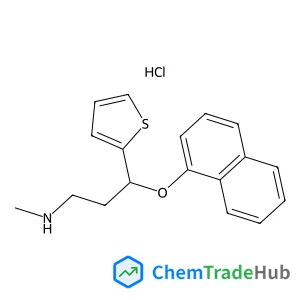
N-Methyl-3-(1-naphthyloxy)-3-(2-thienyl)-1-propanamine hydrochloride (1:1)
CAS番号:
1188266-11-6
分子式:
C18H20ClNOS

おすすめサプライヤー




免責事項
このページに表示される学術雑誌情報は、参考および研究目的のみを目的としています。当社は雑誌出版社とは提携しておらず、投稿の取り扱いも行っておりません。出版に関するお問い合わせは、各雑誌出版社に直接ご連絡ください。
表示されている情報に誤りがある場合は、support@chemtradehub.com までご連絡ください。迅速に確認し、対応いたします。