


A quantum cascade laser setup for studying irreversible photoreactions in H2O with nanosecond resolution and microlitre consumption
文献情報
出版日
2020-11-09
DOI
10.1039/D0CP03164J
インパクトファクター
3.676
著者
Jessica L. Klocke
原文を見る
要旨
Time-resolved infrared spectroscopy on irreversible reactions requires in general an exchange of sample for thousands of acquisitions leading to high sample consumption. Here, we present a setup employing a modern quantum cascade laser (QCL) as a probe light source to record time-resolved difference spectra of irreversible photoreactions in H2O. The combination of the focused QCL with a pressure-tolerant flow cell and a micrometre stage orthogonal to the flow allowed us to drastically reduce the sample consumption. We investigated the irreversible photoreduction of the cofactor flavin mononucleotide (FMN) in H2O, which is a common reaction taking place in biological photoreceptors. A broad time range from 20 nanoseconds to 1 second was accessible, because the approach minimized any signal drift by the flow. Kinetics were recorded at 46 selected wavenumbers consuming 12 microlitres for a complete dataset. The tuning range of 1490–1740 cm−1 included relevant carbonyl vibrations and the region of strong water absorption at around 1650 cm−1. A continuous dataset in the spectral dimension was generated by applying a fit with a sum of Lorentzians. Subsequent global analysis allowed us to resolve reference spectra and kinetics of the photoreaction proceeding from the triplet excited state via the intermediate flavin anion radical to the product, the fully reduced state of FMN. Accordingly, the neutral radical state is not populated in the disproportionation. The approach strongly facilitates the spectroscopic access to irreversible reactions of flavin-containing photoreceptors and photoenzymes with high time resolution and small sample consumption.
おすすめジャーナル

Journal of Saudi Chemical Society

Saudi Pharmaceutical Journal

Russian Journal of Applied Chemistry

Current Opinion in Colloid & Interface Science

Acta Materialia

Chemistry Education Research and Practice

Drug Discovery Today

Current Opinion in Solid State & Materials Science

Journal of Peptide Science

Russian Chemical Bulletin
関連文献
Facile preparation of long-chain aliphatic polycarbonates containing block copolycarbonates via one-pot sequential organic catalyzed polymerization of macrocyclic carbonates and trimethylene carbonates
Bingkun Yan, Jiaqian Hou, Chao Wei, Yan Xiao, Meidong Lang, Farong Huang
2020-02-12
Paper
DOI: 10.1039/D0PY00031K
Light-induced reactivity of gold and hybrid perovskite as a new possible degradation mechanism in perovskite solar cells
Natalia N. Shlenskaya, Nikolai A. Belich, Michael Grätzel
2017-12-20
Paper
DOI: 10.1039/C7TA10217H
Thiourea modified polyethylenimine for efficient gene delivery mediated by the combination of electrostatic interactions and hydrogen bonds
Huayu Tian, Jianxun Ding, Jie Chen, Xuesi Chen
2014-01-29
Paper
DOI: 10.1039/C3PY01781H
SiC–Fe3O4 dielectric–magnetic hybrid nanowires: controllable fabrication, characterization and electromagnetic wave absorption
Caiyun Liang, Chenyu Liu, Huan Wang, Lina Wu, Zhaohua Jiang, Yongjun Xu, Baozhong Shen, Zhijiang Wang
2014-08-13
Paper
DOI: 10.1039/C4TA02907K
Investigation on the dynamics of electron transport and recombination in TiO2nanotube/nanoparticle composite electrodes for dye-sensitized solar cells
Raheleh Mohammadpour, Azam Iraji zad, Anders Hagfeldt, Gerrit Boschloo
2011-11-03
Paper
DOI: 10.1039/C1CP21517E
Striking influence of Fe2O3 on the “catalytic carbonization” of chlorinated poly(vinyl chloride) into carbon microspheres with high performance in the photo-degradation of Congo red
Jie Liu, Zhiwei Jiang, Xuecheng Chen, Xin Wen, Ewa Mijowska, Nana Tian, Tao Tang
2013-02-26
Paper
DOI: 10.1039/C3TA10316A
Barrierless photoisomerisation of the “simplest cyanine”: Joining computational and femtosecond optical spectroscopies to trace the full reaction path
Alexander Weigel, Matthias Pfaffe, Mohsen Sajadi, Rainer Mahrwald, Roberto Improta, Vincenzo Barone, Dario Polli, Giulio Cerullo, Nikolaus P. Ernsting, Fabrizio Santoro
2012-07-17
Paper
DOI: 10.1039/C2CP41522D
In situ confocal microscopic observation on inhibiting the dendrite formation of a-CNx/Li electrode
Yi-jun Zhang, Wen-qi Bai, Xiu-li Wang, Xin-hui Xia, Chang-dong Gu, Jiang-ping Tu
2016-09-12
Paper
DOI: 10.1039/C6TA06612G
Microwave-assisted simultaneous reduction and titanate treatment of graphene oxide
Jing Li, Zhenzhen Yang, Hanxun Qiu, Yigang Dai, Qingbin Zheng, Guang-Ping Zheng, Junhe Yang
2013-07-25
Paper
DOI: 10.1039/C3TA12228J
こちらもおすすめ
化合物よくある質問
6- bromo-1-cyclopropyl-1H-benzimidazoleの市場動向や研究トレンドはどうですか?
6- bromo-1-cyclopropyl-1H-benzimidazoleは、抗炎症、抗ウイルス作用を持つことが報告されており、新薬開発の研究対象として注目...
1416713-53-56-Bromo-1-cyclopropy...
化合物よくある質問
環氧プロpanol-d5を取り扱う際の実験室安全事項は何ですか?
取り扱う際には、防護眼鏡と手袋を使用し、ドラフトチャンバー内で操作することを推奨します。漏洩時には適切な手順で処理し、安全データシートを常に参照してください。
1246819-20-4Glycidol-d5
化合物よくある質問
2,2’-ジメチル-3,3’-ビピリジンはどのように合成されますか?
2,2’-ジメチル-3,3’-ビピリジンは、ピリジンと2-メチルアクリルアミドを有機合成反応で合成します。この反応では、ピリジンと2-メチルアクリルアミドを含有...
86156-55-02,2’-Dimethyl-3,3’-b...
化合物よくある質問
6-甲基ピリジン-2-ボリック酸の主な用途は何ですか?
6-甲基ピリジン-2-ボリック酸は、合成化学、医薬品合成、以及研究用途などに広く使用され、特に組換えDNA技術や分子生物学の研究において重要な役割を果たします。
372963-50-3(6-Methyl-2-pyridiny...
化合物よくある質問
(R)-3-(1-甲基-2-氧環己基)プロpano酸メチルは安全ですか?
(R)-3-(1-甲基-2-氧環己基)プロpano酸メチルは一定の安全性がありますが、直接的な皮膚接触や吸入は避けるべきです。使用する際は適切な個々の安全データ...
94089-47-1methyl 3-[(1R)-1-met...
化合物よくある質問
ketorolacはどのように保存すればよいですか?
ketorolacは、密封して遮光容器に保管し、直射日光や高温を避けて保存してください。温度は常温で保存し、湿度をなるべく低く保つことが推奨されます。
74103-06-3rac Ketorolac
化合物よくある質問
L-2,3-二氨基丙酸二盐酸盐を取り扱う際の実験室安全事項は何ですか?
L-2,3-二氨基丙酸二盐酸盐は腐食性が強く、皮膚や粘膜に刺激を与える可能性があります。取り扱う際は、防塵マスク、ゴーグル、手袋を使用し、適切な排気設備を使用し...
19777-68-5(S)-2,3-Diaminopropa...
化合物よくある質問
2-(4-溴ピリジン-2-基)乙腈の物理化学的性質は何ですか?
2-(4-溴ピリジン-2-基)乙腈のCAS番号は312325-73-8です。主に結晶形態で存在し、分子量は159.01 g/molです。この化合物は水に溶けやす...
312325-73-8(4-Bromo-2-pyridinyl...
化合物よくある質問
3-フローロ-[1,1-ベンジレン]-3,4-ジカルボン酸を取り扱う際の実験室安全事項は何ですか?
この化合物は毒性は低いですが、直接的な接触や吸入に注意が必要です。PPE(個人防護具)を着用し、ドラフトチャンバーを使用して操作することを推奨します。また、漏洩...
1261915-32-53'-Fluoro-[1,1'-biph...
化合物よくある質問
3-(1-氧代-1,3-二氢-2H-2-异吲哚)丙酸の主な用途は何ですか?
3-(1-氧代-1,3-二氢-2H-2-异吲哚)丙酸は、薬理学研究や医薬品製造において広く用いられる化合物です。また、工業的な用途でも一部の化学反応の触媒や助剤...
83747-30-23-(1-Oxo-1,3-dihydro...
掲載誌
Physical Chemistry Chemical Physics

CiteScore:
5.5
自己引用率:
10.3%
年間論文数:
3036
Physical Chemistry Chemical Physics (PCCP) is an international journal co-owned by 19 physical chemistry and physics societies from around the world. This journal publishes original, cutting-edge research in physical chemistry, chemical physics and biophysical chemistry. To be suitable for publication in PCCP, articles must include significant innovation and/or insight into physical chemistry; this is the most important criterion that reviewers and Editors will judge against when evaluating submissions. The journal has a broad scope and welcomes contributions spanning experiment, theory, computation and data science. Topical coverage includes spectroscopy, dynamics, kinetics, statistical mechanics, thermodynamics, electrochemistry, catalysis, surface science, quantum mechanics, quantum computing and machine learning. Interdisciplinary research areas such as polymers and soft matter, materials, nanoscience, energy, surfaces/interfaces, and biophysical chemistry are welcomed if they demonstrate significant innovation and/or insight into physical chemistry. Joined experimental/theoretical studies are particularly appreciated when complementary and based on up-to-date approaches.
おすすめ化合物
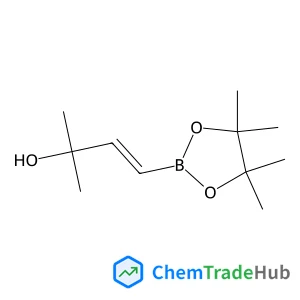
(E)-2-methyl-4-(4,4,5,5-tetramethyl-1,3,2-dioxaborolan-2-yl)but-3-en-2-ol
CAS番号:
581802-26-8
分子式:
C11H21BO3
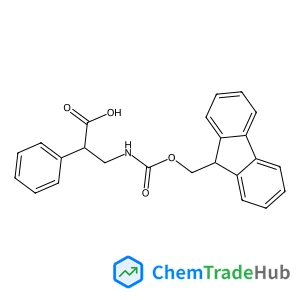
(S)-3-((((9H-Fluoren-9-yl)methoxy)carbonyl)amino)-2-phenylpropanoic acid
CAS番号:
1217663-60-9
分子式:
C24H21NO4
おすすめサプライヤー




免責事項
このページに表示される学術雑誌情報は、参考および研究目的のみを目的としています。当社は雑誌出版社とは提携しておらず、投稿の取り扱いも行っておりません。出版に関するお問い合わせは、各雑誌出版社に直接ご連絡ください。
表示されている情報に誤りがある場合は、support@chemtradehub.com までご連絡ください。迅速に確認し、対応いたします。