












SiC–Fe3O4 dielectric–magnetic hybrid nanowires: controllable fabrication, characterization and electromagnetic wave absorption
文献情報
出版日
2014-08-13
DOI
10.1039/C4TA02907K
インパクトファクター
12.732
著者
Caiyun Liang, Chenyu Liu, Huan Wang, Lina Wu, Zhaohua Jiang, Yongjun Xu, Baozhong Shen, Zhijiang Wang
原文を見る
要旨
Controllable dielectric–magnetic coaxial hybrid nanowires, having a core of SiC nanowires and a shell of Fe3O4 nanoparticles, have been synthesized using a straightforward polyol approach. The morphology, microstructure and magnetic properties of the SiC–Fe3O4 hybrid nanowires have been characterized by transmission electron microscope, powder X-ray diffractometer and vibrating sample magnetometer. The characterization confirms that monodisperse Fe3O4 nanoparticles of core size 10 nm have been successfully coated on the surface of SiC nanowires. The coverage density of the nanoparticles may be adjusted simply by changing the weight ratio of the precursors. Measurement of the electromagnetic (EM) parameters indicates that the Fe3O4 nanoparticles increase the magnetic loss and improve the impedance matching conditions compared to untreated SiC nanowires. When the coverage density of Fe3O4 is optimal, the reflection loss of an EM wave can be as low as −51 dB. By changing the loading density of Fe3O4, the best microwave absorption state was obtained in the 2–18 GHz band. These results suggest that SiC–Fe3O4 hybrid nanowires will be valuable in EM absorption applications.
関連文献
Molecular imaging with polymers
Nathan R. B. Boase, Idriss Blakey, Kristofer J. Thurecht
2012-03-26
Minireview
DOI: 10.1039/C2PY20132A
Functional galactomannan platform from convenient esterification in imidazolium-based ionic liquids
2011-12-23
Paper
DOI: 10.1039/C2PY00512C
Bioinspired dual self-folding of single polymer chains via reversible hydrogen bonding
Ozcan Altintas, Peter Gerstel
2011-11-11
Paper
DOI: 10.1039/C1PY00392E
One-step RAFT synthesis of well-defined amphiphilic star polymers and their self-assembly in aqueous solution
Christoph Herfurth, Paula Malo de Molina, Christoph Wieland, Sarah Rogers, Michael Gradzielski
2012-04-26
Paper
DOI: 10.1039/C2PY20126G
Emulsifier-free, organotellurium-mediated living radical emulsion polymerization (emulsion TERP) of methyl methacrylate with dimethyl ditelluride as the catalyst
Yukiya Kitayama, Hirotaka Moribe, Kazuya Kishida
2012-03-30
Paper
DOI: 10.1039/C2PY20105D
Combination of phosphazene base and triisobutylaluminum for the rapid synthesis of polyhydroxy telechelic poly(propylene oxide)
2012-03-02
Paper
DOI: 10.1039/C2PY20014G
Electrochemical investigations on anticorrosive and electrochromic properties of electroactive polyurea
Tzu-Chun Yeh, Tsao-Cheng Huang, Hsiu-Ying Huang, Yu-Pei Huang, Yu-Ting Cai, Shih-Ting Lin, Yen Wei, Jui-Ming Yeh
2012-05-28
Paper
DOI: 10.1039/C2PY20061A
Spectroscopic study of side-chain melting and crystallization of regioregular poly(3-dodecylthiophene)
Yan Guo, Ying Jin, Zhaohui Su
2012-02-03
Communication
DOI: 10.1039/C2PY00582D
Synthesis and polymerization of C-vinyl- and N-vinyl-1,2,3-triazoles
Samir Beghdadi, Daniele Addis, Hatem Ben Romdhane, Julien Bernard, Eric Drockenmuller
2011-10-28
Review Article
DOI: 10.1039/C1PY00446H
こちらもおすすめ
化合物よくある質問
6- bromo-1-cyclopropyl-1H-benzimidazoleの市場動向や研究トレンドはどうですか?
6- bromo-1-cyclopropyl-1H-benzimidazoleは、抗炎症、抗ウイルス作用を持つことが報告されており、新薬開発の研究対象として注目...
1416713-53-56-Bromo-1-cyclopropy...
化合物よくある質問
環氧プロpanol-d5を取り扱う際の実験室安全事項は何ですか?
取り扱う際には、防護眼鏡と手袋を使用し、ドラフトチャンバー内で操作することを推奨します。漏洩時には適切な手順で処理し、安全データシートを常に参照してください。
1246819-20-4Glycidol-d5
化合物よくある質問
2,2’-ジメチル-3,3’-ビピリジンはどのように合成されますか?
2,2’-ジメチル-3,3’-ビピリジンは、ピリジンと2-メチルアクリルアミドを有機合成反応で合成します。この反応では、ピリジンと2-メチルアクリルアミドを含有...
86156-55-02,2’-Dimethyl-3,3’-b...
化合物よくある質問
6-甲基ピリジン-2-ボリック酸の主な用途は何ですか?
6-甲基ピリジン-2-ボリック酸は、合成化学、医薬品合成、以及研究用途などに広く使用され、特に組換えDNA技術や分子生物学の研究において重要な役割を果たします。
372963-50-3(6-Methyl-2-pyridiny...
化合物よくある質問
(R)-3-(1-甲基-2-氧環己基)プロpano酸メチルは安全ですか?
(R)-3-(1-甲基-2-氧環己基)プロpano酸メチルは一定の安全性がありますが、直接的な皮膚接触や吸入は避けるべきです。使用する際は適切な個々の安全データ...
94089-47-1methyl 3-[(1R)-1-met...
化合物よくある質問
ketorolacはどのように保存すればよいですか?
ketorolacは、密封して遮光容器に保管し、直射日光や高温を避けて保存してください。温度は常温で保存し、湿度をなるべく低く保つことが推奨されます。
74103-06-3rac Ketorolac
化合物よくある質問
L-2,3-二氨基丙酸二盐酸盐を取り扱う際の実験室安全事項は何ですか?
L-2,3-二氨基丙酸二盐酸盐は腐食性が強く、皮膚や粘膜に刺激を与える可能性があります。取り扱う際は、防塵マスク、ゴーグル、手袋を使用し、適切な排気設備を使用し...
19777-68-5(S)-2,3-Diaminopropa...
化合物よくある質問
2-(4-溴ピリジン-2-基)乙腈の物理化学的性質は何ですか?
2-(4-溴ピリジン-2-基)乙腈のCAS番号は312325-73-8です。主に結晶形態で存在し、分子量は159.01 g/molです。この化合物は水に溶けやす...
312325-73-8(4-Bromo-2-pyridinyl...
化合物よくある質問
3-フローロ-[1,1-ベンジレン]-3,4-ジカルボン酸を取り扱う際の実験室安全事項は何ですか?
この化合物は毒性は低いですが、直接的な接触や吸入に注意が必要です。PPE(個人防護具)を着用し、ドラフトチャンバーを使用して操作することを推奨します。また、漏洩...
1261915-32-53'-Fluoro-[1,1'-biph...
化合物よくある質問
3-(1-氧代-1,3-二氢-2H-2-异吲哚)丙酸の主な用途は何ですか?
3-(1-氧代-1,3-二氢-2H-2-异吲哚)丙酸は、薬理学研究や医薬品製造において広く用いられる化合物です。また、工業的な用途でも一部の化学反応の触媒や助剤...
83747-30-23-(1-Oxo-1,3-dihydro...
掲載誌
Journal of Materials Chemistry A
CiteScore:
19.5
自己引用率:
4.7%
年間論文数:
2211
Journal of Materials Chemistry A, B & C cover high quality studies across all fields of materials chemistry. The journals focus on those theoretical or experimental studies that report new understanding, applications, properties and synthesis of materials. The journals have a strong history of publishing quality reports of interest to interdisciplinary communities and providing an efficient and rigorous service through peer review and publication. The journals are led by an international team of Editors-in-Chief and Associate Editors who are all active researchers in their fields. Journal of Materials Chemistry A, B & C are separated by the intended application of the material studied. Broadly, applications in energy and sustainability are of interest to Journal of Materials Chemistry A, applications in biology and medicine are of interest to Journal of Materials Chemistry B, and applications in optical, magnetic and electronic devices are of interest to Journal of Materials Chemistry C. More than one Journal of Materials Chemistry journal may be suitable for certain fields and researchers are encouraged to submit their paper to the journal that they feel best fits for their particular article. Example topic areas within the scope of Journal of Materials Chemistry A are listed below. This list is neither exhaustive nor exclusive. Artificial photosynthesis Batteries Carbon dioxide conversion Catalysis Fuel cells Gas capture/separation/storage Green/sustainable materials Hydrogen generation Hydrogen storage Photocatalysis Photovoltaics Self-cleaning materials Self-healing materials Sensors Supercapacitors Thermoelectrics Water splitting Water treatment
おすすめ化合物
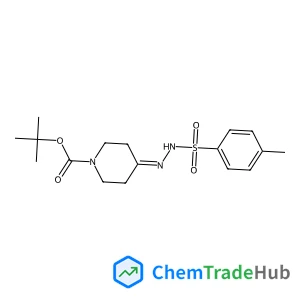
tert-Butyl 4-(2-(p-Tolylsulfonyl)hydrazono)piperidine-1-carboxylate
CAS番号:
1046478-89-0
分子式:
C17H25N3O4S
おすすめサプライヤー



免責事項
このページに表示される学術雑誌情報は、参考および研究目的のみを目的としています。当社は雑誌出版社とは提携しておらず、投稿の取り扱いも行っておりません。出版に関するお問い合わせは、各雑誌出版社に直接ご連絡ください。
表示されている情報に誤りがある場合は、support@chemtradehub.com までご連絡ください。迅速に確認し、対応いたします。