












Identifying cysteine residues susceptible to oxidation by photoactivatable atomic oxygen precursors using a proteome-wide analysis
文献情報
出版日
2021-01-19
DOI
10.1039/D0CB00200C
インパクトファクター
0
著者
Ankita Isor, Benjamin V. Chartier, Masahiro Abo, Emily R. Currens, Eranthie Weerapana, Ryan D. McCulla
原文を見る
要旨
The reactivity profile of atomic oxygen [O(3P)] in the condensed phase has shown a preference for the thiol group of cysteines. In this work, water-soluble O(3P)-precursors were synthesized by adding aromatic burdens and water-soluble sulphonic acid groups to the core structure of dibenzothiophene-S-oxide (DBTO) to study O(3P) reactivity in cell lysates and live cells. The photodeoxygenation of these compounds was investigated using common intermediates, which revealed that an increase in aromatic burdens to the DBTO core structure decreases the total oxidation yield due to competitive photodeoxygenation mechanisms. These derivatives were then tested in cell lysates and live cells to profile changes in cysteine reactivity using the isoTOP-ABPP chemoproteomics platform. The results from this analysis indicated that O(3P) significantly affects cysteine reactivity in the cell. Additionally, O(3P) was found to oxidize cysteines within peptide sequences with leucine and serine conserved at the sites surrounding the oxidized cysteine. O(3P) was also found to least likely oxidize cysteines among membrane proteins.
関連文献
Can boron antisites of BNNTs be an efficient metal-free catalyst for nitrogen fixation? – A DFT investigation
2017-05-23
Paper
DOI: 10.1039/C7CP02220D
Local pH and effective pKA of weak polyelectrolytes – insights from computer simulations
Lucie Nová, Filip Uhlík, Peter Košovan
2017-02-28
Paper
DOI: 10.1039/C7CP00265C
Electrode potential dependent desolvation and resolvation of germanium(100) in contact with aqueous perchlorate electrolytes
Fang Niu, Rainer Schulz, Arcesio Castañeda Medina, Rochus Schmid
2017-05-10
Paper
DOI: 10.1039/C6CP08908A
Structure and dynamics of water confined in a graphene nanochannel under gigapascal high pressure: dependence of friction on pressure and confinement
Lei Yang, Yanjie Guo, Dongfeng Diao
2017-05-05
Paper
DOI: 10.1039/C7CP01962A
Modulation of the electronic and mechanical properties of phagraphene via hydrogenation and fluorination
Houyang Chen
2017-02-28
Paper
DOI: 10.1039/C6CP08621G
Emission behaviours of novel V- and X-shaped fluorophores in response to pH and force stimuli
Hong-Yu Fu, Ning Xu, Yi-Min Pan, Xiao-Lin Lu, Min Xia
2017-04-06
Paper
DOI: 10.1039/C7CP01281K
Current–voltage characteristics influenced by the nanochannel diameter and surface charge density in a fluidic field-effect-transistor
Chunlei Guo
2017-05-19
Paper
DOI: 10.1039/C7CP02457F
Visualization of structural evolution and phase distribution of a lithium vanadium oxide (Li1.1V3O8) electrode via an operando and in situ energy dispersive X-ray diffraction technique
Qing Zhang, Andrea M. Bruck, David C. Bock, Jing Li, Varun Sarbada, Eric A. Stach
2017-05-03
Paper
DOI: 10.1039/C7CP02239E
Water-repellent hydrophilic nanogrooves
Yu-Hsuan Weng, I-Fan Hsieh, Yu-Jane Sheng
2017-04-27
Paper
DOI: 10.1039/C7CP01409K
The role of sulfur oxidation in controlling the electronic properties of sulfur-containing host molecules for phosphorescent organic light-emitting diodes
2017-04-07
Paper
DOI: 10.1039/C7CP00828G
こちらもおすすめ
化合物よくある質問
2-メトキシ-4-(メチルスルフィニル)アミンの主な用途は何ですか?
2-メトキシ-4-(メチルスルフィニル)アミンは、主に医薬品および農薬の製造に使用されます。また、合成化学の一部として研究用材料としても利用されます。
41608-73-52-Methoxy-4-(methyls...
118684-13-24-(Bromomethyl)-3-me...
化合物よくある質問
4,6-二氯-N-甲基ピラミジンアミンの代替品はありますか?
代替品としては、4,6-二クロロピラミジンアミンや他のピラミジン系化合物が考えられます。ただし、目的と用途によって最適な代替品は異なります。
10397-15-64,6-Dichloro-N-methy...
化合物よくある質問
6-氯-4-甲基-1H-吲哚を含む廃棄物はどのように処理すべきですか?
6-氯-4-甲基-1H-吲哚の廃棄物は、適切な容器に収集し、密閉して保管します。温度は常温、湿度は低く、直射日光を避けて保管することを推奨します。廃棄処理は専門...
885520-84-36-chloro-4-methyl-1H...
化合物よくある質問
2-フローユロ-4-(トリフルオロメチル)ベンゾイドについて「に適用される法規ガイドラインは何ですか」
2-フローユロ-4-(トリフルオロメチル)ベンゾイドのCAS番号は207974-08-1です。この化合物はGHS分類で毒性物質と有害な反応物質として分類されます...
207974-08-1[2-Fluoro-4-(trifluo...
化合物よくある質問
4-ニトロフェニルN-[(ベンゼルオキシルカーボンイル]グリシングリシングリシン酸はどのように保存すればよいですか?
4-ニトロフェニルN-[(ベンゼルオキシルカーボンイル]グリシングリシングリシン酸は、室温で暗所に保管し、乾燥した環境で保存することを推奨します。容器は密閉性の...
19811-64-44-Nitrophenyl N-[(be...
化合物よくある質問
イソデスロラタドリンの代替品はありますか?
イソデスロラタドリンの代替品としては、デスロラタドリンや他の抗ヒスタミン薬が挙げられます。具体的には、デスロラタドリン、ラセカミド、フェルタドリンなどが、症状や...
183198-49-4Iso Desloratadine
化合物よくある質問
5-甲氧基-1,2,3,4-四氢异喹啉盐酸盐はどのように合成されますか?
5-甲氧基-1,2,3,4-四氢异喹啉盐酸盐の一般的な合成方法は、メタノール中で5-メトキシ-1,2,3,4-四ヒュドロイソキシンを塩酸で塩化します。この反応で...
103030-69-95-Methoxy-1,2,3,4-te...
化合物よくある質問
4-アミノ-5-メトキシ-2-トルエンサルホニック酸についての法規ガイドラインは何ですか?
CAS番号6471-78-9の4-アミノ-5-メトキシ-2-トルエンサルホニック酸は、GHS分類では corrosive(腐食性)と識別されます。EUのREAC...
6471-78-94-Amino-5-Methoxy-2-...
化合物よくある質問
甲基孕酮を取り扱う際の実験室安全事項は何ですか?
甲基孕酮の取り扱いは、PPE(個人保護具)の使用が必要な重要な安全事項を伴います。防塵マスク、ゴーグル、手袋を着用することが推奨されます。ドラフトチャンバーを使...
204063-33-22-[(Diphenylmethyl)a...
掲載誌
おすすめ化合物
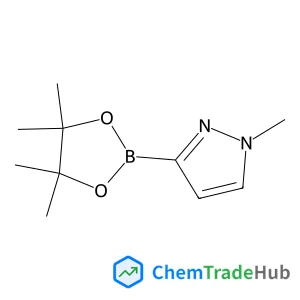
1-Methyl-3-(4,4,5,5-tetramethyl-1,3,2-dioxaborolan-2-yl)-1H-pyrazole
CAS番号:
1020174-04-2
分子式:
C10H17BN2O2
おすすめサプライヤー







免責事項
このページに表示される学術雑誌情報は、参考および研究目的のみを目的としています。当社は雑誌出版社とは提携しておらず、投稿の取り扱いも行っておりません。出版に関するお問い合わせは、各雑誌出版社に直接ご連絡ください。
表示されている情報に誤りがある場合は、support@chemtradehub.com までご連絡ください。迅速に確認し、対応いたします。