












Modulation of the electronic and mechanical properties of phagraphene via hydrogenation and fluorination
文献情報
出版日
2017-02-28
DOI
10.1039/C6CP08621G
インパクトファクター
3.676
著者
Houyang Chen
原文を見る
要旨
Recently, a new carbon sheet, phagraphene, was proposed by theoretical calculations [Nano Lett. 2015, 15, 6182]. In this paper, hydrogenated and fluorinated phagraphene (denoted as H-PHA and F-PHA) sheets have been systematically studied using first-principles calculations. The results of formation energy, ab initio molecular dynamics, phonon dispersion and elastic constants confirm that the modified phagraphene sheets are thermodynamically and dynamically as well as mechanically stable. We find that hydrogenation or fluorination is an effective way to modulate the bandgap, and we also find that adsorption-induced semimetal–semiconductor transition and adsorption-induced semimetal–insulator transition occur. Configuration-dependent bandgaps for partially H-PHA and configuration-independent bandgaps for fully H-PHA are determined. Adsorption-ratio-dependent bandgaps of H-PHA and F-PHA are also identified. Bandgaps calculated from HSE06 and PBE functionals of fully H-PHA are larger than those of F-PHA, and they are comparable to hydrogenated/fluorinated penta-graphene while they are larger than their corresponding graphene. Dependence of bandgaps of fully H-PHA and F-PHA on the tensile strain is investigated, and our calculations show that an insulator–semiconductor transition occurs upon increasing the tensile strain. Our results also show that the mechanical properties can be controlled using hydrogenation and fluorination. The calculations of Young's modulus and Poisson's ratio reveal that functionalized phagraphene sheets possess suitable stiffness and resistance to volume deformation, and both are smaller than those of the pristine phagraphene.
関連文献
The exciton dynamics in tetracene thin films
Murad J. Y. Tayebjee, Raphaël G. C. R. Clady, Timothy W. Schmidt
2013-07-19
Paper
DOI: 10.1039/C3CP52609G
Thermal unfolding and refolding of lysozyme in deep eutectic solvents and their aqueous dilutions
Rocio Esquembre, Jesus M. Sanz, J. Gerard Wall, Francisco del Monte, C. Reyes Mateo, M. Luisa Ferrer
2013-05-08
Paper
DOI: 10.1039/C3CP44299C
Assessment of femtosecond laser induced periodic surface structures on polymer films
Esther Rebollar, Javier R. Vázquez de Aldana, Ignacio Martín-Fabiani, Margarita Hernández, Daniel R. Rueda, Tiberio A. Ezquerra, Concepción Domingo, Pablo Moreno, Marta Castillejo
2013-05-13
Paper
DOI: 10.1039/C3CP51523K
Strain driven enhancement of ferroelectricity and magnetoelectric effect in multiferroic tunnel junction
Dan Cao, Hai-bo Shu, Zhi-wei Jiao, Yun Zhou, Miao-gen Chen, Meng-qiu Cai, Wang-yu Hu
2013-08-02
Paper
DOI: 10.1039/C3CP51350E
Charge transport characteristics of a high-mobility diketopyrrolopyrrole-based polymer
Dae Sung Chung, Il Kang, Yun-Hi Kim, Soon-Ki Kwon
2013-07-08
Paper
DOI: 10.1039/C3CP52422A
Studies of bimolecular reaction dynamics using pulsed high-intensity vacuum-ultraviolet lasers for photoionization detection
Daniel R. Albert, H. Floyd Davis
2013-07-12
Perspective
DOI: 10.1039/C3CP51930A
Estimation of electrode ionomer oxygen permeability and ionomer-phase oxygen transport resistance in polymer electrolyte fuel cells
Satheesh Sambandam, Javier Parrondo, Vijay Ramani
2013-07-10
Paper
DOI: 10.1039/C3CP51450A
Time-resolved photoelectron spectroscopy of adenine and adenosine in aqueous solution
Franziska Buchner, Hans-Hermann Ritze, Jan Lahl, Andrea Lübcke
2013-05-07
Paper
DOI: 10.1039/C3CP51057C
Compact large area and high-quality Au film with a hierarchical structure and its application in SERS
Youyi Xia, Tenjiao Li, Jun Chen
2013-05-15
Paper
DOI: 10.1039/C3CP51080H
Introducing a standard method for experimental determination of the solvent response in laser pump, X-ray probe time-resolved wide-angle X-ray scattering experiments on systems in solution
Tim B. van Driel, Jan Kehres, Kristoffer Haldrup, Dmitry Khakhulin, Klaus Bechgaard, Marco Cammarata, Michael Wulff, Thomas Just Sørensen, Martin M. Nielsen
2013-06-24
Paper
DOI: 10.1039/C3CP50751C
こちらもおすすめ
化合物よくある質問
2-メトキシ-4-(メチルスルフィニル)アミンの主な用途は何ですか?
2-メトキシ-4-(メチルスルフィニル)アミンは、主に医薬品および農薬の製造に使用されます。また、合成化学の一部として研究用材料としても利用されます。
41608-73-52-Methoxy-4-(methyls...
118684-13-24-(Bromomethyl)-3-me...
化合物よくある質問
4,6-二氯-N-甲基ピラミジンアミンの代替品はありますか?
代替品としては、4,6-二クロロピラミジンアミンや他のピラミジン系化合物が考えられます。ただし、目的と用途によって最適な代替品は異なります。
10397-15-64,6-Dichloro-N-methy...
化合物よくある質問
6-氯-4-甲基-1H-吲哚を含む廃棄物はどのように処理すべきですか?
6-氯-4-甲基-1H-吲哚の廃棄物は、適切な容器に収集し、密閉して保管します。温度は常温、湿度は低く、直射日光を避けて保管することを推奨します。廃棄処理は専門...
885520-84-36-chloro-4-methyl-1H...
化合物よくある質問
2-フローユロ-4-(トリフルオロメチル)ベンゾイドについて「に適用される法規ガイドラインは何ですか」
2-フローユロ-4-(トリフルオロメチル)ベンゾイドのCAS番号は207974-08-1です。この化合物はGHS分類で毒性物質と有害な反応物質として分類されます...
207974-08-1[2-Fluoro-4-(trifluo...
化合物よくある質問
4-ニトロフェニルN-[(ベンゼルオキシルカーボンイル]グリシングリシングリシン酸はどのように保存すればよいですか?
4-ニトロフェニルN-[(ベンゼルオキシルカーボンイル]グリシングリシングリシン酸は、室温で暗所に保管し、乾燥した環境で保存することを推奨します。容器は密閉性の...
19811-64-44-Nitrophenyl N-[(be...
化合物よくある質問
イソデスロラタドリンの代替品はありますか?
イソデスロラタドリンの代替品としては、デスロラタドリンや他の抗ヒスタミン薬が挙げられます。具体的には、デスロラタドリン、ラセカミド、フェルタドリンなどが、症状や...
183198-49-4Iso Desloratadine
化合物よくある質問
5-甲氧基-1,2,3,4-四氢异喹啉盐酸盐はどのように合成されますか?
5-甲氧基-1,2,3,4-四氢异喹啉盐酸盐の一般的な合成方法は、メタノール中で5-メトキシ-1,2,3,4-四ヒュドロイソキシンを塩酸で塩化します。この反応で...
103030-69-95-Methoxy-1,2,3,4-te...
化合物よくある質問
4-アミノ-5-メトキシ-2-トルエンサルホニック酸についての法規ガイドラインは何ですか?
CAS番号6471-78-9の4-アミノ-5-メトキシ-2-トルエンサルホニック酸は、GHS分類では corrosive(腐食性)と識別されます。EUのREAC...
6471-78-94-Amino-5-Methoxy-2-...
化合物よくある質問
甲基孕酮を取り扱う際の実験室安全事項は何ですか?
甲基孕酮の取り扱いは、PPE(個人保護具)の使用が必要な重要な安全事項を伴います。防塵マスク、ゴーグル、手袋を着用することが推奨されます。ドラフトチャンバーを使...
204063-33-22-[(Diphenylmethyl)a...
掲載誌
Physical Chemistry Chemical Physics

CiteScore:
5.5
自己引用率:
10.3%
年間論文数:
3036
Physical Chemistry Chemical Physics (PCCP) is an international journal co-owned by 19 physical chemistry and physics societies from around the world. This journal publishes original, cutting-edge research in physical chemistry, chemical physics and biophysical chemistry. To be suitable for publication in PCCP, articles must include significant innovation and/or insight into physical chemistry; this is the most important criterion that reviewers and Editors will judge against when evaluating submissions. The journal has a broad scope and welcomes contributions spanning experiment, theory, computation and data science. Topical coverage includes spectroscopy, dynamics, kinetics, statistical mechanics, thermodynamics, electrochemistry, catalysis, surface science, quantum mechanics, quantum computing and machine learning. Interdisciplinary research areas such as polymers and soft matter, materials, nanoscience, energy, surfaces/interfaces, and biophysical chemistry are welcomed if they demonstrate significant innovation and/or insight into physical chemistry. Joined experimental/theoretical studies are particularly appreciated when complementary and based on up-to-date approaches.
おすすめ化合物

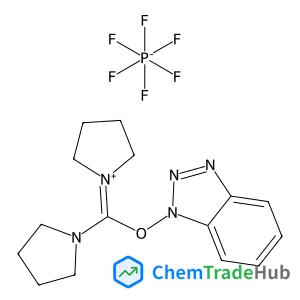
(1H-Benzotriazol-1-yloxy)(di-1-pyrrolidinyl)methylium hexafluorophosphate
CAS番号:
105379-24-6
分子式:
C15H21F6N5OP
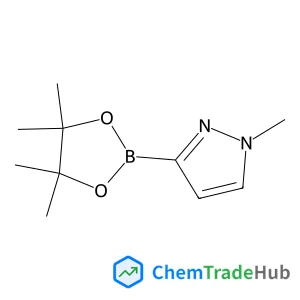
1-Methyl-3-(4,4,5,5-tetramethyl-1,3,2-dioxaborolan-2-yl)-1H-pyrazole
CAS番号:
1020174-04-2
分子式:
C10H17BN2O2
おすすめサプライヤー




免責事項
このページに表示される学術雑誌情報は、参考および研究目的のみを目的としています。当社は雑誌出版社とは提携しておらず、投稿の取り扱いも行っておりません。出版に関するお問い合わせは、各雑誌出版社に直接ご連絡ください。
表示されている情報に誤りがある場合は、support@chemtradehub.com までご連絡ください。迅速に確認し、対応いたします。