












![1,2-Diphenyl-4-[2-(phenylsulfinyl)ethyl]-3,5-pyrazolidinedione structure](https://static.chemtradehub.com/structs/57-/57-96-5-efcc.webp "1,2-Diphenyl-4-[2-(phenylsulfinyl)ethyl]-3,5-pyrazolidinedione structure")
Structure and dynamics of water confined in a graphene nanochannel under gigapascal high pressure: dependence of friction on pressure and confinement
文献情報
出版日
2017-05-05
DOI
10.1039/C7CP01962A
インパクトファクター
3.676
著者
Lei Yang, Yanjie Guo, Dongfeng Diao
原文を見る
要旨
Recently, water flow confined in nanochannels has become an interesting topic due to its unique properties and potential applications in nanofluidic devices. The trapped water is predicted to experience high pressure in the gigapascal regime. Theoretical and experimental studies have reported various novel structures of the confined water under high pressure. However, the role of this high pressure on the dynamic properties of water has not been elucidated to date. In the present study, the structure evolution and interfacial friction behavior of water constrained in a graphene nanochannel were investigated via molecular dynamics simulations. Transitions of the confined water to different ice phases at room temperature were observed in the presence of lateral pressure at the gigapascal level. The friction coefficient at the water/graphene interface was found to be dependent on the lateral pressure and nanochannel height. Further theoretical analyses indicate that the pressure dependence of friction is related to the pressure-induced change in the structure of water and the confinement dependence results from the variation in the water/graphene interaction energy barrier. These findings provide a basic understanding of the dynamics of the nanoconfined water, which is crucial in both fundamental and applied science.
関連文献
Core–shell catalysts consisting of nanoporous cores for oxygen reduction reaction‡
Minhua Shao, Brandon H. Smith, Sandra Guerrero, Lesia Protsailo, Dong Su, Keiichi Kaneko, Jonathan H. Odell, Michael P. Humbert, Kotaro Sasaki, Jesse Marzullo, Robert M. Darling
2013-07-11
Paper
DOI: 10.1039/C3CP52252K
Time-resolved photoelectron spectroscopy of adenine and adenosine in aqueous solution
Franziska Buchner, Hans-Hermann Ritze, Jan Lahl, Andrea Lübcke
2013-05-07
Paper
DOI: 10.1039/C3CP51057C
Mg composition dependent band offsets of Zn1−xMgxO/ZnO heterojunctions
H. H. Zhang, X. H. Pan, B. Lu, J. Y. Huang, P. Ding, W. Chen, H. P. He, J. G. Lu, S. S. Chen, Z. Z. Ye
2013-05-22
Communication
DOI: 10.1039/C3CP51156A
Water and water-like liquids: relationships between structure, entropy and mobility
Divya Nayar, Charusita Chakravarty
2013-07-29
Perspective
DOI: 10.1039/C3CP51114F
Thermal unfolding and refolding of lysozyme in deep eutectic solvents and their aqueous dilutions
Rocio Esquembre, Jesus M. Sanz, J. Gerard Wall, Francisco del Monte, C. Reyes Mateo, M. Luisa Ferrer
2013-05-08
Paper
DOI: 10.1039/C3CP44299C
Extending the distance range accessed with continuous wave EPR with Gd3+spin probes at high magnetic fields
Devin T. Edwards, Zhidong Ma, Daniella Goldfarb
2013-05-15
Paper
DOI: 10.1039/C3CP43787F
Marine natural products from the deep Pacific as potential non-linear optical chromophores
Bruce F. Milne, Patrick Norman, Fernando Nogueira, Cláudia Cardoso
2013-07-24
Paper
DOI: 10.1039/C3CP52528G
Highly sensitive, selective and reusable mercury(ii) ion sensor based on a ssDNA-functionalized photonic crystal film
Yuqi Zhang, Loujun Gao, Liping Wen, Liping Heng, Yanlin Song
2013-05-10
Paper
DOI: 10.1039/C3CP51324F
Donor–acceptor–donor thienyl/bithienyl-benzothiadiazole/quinoxaline model oligomers: experimental and theoretical studies
João Pina, J. Seixas de Melo, D. Breusov, Ullrich Scherf
2013-08-08
Paper
DOI: 10.1039/C3CP52056K
Towards systematically improvable models for actinides in condensed phase: the electronic spectrum of uranyl in Cs2UO2Cl4 as a test case
André Severo Pereira Gomes, Christoph R. Jacob, Florent Réal, Lucas Visscher, Valérie Vallet
2013-07-12
Paper
DOI: 10.1039/C3CP52090K
こちらもおすすめ
化合物よくある質問
2-メトキシ-4-(メチルスルフィニル)アミンの主な用途は何ですか?
2-メトキシ-4-(メチルスルフィニル)アミンは、主に医薬品および農薬の製造に使用されます。また、合成化学の一部として研究用材料としても利用されます。
41608-73-52-Methoxy-4-(methyls...
118684-13-24-(Bromomethyl)-3-me...
化合物よくある質問
4,6-二氯-N-甲基ピラミジンアミンの代替品はありますか?
代替品としては、4,6-二クロロピラミジンアミンや他のピラミジン系化合物が考えられます。ただし、目的と用途によって最適な代替品は異なります。
10397-15-64,6-Dichloro-N-methy...
化合物よくある質問
6-氯-4-甲基-1H-吲哚を含む廃棄物はどのように処理すべきですか?
6-氯-4-甲基-1H-吲哚の廃棄物は、適切な容器に収集し、密閉して保管します。温度は常温、湿度は低く、直射日光を避けて保管することを推奨します。廃棄処理は専門...
885520-84-36-chloro-4-methyl-1H...
化合物よくある質問
2-フローユロ-4-(トリフルオロメチル)ベンゾイドについて「に適用される法規ガイドラインは何ですか」
2-フローユロ-4-(トリフルオロメチル)ベンゾイドのCAS番号は207974-08-1です。この化合物はGHS分類で毒性物質と有害な反応物質として分類されます...
207974-08-1[2-Fluoro-4-(trifluo...
化合物よくある質問
4-ニトロフェニルN-[(ベンゼルオキシルカーボンイル]グリシングリシングリシン酸はどのように保存すればよいですか?
4-ニトロフェニルN-[(ベンゼルオキシルカーボンイル]グリシングリシングリシン酸は、室温で暗所に保管し、乾燥した環境で保存することを推奨します。容器は密閉性の...
19811-64-44-Nitrophenyl N-[(be...
化合物よくある質問
イソデスロラタドリンの代替品はありますか?
イソデスロラタドリンの代替品としては、デスロラタドリンや他の抗ヒスタミン薬が挙げられます。具体的には、デスロラタドリン、ラセカミド、フェルタドリンなどが、症状や...
183198-49-4Iso Desloratadine
化合物よくある質問
5-甲氧基-1,2,3,4-四氢异喹啉盐酸盐はどのように合成されますか?
5-甲氧基-1,2,3,4-四氢异喹啉盐酸盐の一般的な合成方法は、メタノール中で5-メトキシ-1,2,3,4-四ヒュドロイソキシンを塩酸で塩化します。この反応で...
103030-69-95-Methoxy-1,2,3,4-te...
化合物よくある質問
4-アミノ-5-メトキシ-2-トルエンサルホニック酸についての法規ガイドラインは何ですか?
CAS番号6471-78-9の4-アミノ-5-メトキシ-2-トルエンサルホニック酸は、GHS分類では corrosive(腐食性)と識別されます。EUのREAC...
6471-78-94-Amino-5-Methoxy-2-...
化合物よくある質問
甲基孕酮を取り扱う際の実験室安全事項は何ですか?
甲基孕酮の取り扱いは、PPE(個人保護具)の使用が必要な重要な安全事項を伴います。防塵マスク、ゴーグル、手袋を着用することが推奨されます。ドラフトチャンバーを使...
204063-33-22-[(Diphenylmethyl)a...
掲載誌
Physical Chemistry Chemical Physics

CiteScore:
5.5
自己引用率:
10.3%
年間論文数:
3036
Physical Chemistry Chemical Physics (PCCP) is an international journal co-owned by 19 physical chemistry and physics societies from around the world. This journal publishes original, cutting-edge research in physical chemistry, chemical physics and biophysical chemistry. To be suitable for publication in PCCP, articles must include significant innovation and/or insight into physical chemistry; this is the most important criterion that reviewers and Editors will judge against when evaluating submissions. The journal has a broad scope and welcomes contributions spanning experiment, theory, computation and data science. Topical coverage includes spectroscopy, dynamics, kinetics, statistical mechanics, thermodynamics, electrochemistry, catalysis, surface science, quantum mechanics, quantum computing and machine learning. Interdisciplinary research areas such as polymers and soft matter, materials, nanoscience, energy, surfaces/interfaces, and biophysical chemistry are welcomed if they demonstrate significant innovation and/or insight into physical chemistry. Joined experimental/theoretical studies are particularly appreciated when complementary and based on up-to-date approaches.
おすすめ化合物
![N-[(Benzyloxy)carbonyl]serine structure](https://static.chemtradehub.com/structs/276/2768-56-1-77f7.webp "N-[(Benzyloxy)carbonyl]serine structure")
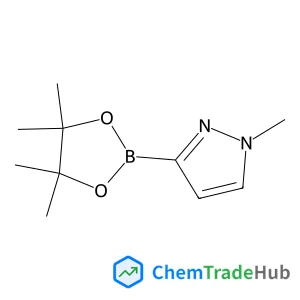
1-Methyl-3-(4,4,5,5-tetramethyl-1,3,2-dioxaborolan-2-yl)-1H-pyrazole
CAS番号:
1020174-04-2
分子式:
C10H17BN2O2
おすすめサプライヤー






免責事項
このページに表示される学術雑誌情報は、参考および研究目的のみを目的としています。当社は雑誌出版社とは提携しておらず、投稿の取り扱いも行っておりません。出版に関するお問い合わせは、各雑誌出版社に直接ご連絡ください。
表示されている情報に誤りがある場合は、support@chemtradehub.com までご連絡ください。迅速に確認し、対応いたします。