


![2-morpholino-2-[2-(trifluoromethyl)pyrimidin-5-yl]ethanamine structure](https://static.chemtradehub.com/structs/119/1192570-20-9-2810.webp "2-morpholino-2-[2-(trifluoromethyl)pyrimidin-5-yl]ethanamine structure")
Investigating the influence of solvent quality on RAFT-mediated PISA of sulfonate-functional diblock copolymer nanoparticles
文献情報
出版日
2020-02-04
DOI
10.1039/C9PY01912J
インパクトファクター
5.582
著者
Shang-Pin Wen, Jack G. Saunders, Lee A. Fielding
原文を見る
要旨
Polymerisation-induced self-assembly (PISA) has become widely recognised as a versatile and efficient strategy to prepare well-defined diblock copolymer nanoparticles in a range of solvents. In this article, we report the synthesis of anionic, sterically-stabilised, sulfonate-functional diblock copolymer nanoparticles via PISA using a reversible addition–fragmentation chain-transfer (RAFT) polymerisation formulation. Anionic poly(potassium 3-sulfopropyl methacrylate) (PKSPMA) macromolecular chain-transfer agents (macro-CTAs) were synthesised via RAFT solution polymerisation followed by chain-extension with benzyl methacrylate (BzMA) in alcohol/water mixtures to form PKSPMA–PBzMA nanoparticles. The influence of solvent quality on the formation of these nanoparticles was investigated by judiciously changing the alcohol/water ratio, the alcohol co-solvent (ethanol or methanol) and relative copolymer composition. The resulting diblock copolymer nanoparticles were analysed by dynamic light scattering (DLS), transmission electron microscopy (TEM), small-angle X-ray scattering (SAXS), and aqueous electrophoresis. The results demonstrated that nanoparticles with controllable diameters for a fixed copolymer composition can be prepared by altering the co-solvent composition. More specifically, when using different ratios of ethanol/water or methanol/water, the nanoparticle diameter can be tuned from approximately 20 to 200 nm with fixed copolymer composition. This indicates that the solvency of both the stabiliser and core-forming block has a marked impact on both the aggregation of polymer chains during self-assembly and the resulting nanoparticles. Additionally, these nanoparticles remain colloidally stable and highly anionic over a wide pH range from 4 to 10, as judged by aqueous electrophoresis.
おすすめジャーナル

Atomization and Sprays

NDT & E International

Acta Metallurgica Sinica-English Letters

Main Group Chemistry

Journal of Chemical Sciences

Bioorganic & Medicinal Chemistry Letters

Herald of the Russian Academy of Sciences

Bioorganic & Medicinal Chemistry

Medicinal Chemistry Research

Journal of Asian Natural Products Research
関連文献
Selective degradation-inducing probes for studying cereblon (CRBN) biology
2021-07-06
Research Article
DOI: 10.1039/D0MD00382D
Retraction: MicroRNA-451 blockade promotes osteoblastic differentiation and skeletal anabolic effects by promoting YWHAZ-mediated RUNX2 protein stabilization
2021-01-26
Retraction
DOI: 10.1039/D1MD90001C
Pharmacokinetics and pharmacodynamics in the treatment of cutaneous leishmaniasis – challenges and opportunities
Katrien Van Bocxlaer, Simon L. Croft
2021-01-07
Review Article
DOI: 10.1039/D0MD00343C
Synthesis and structure–activity relationships of 3,4,5-trisubstituted-1,2,4-triazoles: high affinity and selective somatostatin receptor-4 agonists for Alzheimer's disease treatment
William L. Neumann, Karin E. Sandoval, Shirin Mobayen, Mahsa Minaeian, Stephen G. Kukielski, Khush N. Srabony, Rafael Frare, Olivia Slater, Susan A. Farr, Michael L. Niehoff, Audrey Hospital, Maria Kontoyianni, A. Michael Crider, Ken A. Witt
2021-05-26
Research Article
DOI: 10.1039/D1MD00044F
Using NMR to identify binding regions for N and C-terminal Hsp90 inhibitors using Hsp90 domains
Jeanette R. McConnell, H. Jane Dyson, Shelli R. McAlpine
2021-02-15
Research Article
DOI: 10.1039/D0MD00387E
Synthesis and biological evaluation of N6 derivatives of 8-azapurine as novel antiplatelet agents
Zhichang Zhao, Yeming Wang, Hong Yan, Juan Wang
2021-07-13
Research Article
DOI: 10.1039/D1MD00128K
Modulating β-arrestin 2 recruitment at the δ- and μ-opioid receptors using peptidomimetic ligands
Krishna K. Sharma, Robert J. Cassell, Hongyu Su, Benjamin R. Cummins, Kendall L. Mores, David K. Johnson
2021-08-16
Research Article
DOI: 10.1039/D1MD00025J
The modulatory role of sulfated and non-sulfated small molecule heparan sulfate-glycomimetics in endothelial dysfunction: absolute structural clarification, molecular docking and simulated dynamics, SAR analyses and ADMET studies
Daniel M. Gill, Sabrina A. Shamir, Fiona L. Wilkinson, M. Yvonne Alexander, Marinonio L. Cornelio, Alan M. Jones
2021-04-23
Research Article
DOI: 10.1039/D0MD00366B
こちらもおすすめ
化合物よくある質問
カルボニル基が付いた5-氰基-1-{[(2-メチル-2-プロpanyl)オキシ]カーボンイル}1H-吲哚-2-イリド-2-ボリン酸はどのように保存すればよいですか?
カルボニル基が付いた5-氰基-1-{[(2-メチル-2-プロpanyl)オキシ]カーボンイル}1H-吲哚-2-イリド-2-ボリン酸は、直射日光を避けて室温(15...
475102-15-9(5-Cyano-1-{[(2-meth...
化合物よくある質問
tert-ブチル2-クロロメチルピリジン-3-基炭酸エステルの市場動向や研究トレンドはどうですか?
この化合物は合成化学分野において、特にピリジン化合物の合成や改良に用いられます。最近の研究では、ピリジン化合物の新規合成法や特性の改良が注目されています。市場動...
1203498-98-9tert-Butyl 2-chloro-...
化合物よくある質問
聚二季戊四醇六丙烯酸酯はどの業界で使用されていますか?
聚二季戊四醇六丙烯酸酯は、医薬品、ポリマー、センサー、半導体などの業界で広く使用されています。特にポリマー業界では硬化剤として、医薬分野では医療機器の製造に使用...
29570-58-93-(Acryloyloxy)-2-({...
化合物よくある質問
1-氯-5-硝基异喹啉の市場動向や研究トレンドはどうですか?
1-氯-5-硝基异喹啉は、薬理学や合成化学の研究分野で注目されています。市場動向としては、その生物学的な活性や合成可能性を評価する研究が増えています。また、代替...
58142-97-51-Chloro-5-nitroisoq...
化合物よくある質問
2-チロール-5-メチルスルフェニル-3-trifルオルメチルベンゼンはどのように合成されますか?
2-チロール-5-メチルスルフェニル-3-trifルオルメチルベンゼンは、トリフルオロメチル化反応と硫化反応を経て合成されます。通常、トリフルオロメチル化剤と硫...
957066-04-51-Chloro-4-(methylsu...
化合物よくある質問
p-トールイルマグネシウムブロミドの物理化学的性質は何ですか?
p-トールイルマグネシウムブロミドのCAS番号は4294-57-9です。この化合物は白色の結晶性粉末で、分子量は204.32です。溶剤中で良好に溶解しますが、水...
4294-57-9p-Tolylmagnesium bro...
化合物よくある質問
1-(5-甲基-2-硫化素基)プロパン-1-酮の市場動向や研究トレンドはどうですか?
1-(5-甲基-2-硫化素基)プロパン-1-酮の市場動向は、化学産業全体の需要に影響を受けますが、最近では pharmaceutical 分野での応用が注目され...
59303-13-81-(5-Methyl-2-thieny...
化合物よくある質問
十一碳烯酰甘氨酸を取り扱う際の実験室安全事項は何ですか?
十一碳烯酰甘氨酸は吸入や皮膚から吸収されることがあり、取り扱う際には防塵マスクと手袋を使用してください。ドラフトチャンバーを用いて漏洩を処理し、適切なSDS(S...
54301-26-7N-10-Undecenoylglyci...
化合物よくある質問
1H,1H-全氟-3,6-二氧杂葵-1-醇を取り扱う際の実験室安全事項は何ですか?
この化合物は吸入や皮膚吸収による毒性があるため、防塵マスク、ゴーグル、防護手袋を使用する必要があります。ドラフトチャンバーでの操作が必要です。漏洩時には即座に換...
152914-73-32,2-Difluoro-2-[1,1,...
化合物よくある質問
3-(4-(フルオロメチルオキシ)フェニル)-1,2,4-オキサジアゾール-5-カルボハイドライドは安全ですか?
安全性は化合物の使用方法によります。直接的な毒性は報告されていませんが、吸入や皮膚接触には注意が必要です。適切な防護服を着用し、換気を図ることを推奨します。
883028-82-83-(4-(Trifluorometho...
掲載誌
Polymer Chemistry

CiteScore:
8.6
自己引用率:
7.3%
年間論文数:
457
Polymer Chemistry welcomes submissions in all areas of polymer science that have a strong focus on macromolecular chemistry. Manuscripts may cover a broad range of fields, yet no direct application focus is required.
おすすめ化合物
![(3-{[4-(Aminomethyl)-6-(trifluoromethyl)-2-pyridinyl]oxy}phenyl)[(3R,4R)-3-fluoro-4-hydroxy-1-pyrrolidinyl]methanone structure](https://static.chemtradehub.com/structs/200/2007885-39-2-affc.webp "(3-{[4-(Aminomethyl)-6-(trifluoromethyl)-2-pyridinyl]oxy}phenyl)[(3R,4R)-3-fluoro-4-hydroxy-1-pyrrolidinyl]methanone structure")
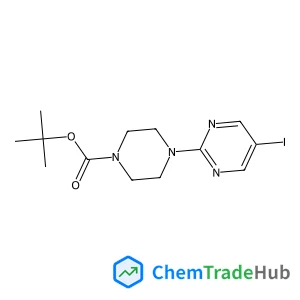
2-Methyl-2-propanyl 4-(5-iodo-2-pyrimidinyl)-1-piperazinecarboxylate
CAS番号:
1027616-32-5
分子式:
C13H19IN4O2
おすすめサプライヤー




免責事項
このページに表示される学術雑誌情報は、参考および研究目的のみを目的としています。当社は雑誌出版社とは提携しておらず、投稿の取り扱いも行っておりません。出版に関するお問い合わせは、各雑誌出版社に直接ご連絡ください。
表示されている情報に誤りがある場合は、support@chemtradehub.com までご連絡ください。迅速に確認し、対応いたします。