











Transmembrane H+/Cl− cotransport activity of bis(amido)imidazole receptors
文献情報
出版日
2019-04-01
DOI
10.1039/C9OB00554D
インパクトファクター
3.876
著者
Sopan Valiba Shinde, Pinaki Talukdar
原文を見る
要旨
A series of sickle-shaped bis(amido) imidazoles are synthesized for their ion transport studies. Proton–anion binding by the neutral and protonated form of receptors assessed by 1H-NMR titration experiments confirmed better chloride binding by the protonated form of a receptor compared to its neutral form. The transport experiments across unimolecular vesicles (by HPTS and lucigenin assays) confirmed the H+/Cl− symport process under the applied pH gradient conditions. The transporter also allows anion antiport as evident from the studies under symmetrical pH conditions. The ionophoric activity by the mobile carrier mechanism is proved by the U-tube experiment.
関連文献
Is energy transfer limiting multiphotochromism? answers from ab initio quantifications
Roberto Russo, Lorenzo Cupellini, Benedetta Mennucci
2016-12-19
Paper
DOI: 10.1039/C6CP07458H
A simple guiding principle for the temperature dependence of the solubility of light gases in imidazolium-based ionic liquids derived from molecular simulations
Daniela Kerlé, Majid Namayandeh Jorabchi, Sebastian Wohlrab, Dietmar Paschek
2016-11-08
Paper
DOI: 10.1039/C6CP06792A
Comment on “trans-1,2-Disiloxybenzocyclobutene, an adequate partner for the auto-oxidation: EPR/spin trapping and theoretical studies” by J. Drujon et al., Phys. Chem. Chem. Phys., 2014, 16, 7513
Hans-Gert Korth, Peter Mulder, Thomas Paul
2016-12-21
Comment
DOI: 10.1039/C6CP04187F
Gold-supported two-dimensional cobalt oxyhydroxide (CoOOH) and multilayer cobalt oxide islands
Jakob Fester, Alex Walton, Zheshen Li, Jeppe V. Lauritsen
2016-12-21
Paper
DOI: 10.1039/C6CP07901F
Sensitized ZnO nanorod assemblies to detect heavy metal contaminated phytomedicines: spectroscopic and simulation studies
Damayanti Bagchi, Tuhin Kumar Maji, Samim Sardar, Chinmoy Bhattacharya, Debjani Karmakar, Samir Kumar Pal
2016-12-20
Paper
DOI: 10.1039/C6CP08016B
Three-dimensional metal–organic framework derived porous CoP3 concave polyhedrons as superior bifunctional electrocatalysts for the evolution of hydrogen and oxygen
Tianli Wu, Mingyu Pi, Xiaodeng Wang, Dingke Zhang, Shijian Chen
2016-12-14
Paper
DOI: 10.1039/C6CP07294A
Liberation of three dihydrogens from two ethene molecules as mediated by the tantalum nitride anion cluster Ta3N2− at room temperature
Ji-Chuang Hu, Lin-Lin Xu, Hai-Fang Li, David Yubero Valdivielso, André Fielicke, Sheng-Gui He, Jia-Bi Ma
2016-11-29
Paper
DOI: 10.1039/C6CP06896K
Jahn–Teller effect in LiMn2O4: influence on charge ordering, magnetoresistance and battery performance
K. Ragavendran, H. Xia, P. Mandal, A. K. Arof
2016-12-12
Paper
DOI: 10.1039/C6CP07289E
こちらもおすすめ
化合物よくある質問
4'-ブロモビフェニル-3-メトークシーディ.ActionBarはどのように保存すればよいですか?
4'-ブロモビフェニル-3-メトークシーディ.ActionBarは、冷暗所で、直射日光を避け、密栓の容器に保存し、遠隔場所に保管してください。温度は常温(0〜2...
149506-25-24'-Bromo-biphenyl-3-...
2947-60-6(3-Methylphenyl)acet...
化合物よくある質問
2-異丙基フェニルヒドラジン塩酸塩とは何ですか?
2-異丙基フェニルヒドラジン塩酸塩は、CAS番号58928-82-8を有する化合物で、構造式はC11H14N2HClです。これは塩基性化合物であり、水に溶けやす...
58928-82-8(2-Isopropylphenyl)h...
化合物よくある質問
5-(4-クロロフェニル)-4H-1,2,4-三氮唑-3-アミンを取り扱う際の実験室安全事項は何ですか?
5-(4-クロロフェニル)-4H-1,2,4-三氮唑-3-アミンは取り扱いに注意が必要です。PPEとして防塵マスク、ゴーグル、手袋を使用し、ドラフトチャンバーを...
98554-00-85-(4-Chlorophenyl)-1...
化合物よくある質問
去甲基雷贝拉唑硫醚はどのように合成されますか?
去甲基雷贝拉唑硫醚は、ベンジミダゾール硫化物と3-メチル-4-ピリジノールの反応によって合成されます。具体的には、2-チオキシドベンジミダゾールと3-メチル-4...
117976-91-73-({2-[(1H-Benzimida...
化合物よくある質問
2-ブロモ-5-フロロ-N-(2-フェノールメチル)ベンゼンウレアは安全ですか?
2-ブロモ-5-フロロ-N-(2-フェノールメチル)ベンゼンウレアは、毒性や刺激性の実験データに基づき、適切な取扱いと防護措置を講じることで安全に使用できます。...
923722-86-52-Bromo-5-fluoro-N-(...
化合物よくある質問
対甲苯磺酸酯-四聚乙二醇-四氢吡喃醚の物理化学的性質は何ですか?
対甲苯磺酸酯-四聚乙二醇-四氢吡喃醚のCAS番号は86259-89-4です。この化合物は無色の液体で、分子量は約724.8です。高濃度では溶血性が報告されており...
86259-89-42-(2-{2-[2-(Tetrahyd...
化合物よくある質問
2-(3-(二氟甲基)-4-氟苯基)-4,4,5,5-四甲基-1,3,2-二噁硼戊環はどのように保存すればよいですか?
2-(3-(二氟甲基)-4-氟苯基)-4,4,5,5-四甲基-1,3,2-二噁硼戊環は、室温で暗い場所に保管し、直射日光から遠ざけ、容器は密閉状態で保存してくだ...
445303-65-12-[3-(difluoromethyl...
化合物よくある質問
6-アミノ-5-クロロ-2-シクロプロピルピリミジンカルボン酸の代替品はありますか?
この化合物の代替品には、ピロリミジン酸やその類似物、またピロリミジンカルボン酸の他の異性体があります。これらの代替品は、特定の化学反応や目的に応じて選択すること...
858956-08-86-Amino-5-chloro-2-c...
化合物よくある質問
5-クロロベンゾ[1,3]二オキセイン-4-アミンに適用される法規ガイドラインは何ですか?
5-クロロベンゾ[1,3]二オキセイン-4-アミンはCAS番号379228-45-2に該当します。この化合物はGHS分類でH314(接触により急性毒性がある)と...
379228-45-25-Chloro-1,3-benzodi...
掲載誌
Organic & Biomolecular Chemistry

CiteScore:
3.4
自己引用率:
10.3%
年間論文数:
1041
Organic & Biomolecular Chemistry (OBC) publishes original and high impact research and reviews in organic chemistry. We welcome research that shows new or significantly improved protocols or methodologies in total synthesis, synthetic methodology or physical and theoretical organic chemistry as well as research that shows a significant advance in the organic chemistry or molecular design aspects of chemical biology, catalysis, supramolecular and macromolecular chemistry, theoretical chemistry, mechanism-oriented physical organic chemistry, medicinal chemistry or natural products. Articles published in the journal should report new work which makes a highly-significant impact in the field. Routine and incremental work is generally not suitable for publication in the journal. More details about key areas of our scope are below. In all cases authors should include in their article clear rationale for why their research has been carried out.
おすすめ化合物
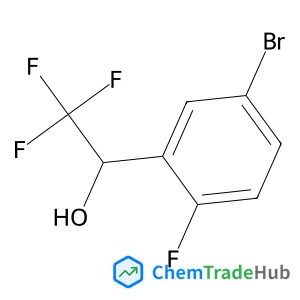
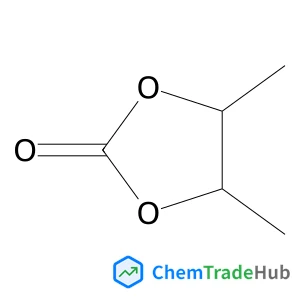
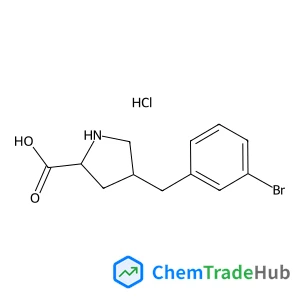
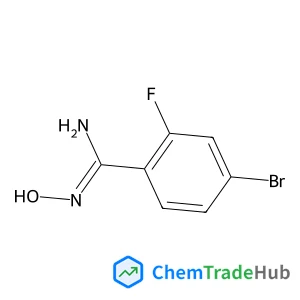
(2S,4R)-4-(3-Bromobenzyl)pyrrolidine-2-carboxylic acid hydrochloride
CAS番号:
1049734-10-2
分子式:
C12H15BrClNO2
おすすめサプライヤー






免責事項
このページに表示される学術雑誌情報は、参考および研究目的のみを目的としています。当社は雑誌出版社とは提携しておらず、投稿の取り扱いも行っておりません。出版に関するお問い合わせは、各雑誌出版社に直接ご連絡ください。
表示されている情報に誤りがある場合は、support@chemtradehub.com までご連絡ください。迅速に確認し、対応いたします。