












Direct evidence for the influence of lithium ion vacancies on polaron transport in nanoscale LiFePO4
文献情報
出版日
2019-04-15
DOI
10.1039/C9CP00408D
インパクトファクター
3.676
著者
Azeem Banday, Mahboob Ali, Raghvendra Pandey, Sevi Murugavel
原文を見る
要旨
Improving the electronic conductivity in lithium-based compounds can considerably impact the design of rechargeable batteries. Here, we explore the influence of lithium ion vacancies on the electronic conductivity of LiFePO4, an active cathode material, by varying the crystallite sizes. We find that about 17% lithium ion vacancy concentration leads to an enhancement in electronic conductivity of about two orders of magnitude at 313 K with respect to our initial crystallite size. We attribute the enhanced electronic conductivity to the lithium ion vacancy concentration in addition to the reduced hopping length. The lithium ion vacancies are the source of polarons in LiFePO4, which increases with decreasing crystallite size due to the surface energy kinetics. The substantial increase in the polaronic sites (Fe3+) at a lower crystallite size leads to a reduction in lattice parameters including the unit cell volume. The analysis of temperature dependent dc conductivity within the framework of the Mott model of polaron conduction enables us to quantify the various physical parameters associated with polaron hopping in LiFePO4.
関連文献
Eco-solvents – cluster-formation, surfactantless microemulsions and facilitated hydrotropy
Michael L. Klossek, Didier Touraud, Werner Kunz
2013-05-24
Paper
DOI: 10.1039/C3CP50636C
The interaction of H2O2 with TiAlPO-5 molecular sieves: probing the catalytic potential of framework substituted Ti ions
Chiara Novara, Almudena Alfayate, Gloria Berlier, Sara Maurelli, Mario Chiesa
2013-05-03
Paper
DOI: 10.1039/C3CP51214B
The interactions of methyl tert-butyl ether on high silicazeolites: a combined experimental and computational study
G. Berlier, R. Bagatin
2013-07-02
Paper
DOI: 10.1039/C3CP51684A
First principles intensity calculations of the methane rovibrational spectra in the infrared up to 9300 cm−1
Michaël Rey, Vladimir G. Tyuterev
2013-04-12
Paper
DOI: 10.1039/C3CP50275A
Design and synthesis of Pd–MnO2 nanolamella–graphene composite as a high-performance multifunctional electrocatalyst towards formic acid and methanol oxidation
Huajie Huang, Xin Wang
2013-04-22
Paper
DOI: 10.1039/C3CP51569A
Ligand field density functional theory calculation of the 4f2 → 4f15d1 transitions in the quantum cutter Cs2KYF6:Pr3+
Harry Ramanantoanina, Fanica Cimpoesu, Claude Daul
2013-06-19
Paper
DOI: 10.1039/C3CP51344K
Intramolecular proton transfer (IPT) in alkoxyamine: a theoretical investigation
Sylvain R. A. Marque, Didier Siri
2013-07-10
Paper
DOI: 10.1039/C3CP50821H
Ab initio insight into ultrafast nonadiabatic decay of hypoxanthine: keto-N7H and keto-N9H tautomers
Xugeng Guo, Zhenggang Lan, Zexing Cao
2013-04-23
Paper
DOI: 10.1039/C3CP44718A
Thermal and electrochemical decomposition of lithium peroxide in non-catalyzed carbon cathodes for Li–air batteries
H. Beyer, S. Meini, N. Tsiouvaras, M. Piana, H. A. Gasteiger
2013-05-10
Paper
DOI: 10.1039/C3CP51056E
こちらもおすすめ
化合物よくある質問
オステニ二甲磺酸塩に適用される法規ガイドラインは何ですか?
オステニ二甲磺酸塩は、GHS分類に基づき corrosive 物質として分類されます。REACH規則では、該当物質の登録が要求される可能性があります。また、FD...
2070014-82-1N-(2-{[2-(Dimethylam...
化合物よくある質問
環丁基肼盐酸盐は安全ですか?
環丁基肼盐酸盐は毒性があり、吸入や皮膚接触は有害です。使用時の安全対策として、密閉システムを使用し、適切な排気設備を備えた場所で作業することが推奨されます。
1156980-49-2Cyclobutylhydrazine ...
化合物よくある質問
N-(4-パリドン基ソニルフェニル)硫代イソシアネートを取り扱う際の実験室安全事項は何ですか?
N-(4-パリドン基ソニルフェニル)硫代イソシアネートは高毒性で、皮膚や吸入による毒性があります。取り扱う際は防毒マスク、保護用手袋、保護眼鏡などのPPEを着用...
7356-55-01-[(4-Isothiocyanato...
化合物よくある質問
5-ヒドロキシ-1,3-ジヒドロ-2H-インドン-2-酮の物理化学的性質は何ですか?
CAS番号3416-18-0の5-ヒドロキシ-1,3-ジヒドロ-2H-インドン-2-酮は、結晶性の白色粉末です。分子量は228.25であり、 aqueous m...
3416-18-05-Hydroxy-1,3-dihydr...
化合物よくある質問
O-苄基-D-丝氨醇はどのように合成されますか?
O-苄基-D-丝氨醇は、D-アミノ酸とベンゼン環の経由で合成されます。触媒としてジメチルアミノピリジンが使用され、選択性は高いです。一般的な収率は約90%です。
58577-88-1(s)-2-Amino-3-benzyl...
化合物よくある質問
ナトリウム3-ヒドロキシbutano酸とは何ですか?
ナトリウム3-ヒドロキシbutano酸は、CAS番号13613-65-5で登録されている化合物です。この化合物は、(3R)-3-ヒドロキシbutano酸とナトリ...
13613-65-5sodium;(3R)-3-hydrox...
化合物よくある質問
1-(二苯甲基)-4-甲基ベンゼンの物理化学的性質は何ですか?
CAS番号603-37-2の1-(二苯甲基)-4-甲基ベンゼンは、結晶性の固体で、分子量は244.28であり、水中的には微溶です。この化合物は有機反応において中...
603-37-21-(Diphenylmethyl)-4...
化合物よくある質問
ネアミン塩酸塩の物理化学的性質は何ですか?
ネアミン塩酸塩の分子量は321.19であり、結晶性の白色粉末です。この化合物は水に溶けやすく、pHが低くなると不溶性になります。反応活性は高く、水溶液中の酸化還...
15446-43-2NEAMINE HYDROCHLORID...
化合物よくある質問
偶氮二甲酰二哌啶の主な用途は何ですか?
偶氮二甲酰二哌啶は、医薬品、染料、高 Então 剤、触媒、溶媒、量論試薬など、様々な分野で使用されています。特に、高 Enough 反応において、グリコール酸...
10465-81-3(E)-1,2-Diazenediylb...
664969-54-44-[(2E)-3-Phenyl-2-p...
掲載誌
Physical Chemistry Chemical Physics

CiteScore:
5.5
自己引用率:
10.3%
年間論文数:
3036
Physical Chemistry Chemical Physics (PCCP) is an international journal co-owned by 19 physical chemistry and physics societies from around the world. This journal publishes original, cutting-edge research in physical chemistry, chemical physics and biophysical chemistry. To be suitable for publication in PCCP, articles must include significant innovation and/or insight into physical chemistry; this is the most important criterion that reviewers and Editors will judge against when evaluating submissions. The journal has a broad scope and welcomes contributions spanning experiment, theory, computation and data science. Topical coverage includes spectroscopy, dynamics, kinetics, statistical mechanics, thermodynamics, electrochemistry, catalysis, surface science, quantum mechanics, quantum computing and machine learning. Interdisciplinary research areas such as polymers and soft matter, materials, nanoscience, energy, surfaces/interfaces, and biophysical chemistry are welcomed if they demonstrate significant innovation and/or insight into physical chemistry. Joined experimental/theoretical studies are particularly appreciated when complementary and based on up-to-date approaches.
おすすめ化合物
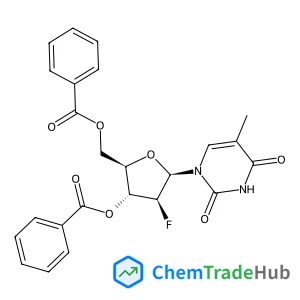
1-(3',5'-Di-O-benzoyl-2'-deoxy-2'-fluoro-b-D-arabinofuranosyl)thymine
CAS番号:
97614-47-6
分子式:
C24H21FN2O7
![4-[(4-Bromophenyl)sulfonyl]thiomorpholine structure](https://static.chemtradehub.com/structs/223/223555-81-5-2d67.webp "4-[(4-Bromophenyl)sulfonyl]thiomorpholine structure")
おすすめサプライヤー





免責事項
このページに表示される学術雑誌情報は、参考および研究目的のみを目的としています。当社は雑誌出版社とは提携しておらず、投稿の取り扱いも行っておりません。出版に関するお問い合わせは、各雑誌出版社に直接ご連絡ください。
表示されている情報に誤りがある場合は、support@chemtradehub.com までご連絡ください。迅速に確認し、対応いたします。