












Guanidine functionalized anthranilamides as effective antibacterials with biofilm disruption activity
文献情報
出版日
2018-07-19
DOI
10.1039/C8OB01699B
インパクトファクター
3.876
著者
Rajesh Kuppusamy, Muhammad Yasir, Eugene Yee, Mark Willcox, David StC. Black, Naresh Kumar
原文を見る
要旨
We describe a library of amphiphilic anthranilamide compounds as antimicrobial peptide (AMP) mimics. These contain a hydrophobic naphthoyl side chain and different hydrophilic cationic groups such as amino, quaternary ammonium and guanidino groups. These are prepared via the ring-opening of different isatoic anhydrides. The antibacterial activity against S. aureus and E. coli of compounds containing guanidino cationic groups was greater than that for amino and quaternary ammonium cationic groups. The fluoro-substituted guanidinium compound 9b showed a minimum inhibitory concentration (MIC) of 2.0 μM against S. aureus, and reduced established biofilms of S. aureus by 92% at 64 μM concentration. The bromo-substituted guanidinium compound 9d exhibited good MIC against S. aureus (3.9 μM) and E. coli (15.6 μM) and disrupted established biofilms of S. aureus by 83% at 62.4 μM concentration. Cytoplasmic membrane permeability studies suggested that depolarization and disruption of the bacterial cell membrane could be a possible mechanism for antibacterial activity and the in vitro toxicity studies against MRC-5 human lung fibroblast cells showed that the potent compounds are non-toxic against mammalian cells.
関連文献
Phenolate anion-catalyzed direct activation of inert alkyl chlorides driven by visible light
Delian Wei, Xipan Li, Lei Shen, Yuzhen Ding, Kangjiang Liang, Chengfeng Xia
2021-09-17
Research Article
DOI: 10.1039/D1QO01128F
Bioinspired cyclization of in situ generated γ-indolyl β,γ-unsaturated α-keto esters via an oxidative enamine process: facile approaches to pyrano[2,3-b]indoles
Man Wang, Qirui Xiang, Wen Si, Ran Song, Daoshan Yang, Ming Li, Jian Lv
2021-09-17
Research Article
DOI: 10.1039/D1QO00996F
Electrophilic carbocyclization reactions of 2-(2-alkynylphenyl)amino-1,4-naphthoquinones
Chang-You Sie, Che-Ping Chuang
2018-07-19
Paper
DOI: 10.1039/C8OB01170B
A fluorescence-enhanced chemosensor based on multifarene[2,2] and its recognition of metal cations
Yin-Hui Huang, Yong-Yi Zhao, Hang Cong, Zhu Tao
2018-07-05
Paper
DOI: 10.1039/C8OB01315B
Correction: Dibenzofuran-4,6-bis(oxazoline) (DBFOX). A novel trans-chelating bis(oxazoline) ligand for asymmetric reactions
Kennosuke Itoh, Mukund P. Sibi
2018-08-09
Correction
DOI: 10.1039/C8OB90113A
Regio- and stereoselective cobalt-catalyzed hydrosilylation of 1,3-diynes with primary and secondary silanes
Shaocong Shen, Zhijian Zong, Nan Sun, Baoxiang Hu, Zhenlu Shen, Xinquan Hu
2021-09-15
Research Article
DOI: 10.1039/D1QO00939G
Divergent biosynthesis of indole alkaloids FR900452 and spiro-maremycins
Yingyi Duan, Yanyan Liu, Tao Huang, Yi Zou, Tingting Huang, Kaifeng Hu, Zixin Deng, Shuangjun Lin
2018-07-18
Paper
DOI: 10.1039/C8OB01181H
Synthesis of the C19–C30 bis-THF fragment of iriomoteolide-13a via stepwise SN2 cyclization and intramolecular syn-oxypalladation
Hui Zhao, Haichen Ma, Tsz Chun Yip, Wei-Min Dai
2021-10-05
Research Article
DOI: 10.1039/D1QO01049B
Molecularly imprinted artificial esterases with highly specific active sites and precisely installed catalytic groups
Lan Hu, Yan Zhao
2018-07-24
Communication
DOI: 10.1039/C8OB01584H
こちらもおすすめ
28770-01-62-(2-Isopropyl-1,3-o...
化合物よくある質問
「邻羟基阿托伐他汀内酯标准品」に適用される法規ガイドelinesは何ですか?
CAS番号163217-74-1の「邻羟基阿托伐他汀内酯标准品」は、GHS分類では危険物に分類されず、主にREACH規則とFDA/EPAの管理対象となります。R...
163217-74-1ortho-Hydroxy Atorva...
化合物よくある質問
メチル(3R)-3-アミノ-2,3-ジヒドロ-1-ベンゾファンラニン-5-カルボイル酸塩塩酸塩の主な用途は何ですか?
メチル(3R)-3-アミノ-2,3-ジヒドロ-1-ベンゾファンラニン-5-カルボイル酸塩塩酸塩は、医薬品や合成化学の研究に広く用いられます。また、特定の薬物の前...
2241594-15-8Methyl (3R)-3-amino-...
化合物よくある質問
トランス-4-メチルピロリジン-3-オール塩酸塩はどのように合成されますか?
トランス-4-メチルピロリジン-3-オール塩酸塩は、4-メチルピロリジンの塩酸塩化によって合成されます。一般的な合成方法では、4-メチルピロリジンを塩酸に加えて...
265108-42-7trans-4-Methylpyrrol...
化合物よくある質問
硫雜環丁烷-1,1-二氧化物は安全ですか?
硫雜環丁烷-1,1-二氧化物は安全ではありません。毒性は報告されていませんが、高温下で分解し、可燃性があるため、高圧ガスは注意が必要です。密閉した容器で保管し、...
5687-92-3Thietane 1,1-dioxide
6054-10-02H, 8H-Benzo[1,2-b
化合物よくある質問
9-ヒドロキシエリプチシネ塩酸塩はどのように合成されますか?
9-ヒドロキシエリプチシネ塩酸塩は、エリプチシネから塩酸を添加することで合成されます。選択性は高いですが、収率は約70%です。
52238-35-49-Hydroxyellipticine...
化合物よくある質問
5-塩素-2-(メチルアミノ)フェニル-(2-塩素フェニル)メタン酮の物理化学的性質は何ですか?
5-塩素-2-(メチルアミノ)フェニル-(2-塩素フェニル)メタン酮のCAS番号は5621-86-3です。この化合物は白色の結晶性粉末で、分子量は415.03で...
5621-86-3[5-Chloro-2-(methyla...
化合物よくある質問
1-[2-(4-甲氧基-苯氧基)-乙基]-哌嗪はどのように保存すればよいですか?
1-[2-(4-甲氧基-苯氧基)-乙基]-哌嗪は、直射日光を避けて暗所に、室温(15-25℃)で保管し、密閉容器に入れることで安定性を保つことができます。
117132-44-21-[2-(4-Methoxy-phen...
化合物よくある質問
2-[3-(4-甲氧基フェニル)プロピル]-4,4,5,5-四メチル-1,3,2-ドイボロロールアンの主な用途は何ですか?
2-[3-(4-甲氧基フェニル)プロピル]-4,4,5,5-四メチル-1,3,2-ドイボロロールアンは、医薬品の合成、有機合成化学、および新材料の研究で使用され...
1073371-72-82-[3-(4-Methoxypheny...
掲載誌
Organic & Biomolecular Chemistry

CiteScore:
3.4
自己引用率:
10.3%
年間論文数:
1041
Organic & Biomolecular Chemistry (OBC) publishes original and high impact research and reviews in organic chemistry. We welcome research that shows new or significantly improved protocols or methodologies in total synthesis, synthetic methodology or physical and theoretical organic chemistry as well as research that shows a significant advance in the organic chemistry or molecular design aspects of chemical biology, catalysis, supramolecular and macromolecular chemistry, theoretical chemistry, mechanism-oriented physical organic chemistry, medicinal chemistry or natural products. Articles published in the journal should report new work which makes a highly-significant impact in the field. Routine and incremental work is generally not suitable for publication in the journal. More details about key areas of our scope are below. In all cases authors should include in their article clear rationale for why their research has been carried out.
おすすめ化合物
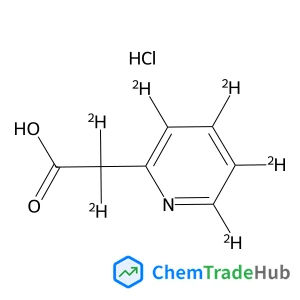
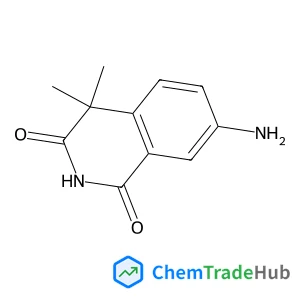
2,2-dideuterio-2-(3,4,5,6-tetradeuterio-2-pyridyl)acetic acid;hydrochloride
CAS番号:
1329799-67-8
分子式:
C7H2ClD6NO2
おすすめサプライヤー





免責事項
このページに表示される学術雑誌情報は、参考および研究目的のみを目的としています。当社は雑誌出版社とは提携しておらず、投稿の取り扱いも行っておりません。出版に関するお問い合わせは、各雑誌出版社に直接ご連絡ください。
表示されている情報に誤りがある場合は、support@chemtradehub.com までご連絡ください。迅速に確認し、対応いたします。