












Tuning the magnetic properties of beryllium chains
文献情報
出版日
2019-02-27
DOI
10.1039/C8CP07159D
インパクトファクター
3.676
著者
Noelia Faginas-Lago, Thierry Leininger, Stefano Evangelisti
原文を見る
要旨
In this work we explore the effect of confining beryllium chains inside carbon nanotubes. Linear Ben systems are characterized by two states originating from the presence of edge orbitals localized at the chain extremities. The two spins occupying these orbitals are, in the gas phase, antiferromagnetically coupled, with the magnetic coupling J decaying exponentially as a function of increasing length of the chain. When inserted into narrow carbon nanotubes, the linear geometry is found to be more stable than the more compact cluster conformation favored for the isolated case: the lack of space inside the cavity prevents the chain from folding. Most importantly, the presence of the surrounding nanotube not only preserves the linear structure of Ben, but affects its magnetic properties too. In particular it was found that the magnetic coupling between the ground and the first excited state can be modulated according to the nanotube diameter as well as the chain length, and our calculations suggest a possible direct relationship between these parameters and J. This behavior can be exploited to engineer a composite Ben@CNT system with the magnetic coupling tuned by construction, with interesting potential applications.
関連文献
Hollow anatase TiO2 tetrakaidecahedral crystals with an active {001}/{110} redox interface toward high-performance photocatalytic activity
Liming Sun, Yaya Yuan, Xiaoxiao He, Wenwen Zhan, Dong Li, Yanli Zhao, Xiao-Jun Wang, Xiguang Han
2023-12-05
Edge Article
DOI: 10.1039/D3SC04328B
Cooperatively designed aptamer-PROTACs for spatioselective degradation of nucleocytoplasmic shuttling protein for enhanced combinational therapy
Ran Liu, Zheng Liu, Mohan Chen, Hang Xing, Penghui Zhang, Jingjing Zhang
2023-11-29
Edge Article
DOI: 10.1039/D3SC04249A
Photocatalytic ethane conversion on rutile TiO2(110): identifying the role of the ethyl radical
Fangliang Li, Yuemiao Lai, Yi Zeng, Xiao Chen, Tao Wang, Qing Guo
2023-11-27
Edge Article
DOI: 10.1039/D3SC05623F
Engineered aptamers for molecular imaging
Bingqian Lin, Feng Xiao, Jinting Jiang, Zhengjia Zhao, Xiang Zhou
2023-11-21
Review Article
DOI: 10.1039/D3SC03989G
An efficient and chemoselective method to generate arynes‡
Bryan E. Metze, Riley A. Roberts, Aleksandra Nilova, David R. Stuart
2023-11-17
Edge Article
DOI: 10.1039/D3SC05429B
Computationally guided bioengineering of the active site, substrate access pathway, and water channels of thermostable cytochrome P450, CYP175A1, for catalyzing the alkane hydroxylation reaction
Mohd Taher, Kshatresh Dutta Dubey, Shyamalava Mazumdar
2023-12-04
Edge Article
DOI: 10.1039/D3SC02857G
Dynamic sampling of liquid metal structures for theoretical studies on catalysis
Charlie Ruffman, Krista G. Steenbergen, Anna L. Garden, Nicola Gaston
2023-11-29
Edge Article
DOI: 10.1039/D3SC04416E
Optimizing copper nanoparticles with a carbon shell for enhanced electrochemical CO2 reduction to ethanol
Ting Yao, Wei Xia, Shitao Han, Shuaiqiang Jia, Xue Dong, Min Wang, Jiapeng Jiao, Dawei Zhou, Jiahao Yang, Xueqing Xing, Chunjun Chen
2023-11-24
Edge Article
DOI: 10.1039/D3SC04061E
Exo-cage catalysis and initiation derived from photo-activating host–guest encapsulation
Rebecca L. Spicer, Helen M. O'Connor, Yael Ben-Tal, Hang Zhou, Patrick J. Boaler, Fraser C. Milne, Euan K. Brechin, Guy. C. Lloyd-Jones, Paul J. Lusby
2023-11-22
Edge Article
DOI: 10.1039/D3SC04877B
Native mass spectrometry of proteoliposomes containing integral and peripheral membrane proteins
Yun Zhu, Sangho D. Yun, Tianqi Zhang, Jing-Yuan Chang, Lauren Stover, Arthur Laganowsky
2023-11-21
Edge Article
DOI: 10.1039/D3SC04938H
こちらもおすすめ
化合物よくある質問
2-ブロモ-9,9-ジフェニル-9H-フルオレンの主な用途は何ですか?
2-溴-9,9-二苯基芴は、医薬品、工業材料、有機合成の研究分野で応用されます。特に、レーザー材料や機能性ポリマーの合成に使用されることがあります。また、蛍光色...
474918-32-62-Bromo-9,9-diphenyl...
化合物よくある質問
四氯化铱の市場動向や研究トレンドはどうですか?
四氯化铱の市場は研究開発分野で注目されており、特にナノ技術や金属有機框架(MOFs)の分野での需要が増加傾向にあります。価格は安定しており、中国や韓国での生産が...
207399-11-9Tetrachloroiridium h...
882-06-44-Nitrocinnamic acid
化合物よくある質問
1-(4-溴-3-氟苯基)-2-氯乙酮を含む廃棄物はどのように処理すべきですか?
1-(4-溴-3-氟苯基)-2-氯乙酮 (CAS番号: 1260857-14-4) の廃棄物は専門的な廃棄処理が必要です。まず、廃棄物は密閉された容器に収集し、...
1260857-14-41-(4-Bromo-3-fluorop...
化合物よくある質問
苦参酚Kとは何ですか?
苦参酚Kは、CAS番号101236-49-1を持つ化合物で、主に天然由来の生薬から抽出されます。この化合物は、抗炎症作用や抗癌作用を持つことが報告されています。
101236-49-1Kushenol K
化合物よくある質問
POTASSIUM (1-(TERTBUTOXYCARBONYL)AZETIDIN-3-YL)TRIFLUOROBORATE を含む廃棄物はどのように処理すべきですか?
POTASSIUM (1-(TERTBUTOXYCARBONYL)AZETIDIN-3-YL)TRIFLUOROBORATE を含む廃棄物は、まず安全なエント...
1430219-73-0Potassium (1-(tert-b...
化合物よくある質問
4-庚基-4’-联苯羧酸の市場動向や研究トレンドはどうですか?
4-庚基-4’-聯苯羧酸は、特殊化学品や合成化学の分野で用いられる化学物質ですが、市場動向としては、研究開発の進展とともに需要が増加しています。また、環境配慮型...
58573-94-74'-Heptyl-4-biphenyl...
化合物よくある質問
6-ブロモ-3-メトキシ-1-フェニル-1H-インドゾールを含む廃棄物はどのように処理すべきですか?
6-ブロモ-3-メトキシ-1-フェニル-1H-インドゾールを含む廃棄物は、適切な化学廃棄処理が必要です。通常、廃棄物は密閉容器に収集され、専門の廃棄処理業者に引...
1332527-03-36-Bromo-3-methoxy-1-...
化合物よくある質問
4,4-二甲基-2-吡咯烷酮はどの業界で使用されていますか?
4,4-二甲基-2-吡咯烷酮は医薬、ポリマー、センサー、半導体などの業界で広く使用されています。特に溶媒としての性能が高く評価されています。
66899-02-34,4-dimethylpyrrolid...
51312-42-6Sodium Phosphotungst...
掲載誌
Physical Chemistry Chemical Physics

CiteScore:
5.5
自己引用率:
10.3%
年間論文数:
3036
Physical Chemistry Chemical Physics (PCCP) is an international journal co-owned by 19 physical chemistry and physics societies from around the world. This journal publishes original, cutting-edge research in physical chemistry, chemical physics and biophysical chemistry. To be suitable for publication in PCCP, articles must include significant innovation and/or insight into physical chemistry; this is the most important criterion that reviewers and Editors will judge against when evaluating submissions. The journal has a broad scope and welcomes contributions spanning experiment, theory, computation and data science. Topical coverage includes spectroscopy, dynamics, kinetics, statistical mechanics, thermodynamics, electrochemistry, catalysis, surface science, quantum mechanics, quantum computing and machine learning. Interdisciplinary research areas such as polymers and soft matter, materials, nanoscience, energy, surfaces/interfaces, and biophysical chemistry are welcomed if they demonstrate significant innovation and/or insight into physical chemistry. Joined experimental/theoretical studies are particularly appreciated when complementary and based on up-to-date approaches.
おすすめ化合物
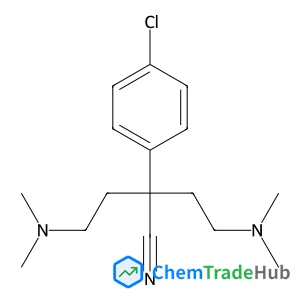
2-(4-Chlorophenyl)-4-(dimethylamino)-2-(2-(dimethylamino)ethyl)butanenitrile
CAS番号:
1246816-57-8
分子式:
C16H24ClN3
![2,6-Di(thiophen-2-yl)dithieno[3,2-b:2',3'-d]thiophene structure](https://static.chemtradehub.com/structs/910/910788-24-8-5b70.webp "2,6-Di(thiophen-2-yl)dithieno[3,2-b:2',3'-d]thiophene structure")
おすすめサプライヤー





免責事項
このページに表示される学術雑誌情報は、参考および研究目的のみを目的としています。当社は雑誌出版社とは提携しておらず、投稿の取り扱いも行っておりません。出版に関するお問い合わせは、各雑誌出版社に直接ご連絡ください。
表示されている情報に誤りがある場合は、support@chemtradehub.com までご連絡ください。迅速に確認し、対応いたします。