












![Methyl 4-({[(2-methyl-2-propanyl)oxy]carbonyl}amino)bicyclo[2.2.2]octane-1-carboxylate structure](https://static.chemtradehub.com/structs/943/943845-74-7-b7e5.webp "Methyl 4-({[(2-methyl-2-propanyl)oxy]carbonyl}amino)bicyclo[2.2.2]octane-1-carboxylate structure")
Native mass spectrometry of proteoliposomes containing integral and peripheral membrane proteins
文献情報
出版日
2023-11-21
DOI
10.1039/D3SC04938H
インパクトファクター
9.825
著者
Yun Zhu, Sangho D. Yun, Tianqi Zhang, Jing-Yuan Chang, Lauren Stover, Arthur Laganowsky
原文を見る
要旨
Cellular membranes are critical to the function of membrane proteins, whether they are associated (peripheral) or embedded (integral) within the bilayer. While detergents have contributed to our understanding of membrane protein structure and function, there remains challenges in characterizing protein–lipid interactions within the context of an intact membrane. Here, we developed a method to prepare proteoliposomes for native mass spectrometry (MS) studies. We first use native MS to detect the encapsulation of soluble proteins within liposomes. We then find the peripheral Gβ1γ2 complex associated with the membrane can be ejected and analyzed using native MS. Four different integral membrane proteins (AmtB, AqpZ, TRAAK, and TREK2), all of which have previously been characterized in detergent, eject from the proteoliposomes as intact complexes bound to lipids that have been shown to tightly associate in detergent, drawing a correlation between the two approaches. We also show the utility of more complex lipid environments, such as a brain polar lipid extract, and show TRAAK ejects from liposomes of this extract bound to lipids. These findings underscore the capability to eject protein complexes from membranes bound to both lipids and metal ions, and this approach will be instrumental in the identification of key protein–lipid interactions.
関連文献
B–H Activation by frustrated Lewis pairs: borenium or boryl phosphonium cation?
Meghan A. Dureen, A. Lough, Thomas M. Gilbert, Douglas W. Stephan
2008-07-16
Communication
DOI: 10.1039/B808348G
Energetics of conformational conversion between 1,1,2-trichloroethane polymorphs
Maciej Bujak, Marcin Podsiadło, Andrzej Katrusiak
2008-07-22
Communication
DOI: 10.1039/B807372D
A BODIPY boronium cation for the sensing of fluoride ions‡
Todd W. Hudnall, François P. Gabbaï
2008-08-19
Communication
DOI: 10.1039/B808740G
Unilamellar composite vesicles and Y-junctions from pristine fullerene C60
Illa Ramakanth, Balachandran Vijai Shankar, Archita Patnaik
2008-08-05
Communication
DOI: 10.1039/B806772D
Transistors from a conjugated macrocycle molecule: field and photo effects
Wei Zhao, Qin Tang, Hoi Shan Chan, Jianbin Xu, Ka Yuen Lo, Qian Miao
2008-07-18
Communication
DOI: 10.1039/B806601A
Controlled formation of porous magnetic nanorodsvia a liquid/liquid solvothermal method
Oscar Bomati-Miguel, Aldo F. Rebolledo, Pedro Tartaj
2008-07-07
Communication
DOI: 10.1039/B805239E
Borenium cations derived from BODIPY dyes
Catherine Bonnier, Warren E. Piers, Masood Parvez, Ted S. Sorensen
2008-07-31
Communication
DOI: 10.1039/B808739C
Amphiphilic block copolymer-stabilized gold nanoparticles for aerobic oxidation of alcohols in aqueous solution
Xueguang Wang, Hajime Kawanami, Nazrul M. Islam, Maya Chattergee, Toshirou Yokoyama, Yutaka Ikushima
2008-08-05
Communication
DOI: 10.1039/B808201D
A self-propagating system for Ge incorporation into nanostructured silica
Aubrey K. Davis, Mark Hildebrand
2008-08-04
Communication
DOI: 10.1039/B804955F
Surface binding vs. sequestration; the uptake of benzohydroxamic acid at iron(iii) oxide surfaces
Iria M. Rio-Echevarria, Fraser J. White, Euan K. Brechin, Peter A. Tasker, Steven G. Harris
2008-08-06
Communication
DOI: 10.1039/B808805E
こちらもおすすめ
化合物よくある質問
2-ブロモ-9,9-ジフェニル-9H-フルオレンの主な用途は何ですか?
2-溴-9,9-二苯基芴は、医薬品、工業材料、有機合成の研究分野で応用されます。特に、レーザー材料や機能性ポリマーの合成に使用されることがあります。また、蛍光色...
474918-32-62-Bromo-9,9-diphenyl...
化合物よくある質問
四氯化铱の市場動向や研究トレンドはどうですか?
四氯化铱の市場は研究開発分野で注目されており、特にナノ技術や金属有機框架(MOFs)の分野での需要が増加傾向にあります。価格は安定しており、中国や韓国での生産が...
207399-11-9Tetrachloroiridium h...
882-06-44-Nitrocinnamic acid
化合物よくある質問
1-(4-溴-3-氟苯基)-2-氯乙酮を含む廃棄物はどのように処理すべきですか?
1-(4-溴-3-氟苯基)-2-氯乙酮 (CAS番号: 1260857-14-4) の廃棄物は専門的な廃棄処理が必要です。まず、廃棄物は密閉された容器に収集し、...
1260857-14-41-(4-Bromo-3-fluorop...
化合物よくある質問
苦参酚Kとは何ですか?
苦参酚Kは、CAS番号101236-49-1を持つ化合物で、主に天然由来の生薬から抽出されます。この化合物は、抗炎症作用や抗癌作用を持つことが報告されています。
101236-49-1Kushenol K
化合物よくある質問
POTASSIUM (1-(TERTBUTOXYCARBONYL)AZETIDIN-3-YL)TRIFLUOROBORATE を含む廃棄物はどのように処理すべきですか?
POTASSIUM (1-(TERTBUTOXYCARBONYL)AZETIDIN-3-YL)TRIFLUOROBORATE を含む廃棄物は、まず安全なエント...
1430219-73-0Potassium (1-(tert-b...
化合物よくある質問
4-庚基-4’-联苯羧酸の市場動向や研究トレンドはどうですか?
4-庚基-4’-聯苯羧酸は、特殊化学品や合成化学の分野で用いられる化学物質ですが、市場動向としては、研究開発の進展とともに需要が増加しています。また、環境配慮型...
58573-94-74'-Heptyl-4-biphenyl...
化合物よくある質問
6-ブロモ-3-メトキシ-1-フェニル-1H-インドゾールを含む廃棄物はどのように処理すべきですか?
6-ブロモ-3-メトキシ-1-フェニル-1H-インドゾールを含む廃棄物は、適切な化学廃棄処理が必要です。通常、廃棄物は密閉容器に収集され、専門の廃棄処理業者に引...
1332527-03-36-Bromo-3-methoxy-1-...
化合物よくある質問
4,4-二甲基-2-吡咯烷酮はどの業界で使用されていますか?
4,4-二甲基-2-吡咯烷酮は医薬、ポリマー、センサー、半導体などの業界で広く使用されています。特に溶媒としての性能が高く評価されています。
66899-02-34,4-dimethylpyrrolid...
51312-42-6Sodium Phosphotungst...
掲載誌
Chemical Science
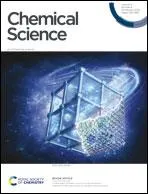
CiteScore:
14.4
自己引用率:
3.9%
年間論文数:
1413
Our journal has a wide-ranging scope which covers the full breadth of the chemical sciences. The research we publish contains the sorts of novel ideas, challenging questions and progressive thinking that bring undiscovered breakthroughs within reach. Your paper could focus on a single area, or cross many. It could be beyond the accepted bounds of the chemical sciences. It might address an immediate challenge, contribute to a future breakthrough or be wholly conceptual. We’re a team from every field of the chemical sciences, and know from experience that breakthroughs that drive the solutions to global challenges can come from anywhere, at any time. You could even start an entirely new area of research. Too bold? Too progressive? No such thing
おすすめ化合物
おすすめサプライヤー






免責事項
このページに表示される学術雑誌情報は、参考および研究目的のみを目的としています。当社は雑誌出版社とは提携しておらず、投稿の取り扱いも行っておりません。出版に関するお問い合わせは、各雑誌出版社に直接ご連絡ください。
表示されている情報に誤りがある場合は、support@chemtradehub.com までご連絡ください。迅速に確認し、対応いたします。