












![(1S)-1,5-Anhydro-2-O-alpha-L-arabinopyranosyl-1-[5-hydroxy-7-({6-O-[3-(4-hydroxy-3-methoxyphenyl)propanoyl]-beta-D-glucopyranosyl}oxy)-2-(4-hydroxyphenyl)-4-oxo-4H-chromen-6-yl]-D-glucitol structure](https://static.chemtradehub.com/structs/225/2252345-81-4-bcff.webp "(1S)-1,5-Anhydro-2-O-alpha-L-arabinopyranosyl-1-[5-hydroxy-7-({6-O-[3-(4-hydroxy-3-methoxyphenyl)propanoyl]-beta-D-glucopyranosyl}oxy)-2-(4-hydroxyphenyl)-4-oxo-4H-chromen-6-yl]-D-glucitol structure")
The adsorption of alcohols on strained Pt3Ni(111) substrates: a density functional investigation within the D3 van der Waals correction
文献情報
出版日
2018-08-21
DOI
10.1039/C8CP02874E
インパクトファクター
3.676
著者
Rafael Costa-Amaral, Juarez L. F. Da Silva
原文を見る
要旨
Experimental and theoretical studies have suggested the use of strain effects to design efficient catalysts for direct alcohol fuel cells. However, our atomistic understanding of the adsorption of alcohols on strained transition-metal (TM) catalysts is still far from satisfactory. Here, we report an ab initio investigation based on density functional theory within the van der Waals D3 correction to explore the adsorption properties of methanol, ethanol and glycerol on Pt3Ni(111) alloys under different conditions. For that, we selected five TM substrates, namely, (i) Ni(111), (ii) Pt12Ni4/Pt12Ni4/Ni(111) (compressive strain), (iii) Pt16/Pt8Ni8/Pt3Ni(111) (without strain), (iv) Pt16/Pt8Ni8/Pt(111) (tensile strain) and (v) Pt(111). As expected, the physical and chemical properties of the Pt3Ni thin-layers are affected by the strain induced by the underlayer TM substrate, and hence, we can tune the adsorption properties of alcohols. In general, the magnitude of the alcohol adsorption energy increases in the following order Pt16/Pt8Ni8/Pt3Ni(111) < Pt16/Pt8Ni8/Pt(111) < Pt12Ni4/Pt12Ni4/Ni(111), which correlates with the d-band center and the effective charge on the adsorption sites, i.e., the coulombic contribution plays an important role in the adsorption. Structural and electronic density analyses indicate that, upon adsorption, the O–H and C–H bonds weaken and their breaking should be the first steps in the decomposition of alcohols. From the Bader charge analysis, we found that the TM atom directly below the bonding O loses charge to neighboring atoms, which polarizes the surface and changes the substrate work function. Although a significant enhancement of energetic and structural properties was found, the addition of the D3 correction does not change our qualitative results except for improving the dependence of the adsorption energy with the alcohol size.
関連文献
Selective monoalkylation of amines with light electrophiles using a flow microreactor system
Thomas Lebleu, Jacques Maddaluno, Julien Legros
2015-02-03
Research Article
DOI: 10.1039/C4QO00342J
One-step access to N-enoxyimides by gold-catalysed addition of N-hydroxyimides to terminal alkynes
Coralie Duchemin, Nicolai Cramer
2018-12-06
Research Article
DOI: 10.1039/C8QO01179F
Copper-catalyzed decarboxylative and oxidative decarbonylative cross-coupling between cinnamic acids and aliphatic aldehydes
Zaigang Luo, Xinxin Han, Yuyu Fang, Peng Liu, Chengtao Feng, Zhong Li, Xuemei Xu
2018-10-08
Research Article
DOI: 10.1039/C8QO00927A
N-Alkyl ammonium resorcinarene salts: multivalent halogen-bonded deep-cavity cavitands
N. Kodiah Beyeh, Sandip Bhowmik, Fangfang Pan, K. Rissanen
2015-01-26
Research Article
DOI: 10.1039/C4QO00326H
Retracted Article: A miraculous chiral Ir–Rh bimetallic nanocatalyst for asymmetric hydrogenation of activated ketones
Xiuru Xue, Zhaohui Zhao, Yanhua Wang
2018-11-16
Research Article
DOI: 10.1039/C8QO01011K
Electrochemical synthesis of 7-membered carbocycles through cascade 5-exo-trig/7-endo-trig radical cyclization
Hao Long, Jinshuai Song, Hai-Chao Xu
2018-09-26
Research Article
DOI: 10.1039/C8QO00803E
Frontiers in the electrophilic nitration of meso-tetraphenylporphyrin derivatives
Agnieszka Mikus, Monika Zając, Stanisław Ostrowski
2018-08-06
Research Article
DOI: 10.1039/C8QO00571K
Aromaticity control via modifications of a macrocyclic frame: 5,6-dimethoxyphenanthriporphyrin and 5,6-dioxophenanthriporphyrin
Kamil Kupietz, Michał J. Białek, Agata Białońska, Bartosz Szyszko, Lechosław Latos-Grażyński
2018-08-20
Research Article
DOI: 10.1039/C8QO00751A
Syntheses of 2-(2,2,2-trifluoroethylidene)/(2,2-difluoroethyl)-1,3-dicarbonyl compounds and their fungicidal activities
Yueji Chen, Yi You, Zhiqiang Weng
2018-12-07
Research Article
DOI: 10.1039/C8QO01118D
こちらもおすすめ
化合物よくある質問
4'-ブロモビフェニル-3-メトークシーディ.ActionBarはどのように保存すればよいですか?
4'-ブロモビフェニル-3-メトークシーディ.ActionBarは、冷暗所で、直射日光を避け、密栓の容器に保存し、遠隔場所に保管してください。温度は常温(0〜2...
149506-25-24'-Bromo-biphenyl-3-...
2947-60-6(3-Methylphenyl)acet...
化合物よくある質問
2-異丙基フェニルヒドラジン塩酸塩とは何ですか?
2-異丙基フェニルヒドラジン塩酸塩は、CAS番号58928-82-8を有する化合物で、構造式はC11H14N2HClです。これは塩基性化合物であり、水に溶けやす...
58928-82-8(2-Isopropylphenyl)h...
化合物よくある質問
5-(4-クロロフェニル)-4H-1,2,4-三氮唑-3-アミンを取り扱う際の実験室安全事項は何ですか?
5-(4-クロロフェニル)-4H-1,2,4-三氮唑-3-アミンは取り扱いに注意が必要です。PPEとして防塵マスク、ゴーグル、手袋を使用し、ドラフトチャンバーを...
98554-00-85-(4-Chlorophenyl)-1...
化合物よくある質問
去甲基雷贝拉唑硫醚はどのように合成されますか?
去甲基雷贝拉唑硫醚は、ベンジミダゾール硫化物と3-メチル-4-ピリジノールの反応によって合成されます。具体的には、2-チオキシドベンジミダゾールと3-メチル-4...
117976-91-73-({2-[(1H-Benzimida...
化合物よくある質問
2-ブロモ-5-フロロ-N-(2-フェノールメチル)ベンゼンウレアは安全ですか?
2-ブロモ-5-フロロ-N-(2-フェノールメチル)ベンゼンウレアは、毒性や刺激性の実験データに基づき、適切な取扱いと防護措置を講じることで安全に使用できます。...
923722-86-52-Bromo-5-fluoro-N-(...
化合物よくある質問
対甲苯磺酸酯-四聚乙二醇-四氢吡喃醚の物理化学的性質は何ですか?
対甲苯磺酸酯-四聚乙二醇-四氢吡喃醚のCAS番号は86259-89-4です。この化合物は無色の液体で、分子量は約724.8です。高濃度では溶血性が報告されており...
86259-89-42-(2-{2-[2-(Tetrahyd...
化合物よくある質問
2-(3-(二氟甲基)-4-氟苯基)-4,4,5,5-四甲基-1,3,2-二噁硼戊環はどのように保存すればよいですか?
2-(3-(二氟甲基)-4-氟苯基)-4,4,5,5-四甲基-1,3,2-二噁硼戊環は、室温で暗い場所に保管し、直射日光から遠ざけ、容器は密閉状態で保存してくだ...
445303-65-12-[3-(difluoromethyl...
化合物よくある質問
6-アミノ-5-クロロ-2-シクロプロピルピリミジンカルボン酸の代替品はありますか?
この化合物の代替品には、ピロリミジン酸やその類似物、またピロリミジンカルボン酸の他の異性体があります。これらの代替品は、特定の化学反応や目的に応じて選択すること...
858956-08-86-Amino-5-chloro-2-c...
化合物よくある質問
5-クロロベンゾ[1,3]二オキセイン-4-アミンに適用される法規ガイドラインは何ですか?
5-クロロベンゾ[1,3]二オキセイン-4-アミンはCAS番号379228-45-2に該当します。この化合物はGHS分類でH314(接触により急性毒性がある)と...
379228-45-25-Chloro-1,3-benzodi...
掲載誌
Physical Chemistry Chemical Physics

CiteScore:
5.5
自己引用率:
10.3%
年間論文数:
3036
Physical Chemistry Chemical Physics (PCCP) is an international journal co-owned by 19 physical chemistry and physics societies from around the world. This journal publishes original, cutting-edge research in physical chemistry, chemical physics and biophysical chemistry. To be suitable for publication in PCCP, articles must include significant innovation and/or insight into physical chemistry; this is the most important criterion that reviewers and Editors will judge against when evaluating submissions. The journal has a broad scope and welcomes contributions spanning experiment, theory, computation and data science. Topical coverage includes spectroscopy, dynamics, kinetics, statistical mechanics, thermodynamics, electrochemistry, catalysis, surface science, quantum mechanics, quantum computing and machine learning. Interdisciplinary research areas such as polymers and soft matter, materials, nanoscience, energy, surfaces/interfaces, and biophysical chemistry are welcomed if they demonstrate significant innovation and/or insight into physical chemistry. Joined experimental/theoretical studies are particularly appreciated when complementary and based on up-to-date approaches.
おすすめ化合物
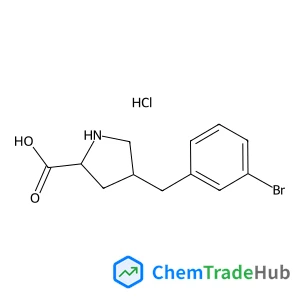
(2S,4R)-4-(3-Bromobenzyl)pyrrolidine-2-carboxylic acid hydrochloride
CAS番号:
1049734-10-2
分子式:
C12H15BrClNO2

![Heptadecanoic Acid 3-[2-[4-(6-Fluoro-1,2-benzisoxazol-3-yl)-1-piperidinyl]ethyl]-6,7,8,9-tetrahydro-2-methyl-4-oxo-4H-pyrido[1,2-a]pyrimidin-9-yl Ester structure](https://static.chemtradehub.com/structs/140/1404053-62-8-9da4.webp "Heptadecanoic Acid 3-[2-[4-(6-Fluoro-1,2-benzisoxazol-3-yl)-1-piperidinyl]ethyl]-6,7,8,9-tetrahydro-2-methyl-4-oxo-4H-pyrido[1,2-a]pyrimidin-9-yl Ester structure")
おすすめサプライヤー





免責事項
このページに表示される学術雑誌情報は、参考および研究目的のみを目的としています。当社は雑誌出版社とは提携しておらず、投稿の取り扱いも行っておりません。出版に関するお問い合わせは、各雑誌出版社に直接ご連絡ください。
表示されている情報に誤りがある場合は、support@chemtradehub.com までご連絡ください。迅速に確認し、対応いたします。