












![2,6-Di(thiophen-2-yl)dithieno[3,2-b:2',3'-d]thiophene structure](https://static.chemtradehub.com/structs/910/910788-24-8-5b70.webp "2,6-Di(thiophen-2-yl)dithieno[3,2-b:2',3'-d]thiophene structure")
A universal orthogonal imaging platform for living-cell RNA detection using fluorogenic RNA aptamers
文献情報
出版日
2023-12-02
DOI
10.1039/D3SC04957D
インパクトファクター
9.825
著者
Peng Yin, Mingmin Ge, Shiyi Xie, Li Zhang, Shi Kuang, Zhou Nie
原文を見る
要旨
MicroRNAs (miRNAs) are crucial regulators of gene expression at the post-transcriptional level, offering valuable insights into disease mechanisms and prospects for targeted therapeutic interventions. Herein, we present a class of miRNA-induced light-up RNA sensors (miLS) that are founded on the toehold mediated principle and employ the fluorogenic RNA aptamers Pepper and Squash as imaging modules. By incorporating a sensor switch to disrupt the stabilizing stem of these aptamers, our design offers enhanced flexibility and convertibility for different target miRNAs and aptamers. These sensors detect multiple miRNA targets (miR-21 and miR-122) with detection limits of 0.48 and 0.2 nM, respectively, while achieving a robust signal-to-noise ratio of up to 44 times. Capitalizing on the distinct fluorescence imaging channels afforded by Pepper-HBC620 (red) and Squash-DFHBI-1T (green), we establish an orthogonal miRNA activation imaging platform, enabling the simultaneous visualization of different intracellular miRNAs in living cells. Our dual-color orthogonal miLS imaging platform provides a powerful tool for sequence-specific miRNA imaging in different cells, opening up new avenues for studying the intricate functions of RNA in living cells.
関連文献
Carborane-based metal–organic frameworks as highly selective sorbents for CO2 over methane
Youn-Sang Bae, Omar K. Farha, Alexander M. Spokoyny, Chad A. Mirkin, Joseph T. Hupp, Randall Q. Snurr
2008-07-15
Communication
DOI: 10.1039/B805785K
Gold mediated glycosylations: selective activation of propargyl 1,2-orthoesters in the presence of aglycones containing a propargyl moiety
Gopalsamy Sureshkumar, Srinivas Hotha
2008-07-21
Communication
DOI: 10.1039/B806707D
A facile approach to fabricate functionalized superparamagnetic copolymer-silica nanocomposite spheres
Dechao Niu, Yongsheng Li, Xiaoli Qiao, Liang Li, Wenru Zhao, Hangrong Chen, Qiaoling Zhao, Zhi Ma
2008-07-29
Communication
DOI: 10.1039/B807781A
Click chemistry step growth polymerization of novel α-azide-ω-alkyne monomers
Denis Damiron, Thierry Hamaide, Jean-Pierre Pascault, Etienne Fleury, Eric Drockenmuller
2008-07-21
Communication
DOI: 10.1039/B805164J
Controlled formation of porous magnetic nanorodsvia a liquid/liquid solvothermal method
Oscar Bomati-Miguel, Aldo F. Rebolledo, Pedro Tartaj
2008-07-07
Communication
DOI: 10.1039/B805239E
Trapping Pd(0) in nanoparticle-assembled microcapsules: an efficient and reusable catalyst
Arlin Jose Amali, Rohit Kumar Rana
2008-07-15
Communication
DOI: 10.1039/B807736C
Selective mono reduction of bis-phosphine oxides under mild conditions
Maria J. Petersson, Wendy A. Loughlin, Ian D. Jenkins
2008-07-30
Communication
DOI: 10.1039/B807695B
Ni(ii)-catalyzed enantioselective Nazarov cyclizations
Irene Walz, Antonio Togni
2008-07-17
Communication
DOI: 10.1039/B806870D
Chemogenetic protein engineering: an efficient tool for the optimization of artificial metalloenzymes
Anca Pordea, Thomas R. Ward
2008-08-12
Feature Article
DOI: 10.1039/B806652C
Is catenation beneficial for hydrogenstorage in metal–organic frameworks?
Patrick Ryan, Linda J. Broadbelt, Randall Q. Snurr
2008-08-01
Communication
DOI: 10.1039/B804343D
こちらもおすすめ
化合物よくある質問
2-ブロモ-9,9-ジフェニル-9H-フルオレンの主な用途は何ですか?
2-溴-9,9-二苯基芴は、医薬品、工業材料、有機合成の研究分野で応用されます。特に、レーザー材料や機能性ポリマーの合成に使用されることがあります。また、蛍光色...
474918-32-62-Bromo-9,9-diphenyl...
化合物よくある質問
四氯化铱の市場動向や研究トレンドはどうですか?
四氯化铱の市場は研究開発分野で注目されており、特にナノ技術や金属有機框架(MOFs)の分野での需要が増加傾向にあります。価格は安定しており、中国や韓国での生産が...
207399-11-9Tetrachloroiridium h...
882-06-44-Nitrocinnamic acid
化合物よくある質問
1-(4-溴-3-氟苯基)-2-氯乙酮を含む廃棄物はどのように処理すべきですか?
1-(4-溴-3-氟苯基)-2-氯乙酮 (CAS番号: 1260857-14-4) の廃棄物は専門的な廃棄処理が必要です。まず、廃棄物は密閉された容器に収集し、...
1260857-14-41-(4-Bromo-3-fluorop...
化合物よくある質問
苦参酚Kとは何ですか?
苦参酚Kは、CAS番号101236-49-1を持つ化合物で、主に天然由来の生薬から抽出されます。この化合物は、抗炎症作用や抗癌作用を持つことが報告されています。
101236-49-1Kushenol K
化合物よくある質問
POTASSIUM (1-(TERTBUTOXYCARBONYL)AZETIDIN-3-YL)TRIFLUOROBORATE を含む廃棄物はどのように処理すべきですか?
POTASSIUM (1-(TERTBUTOXYCARBONYL)AZETIDIN-3-YL)TRIFLUOROBORATE を含む廃棄物は、まず安全なエント...
1430219-73-0Potassium (1-(tert-b...
化合物よくある質問
4-庚基-4’-联苯羧酸の市場動向や研究トレンドはどうですか?
4-庚基-4’-聯苯羧酸は、特殊化学品や合成化学の分野で用いられる化学物質ですが、市場動向としては、研究開発の進展とともに需要が増加しています。また、環境配慮型...
58573-94-74'-Heptyl-4-biphenyl...
化合物よくある質問
6-ブロモ-3-メトキシ-1-フェニル-1H-インドゾールを含む廃棄物はどのように処理すべきですか?
6-ブロモ-3-メトキシ-1-フェニル-1H-インドゾールを含む廃棄物は、適切な化学廃棄処理が必要です。通常、廃棄物は密閉容器に収集され、専門の廃棄処理業者に引...
1332527-03-36-Bromo-3-methoxy-1-...
化合物よくある質問
4,4-二甲基-2-吡咯烷酮はどの業界で使用されていますか?
4,4-二甲基-2-吡咯烷酮は医薬、ポリマー、センサー、半導体などの業界で広く使用されています。特に溶媒としての性能が高く評価されています。
66899-02-34,4-dimethylpyrrolid...
51312-42-6Sodium Phosphotungst...
掲載誌
Chemical Science

CiteScore:
14.4
自己引用率:
3.9%
年間論文数:
1413
Our journal has a wide-ranging scope which covers the full breadth of the chemical sciences. The research we publish contains the sorts of novel ideas, challenging questions and progressive thinking that bring undiscovered breakthroughs within reach. Your paper could focus on a single area, or cross many. It could be beyond the accepted bounds of the chemical sciences. It might address an immediate challenge, contribute to a future breakthrough or be wholly conceptual. We’re a team from every field of the chemical sciences, and know from experience that breakthroughs that drive the solutions to global challenges can come from anywhere, at any time. You could even start an entirely new area of research. Too bold? Too progressive? No such thing
おすすめ化合物
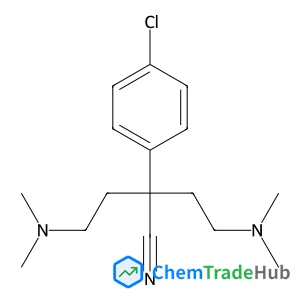
2-(4-Chlorophenyl)-4-(dimethylamino)-2-(2-(dimethylamino)ethyl)butanenitrile
CAS番号:
1246816-57-8
分子式:
C16H24ClN3
おすすめサプライヤー





免責事項
このページに表示される学術雑誌情報は、参考および研究目的のみを目的としています。当社は雑誌出版社とは提携しておらず、投稿の取り扱いも行っておりません。出版に関するお問い合わせは、各雑誌出版社に直接ご連絡ください。
表示されている情報に誤りがある場合は、support@chemtradehub.com までご連絡ください。迅速に確認し、対応いたします。