












Heavy carbon nanodots: a new phosphorescent carbon nanostructure
文献情報
出版日
2018-05-16
DOI
10.1039/C8CP02675K
インパクトファクター
3.676
著者
Rachael Knoblauch, Brian Bui, Ammar Raza, Chris D. Geddes
原文を見る
要旨
Carbon nanodots are nanometer sized fluorescent particles studied for their distinct photoluminescent properties and biocompatibility. Although extensive literature reports the modification and application of carbon nanodot fluorescence, little has been published pertaining to phosphorescence emission from carbon nanodots. The use of phosphors in biological imaging can lead to clearer detection, as the long lifetimes of phosphorescent emission permit off-gated collection that avoids noise from biological autofluorescence. Carbon nanodots present a desirable scaffold for this application, with advantageous qualities ranging from photostability to multi-color emission. This research reports the generation of a novel phosphorescent “heavy carbon” nanodot via halogenation of the carbon nanodot structure. By employing a collection pathway that effectively incorporates bromine into the nanostructure, T1 triplet character is introduced, and subsequently phosphorescence is observed in liquid media at room temperature for the first time in the nanodot literature. Further experiments are reported characterizing the conditions of observed phosphorescence and its pH-dependence. Our approach for producing “heavy carbon nanodots” is a low-cost and relatively simple method for generating the phosphorescent nanodots, which sets the foundation for its potential future use as a phosphorescent probe in application.
関連文献
Cell-penetrating poly(disulfide)-based star polymers for simultaneous intracellular delivery of miRNAs and small molecule drugs
Wenhua Yang, Changmin Yu, Chunxian Wu, Shao Q. Yao, Shuizhu Wu
2017-06-19
Paper
DOI: 10.1039/C7PY00666G
Hybrid single-chain nanoparticles via the metal induced crosslinking of N-donor functionalized polymer chains
Karen Freytag, Stefanie Säfken, Kai Wolter, Jan C. Namyslo, Eike G. Hübner
2017-11-16
Paper
DOI: 10.1039/C7PY01487B
Facile synthesis of ROS-responsive biodegradable main chain poly(carbonate-thioether) copolymers
Bingkun Yan, Yan Zhang, Chao Wei, Yue Xu
2018-01-17
Paper
DOI: 10.1039/C7PY01908D
From mono- to tetraacylgermanes: extending the scope of visible light photoinitiators
Anna Eibel, Judith Radebner, Michael Haas, David E. Fast, Hilde Freißmuth, Eduard Stadler, Paul Faschauner, Ana Torvisco, Iris Lamparth, Norbert Moszner, Harald Stueger, Georg Gescheidt
2017-11-20
Paper
DOI: 10.1039/C7PY01590A
Studies on the hard confinement effect on the RAFT polymerization of a monomeric ionic liquid. Unexpected triggering of RAFT polymerization at 30 °C
Karol Erfurt, Anna Chrobok, Andrzej Zięba, Rafał Bielas
2017-11-29
Paper
DOI: 10.1039/C7PY01726J
The integrated adjustment of chlorine substitution and two-dimensional side chain of low band gap polymers in organic solar cells
Zhen Yang, Huan Wang, Daize Mo, Longzhu Liu, Pengjie Chao, Yulin Zhu, Chuanjun Liu, Feng He
2017-12-15
Paper
DOI: 10.1039/C7PY01792H
Synthesis of conjugated copolymers by combining different coupling reactions
T. Hardeman, G. Koeckelberghs
2017-06-19
Paper
DOI: 10.1039/C7PY00624A
Thermoresponsive nanogels with film-forming ability
Ana S. Sonzogni, Stefanie Wedepohl, Marcelo Calderón
2018-01-18
Paper
DOI: 10.1039/C7PY01798G
Visible-light responsive hydrogen-bonded supramolecular polymers based on ortho-tetrafluorinated azobenzene
Meng-Di Lin, Jie Wei, Li-Juan Liu, Meng-Yan Yun, Lin Wu, Si-Tai Zheng, Huan-Huan Yin, Li-Chun Kong
2017-11-13
Paper
DOI: 10.1039/C7PY01612C
こちらもおすすめ
化合物よくある質問
2-ブロモ-9,9-ジフェニル-9H-フルオレンの主な用途は何ですか?
2-溴-9,9-二苯基芴は、医薬品、工業材料、有機合成の研究分野で応用されます。特に、レーザー材料や機能性ポリマーの合成に使用されることがあります。また、蛍光色...
474918-32-62-Bromo-9,9-diphenyl...
化合物よくある質問
四氯化铱の市場動向や研究トレンドはどうですか?
四氯化铱の市場は研究開発分野で注目されており、特にナノ技術や金属有機框架(MOFs)の分野での需要が増加傾向にあります。価格は安定しており、中国や韓国での生産が...
207399-11-9Tetrachloroiridium h...
882-06-44-Nitrocinnamic acid
化合物よくある質問
1-(4-溴-3-氟苯基)-2-氯乙酮を含む廃棄物はどのように処理すべきですか?
1-(4-溴-3-氟苯基)-2-氯乙酮 (CAS番号: 1260857-14-4) の廃棄物は専門的な廃棄処理が必要です。まず、廃棄物は密閉された容器に収集し、...
1260857-14-41-(4-Bromo-3-fluorop...
化合物よくある質問
苦参酚Kとは何ですか?
苦参酚Kは、CAS番号101236-49-1を持つ化合物で、主に天然由来の生薬から抽出されます。この化合物は、抗炎症作用や抗癌作用を持つことが報告されています。
101236-49-1Kushenol K
化合物よくある質問
POTASSIUM (1-(TERTBUTOXYCARBONYL)AZETIDIN-3-YL)TRIFLUOROBORATE を含む廃棄物はどのように処理すべきですか?
POTASSIUM (1-(TERTBUTOXYCARBONYL)AZETIDIN-3-YL)TRIFLUOROBORATE を含む廃棄物は、まず安全なエント...
1430219-73-0Potassium (1-(tert-b...
化合物よくある質問
4-庚基-4’-联苯羧酸の市場動向や研究トレンドはどうですか?
4-庚基-4’-聯苯羧酸は、特殊化学品や合成化学の分野で用いられる化学物質ですが、市場動向としては、研究開発の進展とともに需要が増加しています。また、環境配慮型...
58573-94-74'-Heptyl-4-biphenyl...
化合物よくある質問
6-ブロモ-3-メトキシ-1-フェニル-1H-インドゾールを含む廃棄物はどのように処理すべきですか?
6-ブロモ-3-メトキシ-1-フェニル-1H-インドゾールを含む廃棄物は、適切な化学廃棄処理が必要です。通常、廃棄物は密閉容器に収集され、専門の廃棄処理業者に引...
1332527-03-36-Bromo-3-methoxy-1-...
化合物よくある質問
4,4-二甲基-2-吡咯烷酮はどの業界で使用されていますか?
4,4-二甲基-2-吡咯烷酮は医薬、ポリマー、センサー、半導体などの業界で広く使用されています。特に溶媒としての性能が高く評価されています。
66899-02-34,4-dimethylpyrrolid...
51312-42-6Sodium Phosphotungst...
掲載誌
Physical Chemistry Chemical Physics

CiteScore:
5.5
自己引用率:
10.3%
年間論文数:
3036
Physical Chemistry Chemical Physics (PCCP) is an international journal co-owned by 19 physical chemistry and physics societies from around the world. This journal publishes original, cutting-edge research in physical chemistry, chemical physics and biophysical chemistry. To be suitable for publication in PCCP, articles must include significant innovation and/or insight into physical chemistry; this is the most important criterion that reviewers and Editors will judge against when evaluating submissions. The journal has a broad scope and welcomes contributions spanning experiment, theory, computation and data science. Topical coverage includes spectroscopy, dynamics, kinetics, statistical mechanics, thermodynamics, electrochemistry, catalysis, surface science, quantum mechanics, quantum computing and machine learning. Interdisciplinary research areas such as polymers and soft matter, materials, nanoscience, energy, surfaces/interfaces, and biophysical chemistry are welcomed if they demonstrate significant innovation and/or insight into physical chemistry. Joined experimental/theoretical studies are particularly appreciated when complementary and based on up-to-date approaches.
おすすめ化合物
![5-Acetyl-2,3-dihydrobenzo[b]furan structure](https://static.chemtradehub.com/structs/908/90843-31-5-eea4.webp "5-Acetyl-2,3-dihydrobenzo[b]furan structure")
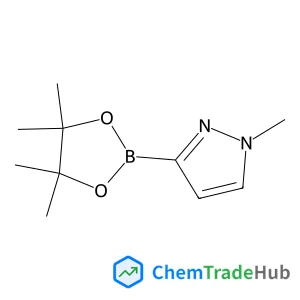
1-Methyl-3-(4,4,5,5-tetramethyl-1,3,2-dioxaborolan-2-yl)-1H-pyrazole
CAS番号:
1020174-04-2
分子式:
C10H17BN2O2
おすすめサプライヤー






免責事項
このページに表示される学術雑誌情報は、参考および研究目的のみを目的としています。当社は雑誌出版社とは提携しておらず、投稿の取り扱いも行っておりません。出版に関するお問い合わせは、各雑誌出版社に直接ご連絡ください。
表示されている情報に誤りがある場合は、support@chemtradehub.com までご連絡ください。迅速に確認し、対応いたします。