












Insights on magnesium and sulfate ions’ adsorption on the surface of sodium alumino-silicate hydrate (NASH) gel: a molecular dynamics study
文献情報
出版日
2018-06-19
DOI
10.1039/C8CP02469C
インパクトファクター
3.676
著者
Yu Zhang, Tao Li, Dongshuai Hou, Jinglin Zhang, Jinyang Jiang
原文を見る
要旨
The movement of water and ions in sodium alumino-silicate hydrate gel (NASH) influences the physical and chemical properties of the geopolymer material. In this paper, in order to better understand the structure and dynamics of water and ions in the interfacial region of the NASH gel, molecular dynamics was utilized to model Na2SO4 and MgSO4 solutions (both at 0.44 mol L−1) near the NASH surface. The broken silicate–aluminate surface network, with predominant percentage of randomly connected Q1 and Q2 silicate and aluminate species, provides plenty of non-bridging oxygen sites to accept the H bond from the surface water molecules, contributing toward a strongly adsorbed hydration layer with a thickness of around 5 Å. Consequently, the water molecule in the hydration layer exhibits increased density, increased dipole moment magnitude, orientation preference, and slow diffusivity. In contrast, up to 36.4% of the counter sodium ions, originally caged in the vacancies on the NASH surface, gradually dissociate from the silicate–aluminate skeleton and migrate into the bulk solution, which is consistent with the experimentally observed leaching process of alkali ions in the geopolymer material. In the MgSO4 solution, the magnesium ions—with a smaller ionic radius—penetrate into the silicate–aluminate skeleton vacancy, have 1.8 to 2.5 coordinated solid oxygen atoms, and remain on the NASH surface for a fairly longer time due to the stable Mg–O bonds. Mg species adsorbed on the inner sphere got rooted onto the hydroxyl layer, healing the damaged silicate–aluminate structures and stabilizing the network by inhibiting Na ion immigration into the solution. Mg ions in the outer layer, on average, associated with around one neighboring SO4 ion, forming ionic pairs and accumulating into large Mg–SO4 clusters, to help the immobilization of sulfate ions on the NASH surface.
おすすめジャーナル
関連文献
(C5H6.16N2Cl0.84)(IO2Cl2): a birefringent crystal featuring unprecedented (IO2Cl2)− anions and π-conjugated organic cations
Chun-Li Hu
2023-11-27
Edge Article
DOI: 10.1039/D3SC05770D
An erythrocyte membrane-camouflaged fluorescent covalent organic framework for starving/nitric oxide/immunotherapy of triple-negative breast cancer
Fang Yuan, Cuiling Zhang, Xianzhu Luo, Shasha Cheng, Yingxin Zhu, Yuezhong Xian
2023-07-28
Edge Article
DOI: 10.1039/D3SC02022C
18F-Labeled brain-penetrant EGFR tyrosine kinase inhibitors for PET imaging of glioblastoma
Jonathan E. Tsang, David A. Nathanson
2023-11-09
Edge Article
DOI: 10.1039/D3SC04424F
Understanding divergent substrate stereoselectivity in the isothiourea-catalysed conjugate addition of cyclic α-substituted β-ketoesters to α,β-unsaturated aryl esters
Alister S. Goodfellow, Kevin Kasten, Zhuan Duan, Tengfei Kang, David B. Cordes, Aidan P. McKay, Michael Bühl, Andrew D. Smith
2023-11-21
Edge Article
DOI: 10.1039/D3SC05470E
Group 13 ion coordination to pyridyl breaks the reduction potential vs. hydricity scaling relationship for dihydropyridinates
Leo W. T. Parsons, James C. Fettinger, Louise A. Berben
2023-11-16
Edge Article
DOI: 10.1039/D3SC03806H
Hydrogen spillover and substrate–support hydrogen bonding mediate hydrogenation of phenol catalyzed by palladium on reducible metal oxides
Yeongseo An, Sayak Banerjee
2023-11-24
Edge Article
DOI: 10.1039/D3SC02913A
Advances in CO2 activation by frustrated Lewis pairs: from stoichiometric to catalytic reactions
Yara van Ingen, Tribani Boruah, Adam McLauchlan, Thomas Wirth, Rebecca L. Melen
2023-11-09
Review Article
DOI: 10.1039/D3SC03907B
Quantitative detection of microRNA-21 in vivo using in situ assembled photoacoustic and SERS nanoprobes
Liting Zheng, Qingqing Li, Ying Wu, Lichao Su, Wei Du, Jibin Song, Lanlan Chen, Huanghao Yang
2023-11-21
Edge Article
DOI: 10.1039/D3SC04371A
こちらもおすすめ
化合物よくある質問
2-ブロモ-9,9-ジフェニル-9H-フルオレンの主な用途は何ですか?
2-溴-9,9-二苯基芴は、医薬品、工業材料、有機合成の研究分野で応用されます。特に、レーザー材料や機能性ポリマーの合成に使用されることがあります。また、蛍光色...
474918-32-62-Bromo-9,9-diphenyl...
化合物よくある質問
四氯化铱の市場動向や研究トレンドはどうですか?
四氯化铱の市場は研究開発分野で注目されており、特にナノ技術や金属有機框架(MOFs)の分野での需要が増加傾向にあります。価格は安定しており、中国や韓国での生産が...
207399-11-9Tetrachloroiridium h...
882-06-44-Nitrocinnamic acid
化合物よくある質問
1-(4-溴-3-氟苯基)-2-氯乙酮を含む廃棄物はどのように処理すべきですか?
1-(4-溴-3-氟苯基)-2-氯乙酮 (CAS番号: 1260857-14-4) の廃棄物は専門的な廃棄処理が必要です。まず、廃棄物は密閉された容器に収集し、...
1260857-14-41-(4-Bromo-3-fluorop...
化合物よくある質問
苦参酚Kとは何ですか?
苦参酚Kは、CAS番号101236-49-1を持つ化合物で、主に天然由来の生薬から抽出されます。この化合物は、抗炎症作用や抗癌作用を持つことが報告されています。
101236-49-1Kushenol K
化合物よくある質問
POTASSIUM (1-(TERTBUTOXYCARBONYL)AZETIDIN-3-YL)TRIFLUOROBORATE を含む廃棄物はどのように処理すべきですか?
POTASSIUM (1-(TERTBUTOXYCARBONYL)AZETIDIN-3-YL)TRIFLUOROBORATE を含む廃棄物は、まず安全なエント...
1430219-73-0Potassium (1-(tert-b...
化合物よくある質問
4-庚基-4’-联苯羧酸の市場動向や研究トレンドはどうですか?
4-庚基-4’-聯苯羧酸は、特殊化学品や合成化学の分野で用いられる化学物質ですが、市場動向としては、研究開発の進展とともに需要が増加しています。また、環境配慮型...
58573-94-74'-Heptyl-4-biphenyl...
化合物よくある質問
6-ブロモ-3-メトキシ-1-フェニル-1H-インドゾールを含む廃棄物はどのように処理すべきですか?
6-ブロモ-3-メトキシ-1-フェニル-1H-インドゾールを含む廃棄物は、適切な化学廃棄処理が必要です。通常、廃棄物は密閉容器に収集され、専門の廃棄処理業者に引...
1332527-03-36-Bromo-3-methoxy-1-...
化合物よくある質問
4,4-二甲基-2-吡咯烷酮はどの業界で使用されていますか?
4,4-二甲基-2-吡咯烷酮は医薬、ポリマー、センサー、半導体などの業界で広く使用されています。特に溶媒としての性能が高く評価されています。
66899-02-34,4-dimethylpyrrolid...
51312-42-6Sodium Phosphotungst...
掲載誌
Physical Chemistry Chemical Physics

CiteScore:
5.5
自己引用率:
10.3%
年間論文数:
3036
Physical Chemistry Chemical Physics (PCCP) is an international journal co-owned by 19 physical chemistry and physics societies from around the world. This journal publishes original, cutting-edge research in physical chemistry, chemical physics and biophysical chemistry. To be suitable for publication in PCCP, articles must include significant innovation and/or insight into physical chemistry; this is the most important criterion that reviewers and Editors will judge against when evaluating submissions. The journal has a broad scope and welcomes contributions spanning experiment, theory, computation and data science. Topical coverage includes spectroscopy, dynamics, kinetics, statistical mechanics, thermodynamics, electrochemistry, catalysis, surface science, quantum mechanics, quantum computing and machine learning. Interdisciplinary research areas such as polymers and soft matter, materials, nanoscience, energy, surfaces/interfaces, and biophysical chemistry are welcomed if they demonstrate significant innovation and/or insight into physical chemistry. Joined experimental/theoretical studies are particularly appreciated when complementary and based on up-to-date approaches.
おすすめ化合物
![2,6-Bis({(2R)-2-[hydroxy(diphenyl)methyl]-1-pyrrolidinyl}methyl)-4-methylphenol structure](https://static.chemtradehub.com/structs/877/877395-58-9-70bf.webp "2,6-Bis({(2R)-2-[hydroxy(diphenyl)methyl]-1-pyrrolidinyl}methyl)-4-methylphenol structure")
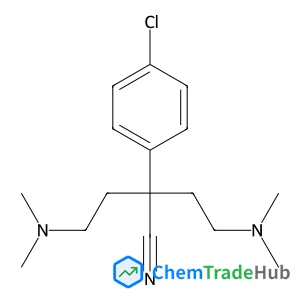
2-(4-Chlorophenyl)-4-(dimethylamino)-2-(2-(dimethylamino)ethyl)butanenitrile
CAS番号:
1246816-57-8
分子式:
C16H24ClN3
おすすめサプライヤー





免責事項
このページに表示される学術雑誌情報は、参考および研究目的のみを目的としています。当社は雑誌出版社とは提携しておらず、投稿の取り扱いも行っておりません。出版に関するお問い合わせは、各雑誌出版社に直接ご連絡ください。
表示されている情報に誤りがある場合は、support@chemtradehub.com までご連絡ください。迅速に確認し、対応いたします。