












Hydrogen spillover and substrate–support hydrogen bonding mediate hydrogenation of phenol catalyzed by palladium on reducible metal oxides
文献情報
出版日
2023-11-24
DOI
10.1039/D3SC02913A
インパクトファクター
9.825
著者
Yeongseo An, Sayak Banerjee
原文を見る
要旨
Substrate–support interactions play an important role in the catalytic hydrogenation of phenolic compounds by ceria-supported palladium (Pd/CeO2). Here, we combine surface contrast solution NMR methods and reaction kinetic assays to investigate the role of substrate–support interactions in phenol (PhOH) hydrogenation catalyzed by titania-supported palladium (Pd/TiO2). We show that PhOH adsorbs on the catalyst via a weak hydrogen-bonding interaction between the –OH group of the substrate and one oxygen atom on the support. Interestingly, we observe that the addition of 20 mM inorganic phosphate results in a ∼2-fold destabilization of the PhOH–support interaction and a corresponding ∼2-fold inhibition of the catalytic reaction, suggesting an active role of the PhOH–TiO2 hydrogen bond in catalysis. A comparison of the data measured here with the results previously reported for a Pd/CeO2 catalyst indicates that the efficiency of the Pd-supported catalysts is correlated to the amount of PhOH hydrogen bonded to the metal oxide support. Since CeO2 and TiO2 have similar ability to uptake activated hydrogen from a noble metal site, these data suggest that hydrogen spillover is the main mechanism by which Pd-activated hydrogens are shuttled to the PhOH adsorbed on the surface of the support. Consistent with this hypothesis, Pd supported on a non-reducible metal oxide (silica) displays negligible hydrogenation activity. Therefore, we conclude that basic and reducible metal oxides are active supports for the efficient hydrogenation of phenolic compounds due to their ability to hydrogen bond to the substrate and mediate the addition of the activated hydrogens to the adsorbed aromatic ring.
関連文献
Detection of mismatched DNAsvia the binding affinity of MutS using a gold nanoparticle-based competitive colorimetric method
Minseon Cho, Min Su Han, Changill Ban
2008-09-01
Communication
DOI: 10.1039/B811346G
Oxidative decarboxylative synthesis of 2-H-imidazolines from glyoxylic acid and 1,2-diamines
Kenichi Murai, Maiko Morishita, Ryo Nakatani, Hiromichi Fujioka, Yasuyuki Kita
2008-08-04
Communication
DOI: 10.1039/B807810F
Microwave-assisted synthesis of near-infrared fluorescent sphingosine derivatives
Kumar R. Bhushan, Fangbing Liu, Preeti Misra, John V. Frangioni
2008-07-28
Communication
DOI: 10.1039/B807930G
Cyclopropenyllithiums as a new source of 1,1-bismetalated cyclopropyl derivatives
Anat Levin, Ilan Marek
2008-07-16
Communication
DOI: 10.1039/B807635A
Direct functionalization at the boron center of antiaromatic chloroborole
Holger Braunschweig, Thomas Kupfer
2008-07-30
Communication
DOI: 10.1039/B808483A
A simple route for fabricating poly(para-phenylene vinylene) (PPV) particles by using ionic liquids and a solvent evaporation process
Hiroshi Yabu, Atsunori Tajima, Takeshi Higuchi
2008-08-06
Communication
DOI: 10.1039/B809765H
Hydrogen adsorption in microporous organic framework polymer
Saad Makhseed, Jacob Samuel
2008-07-18
Communication
DOI: 10.1039/B805656K
Direct observation of time and temperature dependent transition from spherical micelles to vesicles
Hua Wei, Cui-yun Yu, Cong Chang, Chang-yun Quan, Shao-bo Mo, Si-xue Cheng, Xian-zheng Zhang, Ren-xi Zhuo
2008-08-01
Communication
DOI: 10.1039/B811553B
Click chemistry step growth polymerization of novel α-azide-ω-alkyne monomers
Denis Damiron, Thierry Hamaide, Jean-Pierre Pascault, Etienne Fleury, Eric Drockenmuller
2008-07-21
Communication
DOI: 10.1039/B805164J
Microwave effect on the surface composition of the Urushibara Ni hydrogenation catalyst and improved reduction of acetophenone
Junichi Tsuzuki, Futoshi Sakai, Masatsugu Kajitani, Nick Serpone
2008-08-04
Communication
DOI: 10.1039/B808188C
こちらもおすすめ
化合物よくある質問
2-ブロモ-9,9-ジフェニル-9H-フルオレンの主な用途は何ですか?
2-溴-9,9-二苯基芴は、医薬品、工業材料、有機合成の研究分野で応用されます。特に、レーザー材料や機能性ポリマーの合成に使用されることがあります。また、蛍光色...
474918-32-62-Bromo-9,9-diphenyl...
化合物よくある質問
四氯化铱の市場動向や研究トレンドはどうですか?
四氯化铱の市場は研究開発分野で注目されており、特にナノ技術や金属有機框架(MOFs)の分野での需要が増加傾向にあります。価格は安定しており、中国や韓国での生産が...
207399-11-9Tetrachloroiridium h...
882-06-44-Nitrocinnamic acid
化合物よくある質問
1-(4-溴-3-氟苯基)-2-氯乙酮を含む廃棄物はどのように処理すべきですか?
1-(4-溴-3-氟苯基)-2-氯乙酮 (CAS番号: 1260857-14-4) の廃棄物は専門的な廃棄処理が必要です。まず、廃棄物は密閉された容器に収集し、...
1260857-14-41-(4-Bromo-3-fluorop...
化合物よくある質問
苦参酚Kとは何ですか?
苦参酚Kは、CAS番号101236-49-1を持つ化合物で、主に天然由来の生薬から抽出されます。この化合物は、抗炎症作用や抗癌作用を持つことが報告されています。
101236-49-1Kushenol K
化合物よくある質問
POTASSIUM (1-(TERTBUTOXYCARBONYL)AZETIDIN-3-YL)TRIFLUOROBORATE を含む廃棄物はどのように処理すべきですか?
POTASSIUM (1-(TERTBUTOXYCARBONYL)AZETIDIN-3-YL)TRIFLUOROBORATE を含む廃棄物は、まず安全なエント...
1430219-73-0Potassium (1-(tert-b...
化合物よくある質問
4-庚基-4’-联苯羧酸の市場動向や研究トレンドはどうですか?
4-庚基-4’-聯苯羧酸は、特殊化学品や合成化学の分野で用いられる化学物質ですが、市場動向としては、研究開発の進展とともに需要が増加しています。また、環境配慮型...
58573-94-74'-Heptyl-4-biphenyl...
化合物よくある質問
6-ブロモ-3-メトキシ-1-フェニル-1H-インドゾールを含む廃棄物はどのように処理すべきですか?
6-ブロモ-3-メトキシ-1-フェニル-1H-インドゾールを含む廃棄物は、適切な化学廃棄処理が必要です。通常、廃棄物は密閉容器に収集され、専門の廃棄処理業者に引...
1332527-03-36-Bromo-3-methoxy-1-...
化合物よくある質問
4,4-二甲基-2-吡咯烷酮はどの業界で使用されていますか?
4,4-二甲基-2-吡咯烷酮は医薬、ポリマー、センサー、半導体などの業界で広く使用されています。特に溶媒としての性能が高く評価されています。
66899-02-34,4-dimethylpyrrolid...
51312-42-6Sodium Phosphotungst...
掲載誌
Chemical Science
CiteScore:
14.4
自己引用率:
3.9%
年間論文数:
1413
Our journal has a wide-ranging scope which covers the full breadth of the chemical sciences. The research we publish contains the sorts of novel ideas, challenging questions and progressive thinking that bring undiscovered breakthroughs within reach. Your paper could focus on a single area, or cross many. It could be beyond the accepted bounds of the chemical sciences. It might address an immediate challenge, contribute to a future breakthrough or be wholly conceptual. We’re a team from every field of the chemical sciences, and know from experience that breakthroughs that drive the solutions to global challenges can come from anywhere, at any time. You could even start an entirely new area of research. Too bold? Too progressive? No such thing
おすすめ化合物
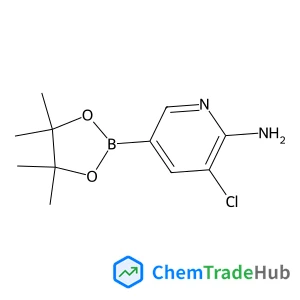
3-Chloro-5-(4,4,5,5-tetramethyl-1,3,2-dioxaborolan-2-yl)-2-pyridinamine
CAS番号:
1032758-99-8
分子式:
C11H16BClN2O2
![6-Benzyl-4,5,6,7-tetrahydro-1H-pyrazolo[3,4-c]pyridin-3(2H)-one structure](https://static.chemtradehub.com/structs/909/909187-64-0-f54f.webp "6-Benzyl-4,5,6,7-tetrahydro-1H-pyrazolo[3,4-c]pyridin-3(2H)-one structure")
おすすめサプライヤー




免責事項
このページに表示される学術雑誌情報は、参考および研究目的のみを目的としています。当社は雑誌出版社とは提携しておらず、投稿の取り扱いも行っておりません。出版に関するお問い合わせは、各雑誌出版社に直接ご連絡ください。
表示されている情報に誤りがある場合は、support@chemtradehub.com までご連絡ください。迅速に確認し、対応いたします。