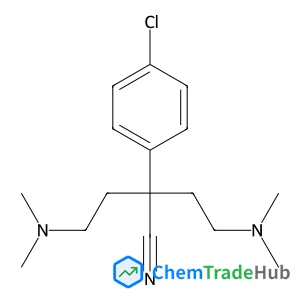
2-(4-Chlorophenyl)-4-(dimethylamino)-2-(2-(dimethylamino)ethyl)butanenitrile
CAS番号:
1246816-57-8
分子式:
C16H24ClN3
Takumi Tokuda, Takahiro Uchida, Kazuya Sonoda, Bogdan A. Marekha, Abdenacer Idrissi, Takashi Tokushima, Hiroyuki Sakurai, Masahiro Kawano, Koichiro Sadakane, Hiroki Iwase
The hydrogen bonds of the imidazolium-ring H atoms of ionic liquids (ILs), 1-alkyl-3-methylimidazolium bis(trifluoromethylsulfonyl)amides ([Cnmim][TFSA], n = 2 to 12 where n represents the alkyl chain length), with the O atom of dimethyl sulfoxide (DMSO) have been elucidated using 1H, 13C, and 15N NMR spectroscopy and soft X-ray absorption and emission spectroscopy (XAS and XES). Density functional theory (DFT) calculations have been performed on an isolated DMSO molecule and two cluster models of [Cnmim]+–DMSO by hydrogen bonding to interpret the XES spectra for the [Cnmim][TFSA]–DMSO solutions. The 1H and 13C NMR chemical shifts of the imidazolium ring showed that deshielding of the ring H and C atoms is moderate as the DMSO mole fraction xDMSO increases to ∼0.8; however, it becomes more significant with further increase of xDMSO. This finding suggests that the hydrogen bonds of the three ring H atoms with the DMSO O atoms are saturated in solutions with xDMSO increased to ∼0.8. The 1H and 13C chemical shifts of the alkyl chains revealed that the electron densities of the chain H and C atoms gradually decrease with increasing xDMSO, except for the N1-bound carbon atom C7 of the chain. The 15N NMR chemical shifts showed that the imidazolium-ring N1 atom which is bound to the alkyl chain is shielded with increasing xDMSO in the range from 0 to 0.8 and is then deshielded with further increase of xDMSO. In contrast, the imidazolium ring N3 atom is simply deshielded with increasing xDMSO. Thus, the electron densities of the alkyl chain may be condensed at the C7 and N1 atoms of [Cnmim]+ by the hydrogen bonding of the ring H atoms with DMSO. The hydrogen bonding of DMSO with the ring results in low-energy shifts of the XES peaks of the O K-edge of DMSO. Small-angle neutron scattering experiments showed that [Cnmim][TFSA] and DMSO are homogeneously mixed with each other on the mesoscopic scale. This results from the strong hydrogen bonds of DMSO with the imidazolium-ring H atoms.
Jie Wang, Xing-Yu Zhang, Guo-Kai Jia, Zhong Cao, Zilong Tang, Xianyong Yu, Xinhua Xu
DOI: 10.1039/C8OB01005F
Takashi Sakamoto, Daisaku Hasegawa, Kenzo Fujimoto
DOI: 10.1039/C8OB02218F
Sadaf Azeez, Priyanka Chaudhary, Popuri Sureshbabu, Shahulhameed Sabiah, Jeyakumar Kandasamy
DOI: 10.1039/C8OB01950A
Rei Watanabe, Yaping Hu, Keita Iio, Kozo Yoneda, Atsunori Hattori, Atsushi Arai, Hideo Kigoshi
DOI: 10.1039/C8OB02222D
Sean A. Newmister, Stelamar Romminger, Jennifer J. Schmidt, Roberto G. S. Berlinck
DOI: 10.1039/C8OB01565A
Harsimran K. Minhas, William Riley, Alison M. Stuart, Martyna Urbonaite
DOI: 10.1039/C8OB02236D
Rongxiang Chen, Abosede Adejoke Ogunlana, Shangwen Fang, Wenhao Long, Hongmei Sun, Xiaoguang Bao, Xiaobing Wan
DOI: 10.1039/C8OB01067F
Saúl Silva, Osvaldo S. Ascenso, Eva C. Lourenço, Margarida Archer, M. Rita Ventura
DOI: 10.1039/C8OB02096E
Olapeju Bolarinwa, Meng Zhang, Erin Mulry, Min Lu, Jianfeng Cai
DOI: 10.1039/C8OB02159G
2-ヒドロキシ-5-ニトロベンジンブロモイドは特定の化学反応に適しているため、代替品は限られています。しかし、同様の構造を持つ2-ヒドロキシ-4-ニトロベンジン...
N-(2-ブロモフェニル)-1-チロール-3-オキソ-3-(ピペリジニル)プロペン-2-イル)ベンゼンアミドは有毒で、皮膚や粘膜に刺激を与える可能性があります。...
この化合物は、新規治療薬の開発に注目されています。市場では、その有効性と安全性が評価され、研究分野では、分子生物学と医薬化学の新たな発見が期待されています。
Succinimidyl-alanyl-phenylalanyl-prolyl-phenylalanine 4-nitroanilide は主に医薬品開発やポ...
メチル6-アミノ-5-クロロピリジン-2-カーボイル酸(CAS番号: 1256794-05-4)の使用には、GHS( Globally Harmonized S...
取り扱いには、耐薬品性の容器を使用し、通気性の良い場所で操作することを推奨します。漏れ時は、SDS(安全データシート)を参照して適切な措置を取ること。手洗いと洗...
(S)-3-ベンZYルピペリジン塩酸塩は、CAS番号1258940-00-9で表される化合物です。これは、(S)-3-苯基哌啶的盐酸盐であり、主に医薬品の原料と...
3,5-二甲基金剛胺は、主に医薬品の原料として使用され、また抗うつ薬や抗アルツハイマー薬の開発に利用されます。さらに、化粧品や食品添加物の製造でも重要な役割を果...
ビス(4-メチル-2-ペンチル)フェニルカルボン酸エステル (CAS番号: 1398066-13-1) の代替品には、ビス(2-エチルヘキシル)フェノールカルボ...

Physical Chemistry Chemical Physics (PCCP) is an international journal co-owned by 19 physical chemistry and physics societies from around the world. This journal publishes original, cutting-edge research in physical chemistry, chemical physics and biophysical chemistry. To be suitable for publication in PCCP, articles must include significant innovation and/or insight into physical chemistry; this is the most important criterion that reviewers and Editors will judge against when evaluating submissions. The journal has a broad scope and welcomes contributions spanning experiment, theory, computation and data science. Topical coverage includes spectroscopy, dynamics, kinetics, statistical mechanics, thermodynamics, electrochemistry, catalysis, surface science, quantum mechanics, quantum computing and machine learning. Interdisciplinary research areas such as polymers and soft matter, materials, nanoscience, energy, surfaces/interfaces, and biophysical chemistry are welcomed if they demonstrate significant innovation and/or insight into physical chemistry. Joined experimental/theoretical studies are particularly appreciated when complementary and based on up-to-date approaches.

![1-[3-(4-Morpholinylsulfonyl)phenyl]methanamine structure](https://static.chemtradehub.com/structs/933/933989-32-3-51af.webp "1-[3-(4-Morpholinylsulfonyl)phenyl]methanamine structure")