












A self-defensive bilayer hydrogel coating with bacteria triggered switching from cell adhesion to antibacterial adhesion
文献情報
出版日
2017-07-31
DOI
10.1039/C7PY00967D
インパクトファクター
5.582
著者
Min He, Qian Wang, Weifeng Zhao, Jianshu Li, Changsheng Zhao
原文を見る
要旨
We report on a self-defensive bilayer hydrogel coating which can switch from a cell adhesion surface to an antibacterial adhesion surface. To covalently attach the coating, an antifouling hydrogel thin film was firstly prepared on a thiol modified substrate as the bottom layer via the thiol–ene click reaction of the ene-functionalized copolymer of poly(sulfobetaine methacrylate-acrylate acid-2-hydroxyethyl methacrylate) (P(SBMA-AA-HEMA)). Thereafter, heparin-mimicking polymer chains were grafted onto the hydrogel film surface as the upper layer via surface initiated atom transfer radical polymerization. The ester group of HEMA was designed as the sensitive part which could be cleaved in a bacterial infectious environment, while the hydroxyl group was designed as the anchoring point of the upper layer. The surface morphology and chemical composition after each modification step were characterized by scanning electron microscopy, atomic force microscopy, and X-ray photoelectron spectroscopy. The bilayer coating could promote cell adhesion and proliferation, as well as bacterial adhesion. After being immersed into a cholesterol esterase solution (simulative bacterial infectious environment), the upper layer could be detached rapidly, and the exposed bottom layer then showed strong resistance to bacteria. Our approach towards bacteria-responsive “intelligent” coating gives new insights into the antibacterial protection of biomedical devices.
関連文献
Recent advances in visible-light photocatalytic deuteration reactions
Rong Zhou, Lishuang Ma, Xiaona Yang, Jilei Cao
2020-11-20
Review Article
DOI: 10.1039/D0QO01299H
Carbon dioxide-promoted palladium-catalyzed dehydration of primary allylic alcohols: access to substituted 1,3-dienes
Yan-Kai Huang, Wen-Zhen Zhang, Ke Zhang, Wen-Le Wang, Xiao-Bing Lu
2020-12-30
Research Article
DOI: 10.1039/D0QO01465F
Rh(iii)-Catalyzed sulfonylamination of α-indolyl alcohols via Csp2–Csp3 bond cleavage
Xinwei Hu, Zheng Tan, Zhipeng Liu, Fengjuan Chen, Huanfeng Jiang, Wei Zeng
2020-12-30
Research Article
DOI: 10.1039/D0QO01426E
Cascade intramolecular rearrangement/cycloaddition of nitrocyclopropane carboxylates with alkynes/alkenes: access to uncommon bi(hetero)cyclic systems
Rohit Kumar Varshnaya, Priyanka Singh, Navpreet Kaur, Prabal Banerjee
2021-01-21
Research Article
DOI: 10.1039/D0QO01535K
Nitriles as radical acceptors in radical cascade reactions
Kai Sun, Ying-Wu Lin, Bing Yu
2020-10-26
Review Article
DOI: 10.1039/D0QO01058H
α-C–H difluoroalkylation of alkyl sulfoxides via intermolecular Pummerer reaction
Xin Huang, Weizhao Zhao, Yuchen Liang, Minghui Wang, Yaling Zhan, Yage Zhang, Lichun Kong, Zhi-Xiang Wang, Bo Peng
2021-01-22
Research Article
DOI: 10.1039/D0QO01513J
Direct determination of rate constants for coupling between aromatic radical anions and alkyl and benzyl radicals by laser-flash photolysis
Torben Lund, Peter Christensen, Robert Wilbrandt
2003-02-20
Paper
DOI: 10.1039/B209594G
Vibrational spectra and conformational isomerism of calixarene building blocks: 2-benzylphenol
Sergei Katsyuba, Alla Chernova, Reinhard Schmutzler
2003-01-27
Paper
DOI: 10.1039/B211164K
こちらもおすすめ
化合物よくある質問
1-{3-[5-(エチルカルボンイル)-2,4-ジメチル-1H-ピロロール-3-基]プロパニル}ピペリジン-4-カルボン酸について、適用される法規ガイドラインは何ですか?
この化合物はCAS番号1142209-81-1であり、GHS分類では corrosive (腐食性物質) と classified (分類物質) として指定され...
1142209-81-11-{3-[5-(Ethoxycarbo...
化合物よくある質問
2,2-二氟-1,3-ベンゾジオキサン-5-カルボキシlic酸とは何ですか?
2,2-二氟-1,3-ベンゾジオキサン-5-カルボキシlic酸は、CAS番号656-46-2の化合物で、化学式はC8H4F2O4です。この化合物は白色の結晶性粉...
656-46-22,2-Difluoro-1,3-ben...
化合物よくある質問
8-氯-4-色原酮の代替品はありますか?
8-氯-4-色原酮(CAS番号: 49701-11-3)の代替品には、他の色原酮類似物や、構造が似ている化合物があります。例えば、8-メチル-4-色原酮や、他の...
49701-11-38-Chloro-2,3-dihydro...
化合物よくある質問
エチル6,6-ジメチル-4,5,6,7-テトラヒドロ-1H-インドアゼー-3-カルボキシレートとは何ですか?
エチル6,6-ジメチル-4,5,6,7-テトラヒドロ-1H-インドアゼー-3-カルボキシレートは、CAS番号1233243-56-5を有する化合物です。これは有...
1233243-56-5Ethyl 6,6-dimethyl-4...
化合物よくある質問
4-叔丁基-6-氯-嘧啶に適用される法規ガイドラインは何ですか?
4-叔丁基-6-氯-嘧啶はCAS番号3435-24-3で、GHS分類では毒性物質とみなし、GHSの危険性分類が適用されます。REACH規則では登録が必要で、Eu...
3435-24-34-Tert-butyl-6-chlor...
化合物よくある質問
維库溴铵杂质Bはどのように合成されますか?
維库溴铵杂质Bは、アンドロステンデンから始まり、一連の合成反応、包括的な選択性と高い収率で合成されます。具体的には、ブロミド化、酸化、ジマーゼ反応、アミド化など...
50587-95-6(2beta,3alpha,5alpha...
化合物よくある質問
2-(4-氟苄基)-吡咯烷の物理化学的性質は何ですか?
CAS番号350017-04-8の2-(4-氟苄基)-吡咯烷は、結晶性の白色粉末です。分子量は199.17 g/molで、水に溶けにくいです。化学反応では比較的...
350017-04-82-(4-Fluorobenzyl)py...
化合物よくある質問
3-喹啉甲醛(2-チロール-8-エチル)は安全ですか?
3-喹啉甲醛(2-チロール-8-エチル)は一定の毒性を持つため、取扱には注意が必要です。使用する際は適切な防護具を着用し、密閉容器で保管・搬送し、直接的な接触を...
335196-05-92-Chloro-8-ethyl-3-q...
化合物よくある質問
エチル3-(ヒドロキシメチル)-1H-ピロール-2-カルボキシレートはどのように保存すればよいですか?
エチル3-(ヒドロキシメチル)-1H-ピロール-2-カルボキシレートは、室温(25℃)以下で保存し、直射日光を避け、乾燥した環境で保管することが推奨されます。ま...
75448-69-0Ethyl 3-(hydroxymeth...
119410-05-88-Chloro-11-(4-piper...
掲載誌
Polymer Chemistry

CiteScore:
8.6
自己引用率:
7.3%
年間論文数:
457
Polymer Chemistry welcomes submissions in all areas of polymer science that have a strong focus on macromolecular chemistry. Manuscripts may cover a broad range of fields, yet no direct application focus is required.
おすすめ化合物
![Ethyl (3aS,6aS)-1-benzylhexahydropyrrolo[3,4-b]pyrrole-5(1H)-carboxylate structure](https://static.chemtradehub.com/structs/894/894853-99-7-e175.webp "Ethyl (3aS,6aS)-1-benzylhexahydropyrrolo[3,4-b]pyrrole-5(1H)-carboxylate structure")
Ethyl (3aS,6aS)-1-benzylhexahydropyrrolo[3,4-b]pyrrole-5(1H)-carboxylate
CAS番号:
894853-99-7
分子式:
C16H22N2O2
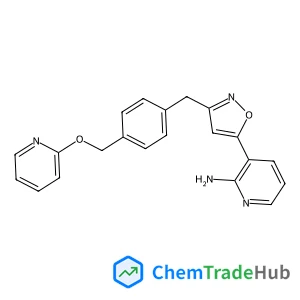
3-(3-(4-((Pyridin-2-yloxy)methyl)benzyl)isoxazol-5-yl)pyridin-2-amine
CAS番号:
936339-60-5
分子式:
C21H18N4O2
おすすめサプライヤー





免責事項
このページに表示される学術雑誌情報は、参考および研究目的のみを目的としています。当社は雑誌出版社とは提携しておらず、投稿の取り扱いも行っておりません。出版に関するお問い合わせは、各雑誌出版社に直接ご連絡ください。
表示されている情報に誤りがある場合は、support@chemtradehub.com までご連絡ください。迅速に確認し、対応いたします。