


Control of triplet state generation in heavy atom-free BODIPY–anthracene dyads by media polarity and structural factors
文献情報
出版日
2018-02-12
DOI
10.1039/C7CP08472B
インパクトファクター
3.676
著者
Mikhail A. Filatov, Safakath Karuthedath, Pavel M. Polestshuk, Susan Callaghan, Keith J. Flanagan, Maxime Telitchko, Thomas Wiesner, Frédéric Laquai, Mathias O. Senge
原文を見る
要旨
A family of heavy atom-free BODIPY–anthracene dyads (BADs) exhibiting triplet excited state formation from charge-transfer states is reported. Four types of BODIPY scaffolds, different in the alkyl substitution pattern, and four anthracene derivatives have been used to access BADs. Fluorescence and intersystem crossing (ISC) in these dyads depend on donor–acceptor couplings and can be accurately controlled by substitution or media polarity. Under conditions that do not allow charge transfer (CT), the dyads exhibit fluorescence with high quantum yields. Formation of charge-transfer states triggers ISC and the formation of long-lived triplet excited states in the dyads. The excited state properties were studied by steady-state techniques and ultrafast pump–probe spectroscopy to determine the parameters of the observed processes. Structural information for various BADs was derived from single crystal X-ray structure determinations alongside DFT molecular geometry optimization, revealing the effects of mutual orientation of subunits on the photophysical properties. The calculations showed that alkyl substituents on the BODIPY destabilize CT states in the dyads, thus controlling the charge transfer between the subunits. The effect of the dyad structure on the ISC efficiency was considered at the M06-2X level of theory, and a correlation between mutual orientation of the subunits and the energy gap between singlet and triplet CT states was studied using a multireference CASSCF method.
おすすめジャーナル

Mini-Reviews in Medicinal Chemistry

Angewandte Chemie International Edition

Journal of Medical Biochemistry

Advanced Engineering Materials

Foundations of Chemistry

Environmental Toxicology and Pharmacology

Nature Reviews Drug Discovery

Green Chemistry

Physical Chemistry Chemical Physics

Journal of Enzyme inhibition and Medicinal Chemistry
関連文献
Ni-Catalyzed 1,2-iminoacylation of alkenes via a reductive strategy
Lin Wang, Chuan Wang
2018-10-25
Research Article
DOI: 10.1039/C8QO01044G
Trichalcogenasumanenes containing various chalcogen atoms: synthesis, structure, properties, and chemical reactivity
Shitao Wang, Jihai Shang, Chaoxian Yan, Wenbo Wang, Chengshan Yuan, Hao-Li Zhang, Xiangfeng Shao
2018-12-05
Research Article
DOI: 10.1039/C8QO01220B
Ag(i)-Catalyzed solvent-free CO2 capture with homopropargylic amines: an efficient access to 1,3-oxazinan-2-ones
Weilin Wang, Yixin Fu, Yimeng Li, Ruitong Yao, Lingyan Liu, Weixing Chang
2018-10-10
Research Article
DOI: 10.1039/C8QO00978C
Secopaxilline A, an indole-diterpenoid derivative from an aciduric Penicillium fungus, its identification and semisynthesis
Yaqin Fan, Yi Wang, Arthit Chairoungdua, Pawinee Piyachaturawat
2018-08-24
Research Article
DOI: 10.1039/C8QO00756J
Pd/Gorlos-Phos-catalyzed cross-coupling between two different aryl chlorides in the presence of B2Pin2 and cytotoxicity studies of the products
Xinyu Duan, Pengbin Li, Guirong Zhu, Chunling Fu, Qin Chen, Xin Huang
2018-10-11
Research Article
DOI: 10.1039/C8QO00781K
Oxidative C(sp3)–H amidation of tertiary arylamines with nitriles
Binzhou Lin, Shanshan Shi, Yiqun Cui, Yupei Liu, Guo Tang
2018-09-03
Research Article
DOI: 10.1039/C8QO00794B
Conductive fullerene surfactants via anion doping as cathode interlayers for efficient organic and perovskite solar cells
Kangrong Yan, Zhi-Xi Liu, Xue Li, Jiehuan Chen, Hongzheng Chen, Chang-Zhi Li
2018-08-24
Research Article
DOI: 10.1039/C8QO00788H
こちらもおすすめ
化合物よくある質問
4'-ブロモビフェニル-3-メトークシーディ.ActionBarはどのように保存すればよいですか?
4'-ブロモビフェニル-3-メトークシーディ.ActionBarは、冷暗所で、直射日光を避け、密栓の容器に保存し、遠隔場所に保管してください。温度は常温(0〜2...
149506-25-24'-Bromo-biphenyl-3-...
2947-60-6(3-Methylphenyl)acet...
化合物よくある質問
2-異丙基フェニルヒドラジン塩酸塩とは何ですか?
2-異丙基フェニルヒドラジン塩酸塩は、CAS番号58928-82-8を有する化合物で、構造式はC11H14N2HClです。これは塩基性化合物であり、水に溶けやす...
58928-82-8(2-Isopropylphenyl)h...
化合物よくある質問
5-(4-クロロフェニル)-4H-1,2,4-三氮唑-3-アミンを取り扱う際の実験室安全事項は何ですか?
5-(4-クロロフェニル)-4H-1,2,4-三氮唑-3-アミンは取り扱いに注意が必要です。PPEとして防塵マスク、ゴーグル、手袋を使用し、ドラフトチャンバーを...
98554-00-85-(4-Chlorophenyl)-1...
化合物よくある質問
去甲基雷贝拉唑硫醚はどのように合成されますか?
去甲基雷贝拉唑硫醚は、ベンジミダゾール硫化物と3-メチル-4-ピリジノールの反応によって合成されます。具体的には、2-チオキシドベンジミダゾールと3-メチル-4...
117976-91-73-({2-[(1H-Benzimida...
化合物よくある質問
2-ブロモ-5-フロロ-N-(2-フェノールメチル)ベンゼンウレアは安全ですか?
2-ブロモ-5-フロロ-N-(2-フェノールメチル)ベンゼンウレアは、毒性や刺激性の実験データに基づき、適切な取扱いと防護措置を講じることで安全に使用できます。...
923722-86-52-Bromo-5-fluoro-N-(...
化合物よくある質問
対甲苯磺酸酯-四聚乙二醇-四氢吡喃醚の物理化学的性質は何ですか?
対甲苯磺酸酯-四聚乙二醇-四氢吡喃醚のCAS番号は86259-89-4です。この化合物は無色の液体で、分子量は約724.8です。高濃度では溶血性が報告されており...
86259-89-42-(2-{2-[2-(Tetrahyd...
化合物よくある質問
2-(3-(二氟甲基)-4-氟苯基)-4,4,5,5-四甲基-1,3,2-二噁硼戊環はどのように保存すればよいですか?
2-(3-(二氟甲基)-4-氟苯基)-4,4,5,5-四甲基-1,3,2-二噁硼戊環は、室温で暗い場所に保管し、直射日光から遠ざけ、容器は密閉状態で保存してくだ...
445303-65-12-[3-(difluoromethyl...
化合物よくある質問
6-アミノ-5-クロロ-2-シクロプロピルピリミジンカルボン酸の代替品はありますか?
この化合物の代替品には、ピロリミジン酸やその類似物、またピロリミジンカルボン酸の他の異性体があります。これらの代替品は、特定の化学反応や目的に応じて選択すること...
858956-08-86-Amino-5-chloro-2-c...
化合物よくある質問
5-クロロベンゾ[1,3]二オキセイン-4-アミンに適用される法規ガイドラインは何ですか?
5-クロロベンゾ[1,3]二オキセイン-4-アミンはCAS番号379228-45-2に該当します。この化合物はGHS分類でH314(接触により急性毒性がある)と...
379228-45-25-Chloro-1,3-benzodi...
掲載誌
Physical Chemistry Chemical Physics
CiteScore:
5.5
自己引用率:
10.3%
年間論文数:
3036
Physical Chemistry Chemical Physics (PCCP) is an international journal co-owned by 19 physical chemistry and physics societies from around the world. This journal publishes original, cutting-edge research in physical chemistry, chemical physics and biophysical chemistry. To be suitable for publication in PCCP, articles must include significant innovation and/or insight into physical chemistry; this is the most important criterion that reviewers and Editors will judge against when evaluating submissions. The journal has a broad scope and welcomes contributions spanning experiment, theory, computation and data science. Topical coverage includes spectroscopy, dynamics, kinetics, statistical mechanics, thermodynamics, electrochemistry, catalysis, surface science, quantum mechanics, quantum computing and machine learning. Interdisciplinary research areas such as polymers and soft matter, materials, nanoscience, energy, surfaces/interfaces, and biophysical chemistry are welcomed if they demonstrate significant innovation and/or insight into physical chemistry. Joined experimental/theoretical studies are particularly appreciated when complementary and based on up-to-date approaches.
おすすめ化合物
![Ethyl thieno[3,2-f]quinoline-2-carboxylate structure](https://static.chemtradehub.com/structs/299/29948-26-3-f62b.webp "Ethyl thieno[3,2-f]quinoline-2-carboxylate structure")
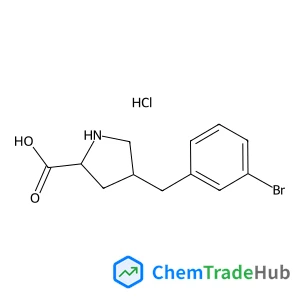
(2S,4R)-4-(3-Bromobenzyl)pyrrolidine-2-carboxylic acid hydrochloride
CAS番号:
1049734-10-2
分子式:
C12H15BrClNO2
おすすめサプライヤー








免責事項
このページに表示される学術雑誌情報は、参考および研究目的のみを目的としています。当社は雑誌出版社とは提携しておらず、投稿の取り扱いも行っておりません。出版に関するお問い合わせは、各雑誌出版社に直接ご連絡ください。
表示されている情報に誤りがある場合は、support@chemtradehub.com までご連絡ください。迅速に確認し、対応いたします。