












Nanopore-mediated ultrashort laser-induced formation and erasure of volume nanogratings in glass
文献情報
出版日
2018-01-25
DOI
10.1039/C7CP07603G
インパクトファクター
3.676
著者
Anton Rudenko, Jean-Philippe Colombier, Tatiana E. Itina
原文を見る
要旨
Ultrashort laser nanostructuring of glasses has attracted increasing interest over the last few decades due to numerous applications in three-dimensional nanofabrication, optical data storage, and development of nanofluidic and polarization-sensitive devices. The knowledge of the influence of laser parameters on the nanostructure formation/erasure is still lacking. In this work, laser-induced modifications and mechanisms of glass decomposition in fused silica are numerically investigated. Cavitation is shown to be the primary mechanism responsible for void formation at the center of the heat-affected zone. Multipulse accumulation processes providing higher local temperatures/pressures lead to the rapid formation of cavitation nanopores, lying in the origin of self-organized nanogratings. Femtosecond laser-interaction threshold conditions required for nanograting formation/erasure are defined in agreement with the available experimental findings. For this, a detailed multi-physical modeling is performed taking into account laser pulse propagation in nonlinear and dispersive media, electronic relaxation/excitation processes, electron–ion heat transfer and thermal diffusion. Based on the calculated temperatures, classical nucleation theory, viscoelastic energy conservation law and the Rayleigh–Plesset model, threshold conditions leading to nanopore formation, stability and growth are investigated as a function of laser energy, pulse duration and repetition rate. The performed numerical study not only contributes to a better fundamental understanding of ultrashort laser-induced modifications on the nanoscale but should also be helpful in defining the optimal laser parameters for nanostructuring or avoiding nanostructure organization and in developing techniques for nanograting rewriting.
関連文献
The catalytic Mitsunobu reaction: a critical analysis of the current state-of-the-art
Rhydian H. Beddoe, Helen F. Sneddon, Ross M. Denton
2018-10-01
Review Article
DOI: 10.1039/C8OB01929K
Silver-catalyzed regioselective hydroamination of alkenyl diazoacetates to synthesize γ-amino acid equivalents
Jun Ueda, Shingo Harada, Hiroki Nakayama
2018-06-06
Paper
DOI: 10.1039/C8OB00894A
Nazarov cyclisations initiated by DDQ-oxidised pentadienyl ether: a mechanistic investigation from the DFT perspective
Ali Gouranourimi, Antony Chipman, Rasool Babaahmadi, Angus Olding, Brian F. Yates, Alireza Ariafard
2018-11-08
Paper
DOI: 10.1039/C8OB02590H
C-Alkylation of N-alkylamides with styrenes in air and scale-up using a microwave flow reactor
Souma Tamaoki, Hiromichi Egami, Noriyuki Ohneda, Tadashi Okamoto, Hiromichi Odajima, Yoshitaka Hamashima
2018-09-29
Communication
DOI: 10.1039/C8OB02282H
Regioselective [3 + 2]-annulation of hydrazonyl chlorides with 1,3-dicarbonyl compounds for assembling of polysubstituted pyrazoles
Kun Liu, Xinye Shang, Yuyu Cheng, Xiaoyong Chang, Pengfei Li, Wenjun Li
2018-10-11
Communication
DOI: 10.1039/C8OB02352B
Asymmetric synthesis of β-amino ketones by using cinchona alkaloid-based chiral phase transfer catalysts
Weihua Li, Yifeng Wang, Danqian Xu
2018-11-01
Communication
DOI: 10.1039/C8OB02484G
Organocatalysis and catalyst aggregation: a study using the asymmetric synthesis of benzofuranones as a test reaction
Luca Massaro, Antonio Puglisi, Lucrezia Angelini, Achille Antenucci, Simone Placidi, Fabio Sciubba, Luciano Galantini, Marco Bella
2018-09-12
Paper
DOI: 10.1039/C8OB01772G
Syntheses of the plant auxin conjugate 2-O-(indole-3-acetyl)-myo-inositol IAInos
Saúl Silva, Osvaldo S. Ascenso, Eva C. Lourenço, Margarida Archer, M. Rita Ventura
2018-09-12
Communication
DOI: 10.1039/C8OB02096E
A supramolecular red to near-infrared fluorescent probe for the detection of drugs in urine
Gyan H. Aryal, Kenneth W. Hunter, Liming Huang
2018-09-21
Paper
DOI: 10.1039/C8OB02180E
こちらもおすすめ
化合物よくある質問
2-ヒドロキシ-5-ニトロベンジンブロモイドの代替品はありますか?
2-ヒドロキシ-5-ニトロベンジンブロモイドは特定の化学反応に適しているため、代替品は限られています。しかし、同様の構造を持つ2-ヒドロキシ-4-ニトロベンジン...
772-33-82-(Bromomethyl)-4-ni...
化合物よくある質問
N-(2-ブロモフェニル)-1-チロール-3-オキソ-3-(ピペリジニル)プロペン-2-イル)ベンゼンアミドを取り扱う際の実験室安全事項は何ですか?
N-(2-ブロモフェニル)-1-チロール-3-オキソ-3-(ピペリジニル)プロペン-2-イル)ベンゼンアミドは有毒で、皮膚や粘膜に刺激を与える可能性があります。...
1800044-77-2N-[(1Z)-1-(2-Bromoph...
化合物よくある質問
1,3プロパンジオール,2-[2-(2アミノ-6クロロ-9Hピリミジン-9-イル)エチル-1,1,2,2-D4]-2,3-ジアセタートの市場動向や研究トレンドはどうですか?
この化合物は、新規治療薬の開発に注目されています。市場では、その有効性と安全性が評価され、研究分野では、分子生物学と医薬化学の新たな発見が期待されています。
1020718-81-31,3-Propanediol, 2-[...
579-44-2Ethanone, 2-hydroxy-...
化合物よくある質問
Succinimidyl-alanyl-phenylalanyl-prolyl-phenylalanine 4-nitroanilide はどの業界で使用されていますか?
Succinimidyl-alanyl-phenylalanyl-prolyl-phenylalanine 4-nitroanilide は主に医薬品開発やポ...
128802-73-3succinimidyl-alanyl-...
化合物よくある質問
メチル6-アミノ-5-クロロピリジン-2-カーボイル酸について、適用される法規ガイドラインは何ですか?
メチル6-アミノ-5-クロロピリジン-2-カーボイル酸(CAS番号: 1256794-05-4)の使用には、GHS( Globally Harmonized S...
1256794-05-4Methyl 6-amino-5-chl...
化合物よくある質問
エチル4-(シクロ Pentagonyl)アミノ-2-メチル硫化基ピリミジン-5-カルボキシレートを取り扱う際の実験室安全事項は何ですか?
取り扱いには、耐薬品性の容器を使用し、通気性の良い場所で操作することを推奨します。漏れ時は、SDS(安全データシート)を参照して適切な措置を取ること。手洗いと洗...
211245-62-4ethyl 4-(cyclopentyl...
化合物よくある質問
(S)-3-ベンZYルピペリジン塩酸塩とは何ですか?
(S)-3-ベンZYルピペリジン塩酸塩は、CAS番号1258940-00-9で表される化合物です。これは、(S)-3-苯基哌啶的盐酸盐であり、主に医薬品の原料と...
1258940-00-9(S)-3-Phenylpiperidi...
化合物よくある質問
3,5-二甲基金剛胺の主な用途は何ですか?
3,5-二甲基金剛胺は、主に医薬品の原料として使用され、また抗うつ薬や抗アルツハイマー薬の開発に利用されます。さらに、化粧品や食品添加物の製造でも重要な役割を果...
19988-45-52-(2,3-Dihydroxyphen...
化合物よくある質問
ビス(4-メチル-2-ペンチル)フェニルカルボン酸エステルの代替品はありますか?
ビス(4-メチル-2-ペンチル)フェニルカルボン酸エステル (CAS番号: 1398066-13-1) の代替品には、ビス(2-エチルヘキシル)フェノールカルボ...
1398066-13-1Bis(4-methyl-2-penty...
掲載誌
Physical Chemistry Chemical Physics

CiteScore:
5.5
自己引用率:
10.3%
年間論文数:
3036
Physical Chemistry Chemical Physics (PCCP) is an international journal co-owned by 19 physical chemistry and physics societies from around the world. This journal publishes original, cutting-edge research in physical chemistry, chemical physics and biophysical chemistry. To be suitable for publication in PCCP, articles must include significant innovation and/or insight into physical chemistry; this is the most important criterion that reviewers and Editors will judge against when evaluating submissions. The journal has a broad scope and welcomes contributions spanning experiment, theory, computation and data science. Topical coverage includes spectroscopy, dynamics, kinetics, statistical mechanics, thermodynamics, electrochemistry, catalysis, surface science, quantum mechanics, quantum computing and machine learning. Interdisciplinary research areas such as polymers and soft matter, materials, nanoscience, energy, surfaces/interfaces, and biophysical chemistry are welcomed if they demonstrate significant innovation and/or insight into physical chemistry. Joined experimental/theoretical studies are particularly appreciated when complementary and based on up-to-date approaches.
おすすめ化合物
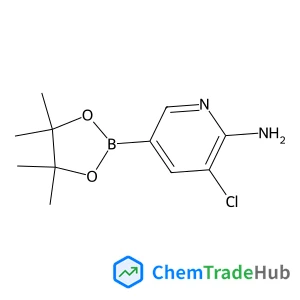
3-Chloro-5-(4,4,5,5-tetramethyl-1,3,2-dioxaborolan-2-yl)-2-pyridinamine
CAS番号:
1032758-99-8
分子式:
C11H16BClN2O2
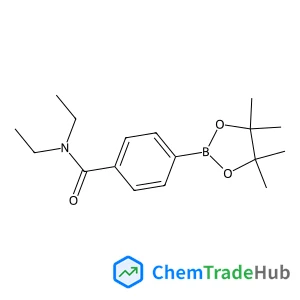
N,N-Diethyl-4-(4,4,5,5-tetramethyl-1,3,2-dioxaborolan-2-yl)benzamide
CAS番号:
325142-99-2
分子式:
C17H26BNO3
おすすめサプライヤー





免責事項
このページに表示される学術雑誌情報は、参考および研究目的のみを目的としています。当社は雑誌出版社とは提携しておらず、投稿の取り扱いも行っておりません。出版に関するお問い合わせは、各雑誌出版社に直接ご連絡ください。
表示されている情報に誤りがある場合は、support@chemtradehub.com までご連絡ください。迅速に確認し、対応いたします。