


Ionic effects on the proton transfer mechanism in aqueous solutions
文献情報
出版日
2017-08-25
DOI
10.1039/C7CP04392A
インパクトファクター
3.676
著者
Joonyoung F. Joung, Sangin Kim, Sungnam Park
原文を見る
要旨
Proton dissociation (PD) reactions of weak acids and proton transfer (PT) processes in aqueous solutions are strongly influenced by ions. However, a detailed molecular picture that describes how ions affect the rates of PD and PT processes is still missing. Here, we utilize time-resolved fluorescence spectroscopy combined with quantum chemical calculations to investigate the excited-state proton transfer (ESPT) reaction of a photoacid in aqueous metal chloride solutions. The activation energy (Ea) for the ESPT of the photoacid increases with increasing charge density of cations (ρcat). The local hydrogen bond (H-bond) structure of the photoacid in the ionic hydration shell is strongly related to both the Ea and the ρcat. Most importantly, the proton's positive charge in the transition state, which is delocalized through the H-bonded water channel, is more destabilized with an increase in the ρcat, leading to a higher Ea. Our experimental and computational results allow us to elucidate the underlying mechanism for the ionic effect on PD and the subsequent PT process at the molecular level.
おすすめジャーナル

Drug Discovery Today

Journal of Peptide Science

Organic Process Research & Development

Chemistry Education Research and Practice

Current Opinion in Solid State & Materials Science

Russian Journal of Organic Chemistry

Russian Journal of Coordination Chemistry

Russian Journal of Bioorganic Chemistry

Russian Chemical Bulletin

Journal of Natural Medicines
関連文献
DNA protection by ectoine from ionizing radiation: molecular mechanisms
Maria-Astrid Schröter, Hans-Jörg Kunte, Tihomir Solomun
2017-08-31
Paper
DOI: 10.1039/C7CP02860A
Enhanced interfacial activity of multi-arm poly(ethylene oxide) star polymers relative to linear poly(ethylene oxide) at fluid interfaces
Yun-Ru Huang, Melissa Lamson, Krzysztof Matyjaszewski
2017-07-10
Paper
DOI: 10.1039/C7CP02841E
Relativistic effects at the Cu2O2 core – a density functional theory study
Matthias Witte, Sonja Herres-Pawlis
2017-09-18
Paper
DOI: 10.1039/C7CP04686C
Probe-location dependent resonance energy transfer at lipid/water interfaces: comparison between the gel- and fluid-phase of lipid bilayer
Moirangthem Kiran Singh, Mohammad Firoz Khan, Him Shweta, Sobhan Sen
2017-07-10
Paper
DOI: 10.1039/C7CP03108D
Dewetting acrylic polymer films with water/propylene carbonate/surfactant mixtures – implications for cultural heritage conservation
M. Baglioni, C. Montis, F. Brandi, T. Guaragnone, I. Meazzini, P. Baglioni, D. Berti
2017-05-18
Paper
DOI: 10.1039/C7CP02608K
Electrostatic interactions in concentrated colloidal dispersions
2017-07-03
Paper
DOI: 10.1039/C7CP02594G
Adsorption of molecular hydrogen on coronene with a new potential energy surface
Massimiliano Bartolomei, Ricardo Pérez de Tudela, Kilian Arteaga, Tomás González-Lezana, Marta I. Hernández, José Campos-Martínez, Pablo Villarreal, Javier Hernández-Rojas, José Bretón
2017-09-05
Paper
DOI: 10.1039/C7CP03819D
Cooperative hydrogen bonds form a pseudocycle stabilizing an isolated complex of isocyanic acid with urea
John C. Mullaney, Chris Medcraft, David P. Tew, Luke Lewis-Borrell, Bernard T. Golding, Nicholas R. Walker, Anthony C. Legon
2017-09-07
Paper
DOI: 10.1039/C7CP04315E
Elucidating the mechanism of MgB2 initial hydrogenation via a combined experimental–theoretical study
Keith G. Ray, Leonard E. Klebanoff, Jonathan R. I. Lee, Vitalie Stavila, Tae Wook Heo, Patrick Shea, Alexander A. Baker, Shinyoung Kang, Michael Bagge-Hansen, Yi-Sheng Liu, James L. White, Brandon C. Wood
2017-07-19
Paper
DOI: 10.1039/C7CP03709K
Capture of Xe and Ar atoms by quantized vortices in 4He nanodroplets
2017-09-04
Paper
DOI: 10.1039/C7CP03307A
こちらもおすすめ
化合物よくある質問
間溴苯甲酰腈の市場動向や研究トレンドはどうですか?
間 brom 苯甲酰腈は、合成化学や薬物化学において重要な Intermediate として使用されています。市場動向としては、その合成性と機能性により、研究開...
24999-51-7(3-Bromophenyl)(oxo)...
287966-62-5Desulfo Glucoraphani...
化合物よくある質問
Methyl 2-amino-5-(trifluoromethyl)benzoateに適用される法規ガイドラインは何ですか?
CAS番号117324-58-0の塩酸メチル2アミノ-5-トリフルオロメチルベンゼートは、GHS分類により腐食性物質と判定されます。REACH規則では、製造、販...
117324-58-0Methyl 2-amino-5-(tr...
化合物よくある質問
3-ブロモ-1,3,4,5-四水化-2H-1-ベンザアゼピン-2-オンは安全ですか?
毒性があるため、適切な安全対策が必須です。皮膚や粘膜への刺激性が強く、吸入や誤飲により健康被害を引き起こす可能性があります。取扱時にはガスマスクや手袋、眼鏡を使...
86499-96-93-Bromo-1,3,4,5-tetr...
化合物よくある質問
三氟甲基ピリジン-2-甲アミン塩酸塩は安全ですか?
三氟甲基ピリジン-2-甲アミン塩酸塩は安全性に注意が必要です。毒性は低レベルですが、直接的接触や吸入は避けるべきです。適切な手袋や防塵マスクを着用し、密閉された...
871826-12-9(5-(Trifluoromethyl)...
化合物よくある質問
1-エチル-4-(4-硝基フェニル)ピペリジンは安全ですか?
1-エチル-4-(4-硝基フェニル)ピペリジンは有毒であり、取扱には注意が必要です。保管や作業中に手袋を着用し、目や皮膚に接触しないように注意する必要があります...
115619-00-61-Ethyl-4-(4-nitroph...
化合物よくある質問
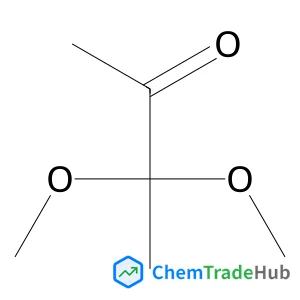
1,1-ジメトキシプロパン-2-オンは安全ですか?
1,1-ジメトキシプロパン-2-オンは一般的に低毒性ですが、皮膚や目への刺激性があるため、取扱いには注意が必要です。蒸気や液体の吸入には有害な可能性があり、適切...
6342-56-91,1-dimethoxypropan-...
化合物よくある質問
コバルト(II) 3,3'-{[(1S,2S)-1,2-ジメチルフENCYCLICALE-1,2-エチエンジイル]ビス[ニトロリルメチルイリデン]}ビス[4-オキソ-2-ペンテン-2-olate]について「に適用される法規ガイドラインは何ですか?
この化合物はCAS番号259259-80-8に対応しています。GHS分類では、毒性、燃焼性、反応性、炎症性を考慮に入れ、適切な危険性分類が行われます。REACH...
259259-80-8Cobalt(2+) (2E,2'E)-...
化合物よくある質問
「カーバミル酸, N-[8-[[2-[[2-(2,6-ジオキソ-3-ピペリジニル)-2,3-ジオキソ-1,3-ジヒドロ-1H-イソイソインドール-4-イルオキシ]アセチル]アミノ]オクチル]-1,1-ジメチレチルエステル」はどのように保存すればよいですか?
この化合物は、冷却庫で-20℃の温度、乾燥した容器に保管し、直日光から保護する必要があります。湿度の高い環境や高温は避けてください。
1950635-34-32-Methyl-2-propanyl ...
1433975-21-3FMoc-D-4-Aph(tBu-CbM...
掲載誌
Physical Chemistry Chemical Physics

CiteScore:
5.5
自己引用率:
10.3%
年間論文数:
3036
Physical Chemistry Chemical Physics (PCCP) is an international journal co-owned by 19 physical chemistry and physics societies from around the world. This journal publishes original, cutting-edge research in physical chemistry, chemical physics and biophysical chemistry. To be suitable for publication in PCCP, articles must include significant innovation and/or insight into physical chemistry; this is the most important criterion that reviewers and Editors will judge against when evaluating submissions. The journal has a broad scope and welcomes contributions spanning experiment, theory, computation and data science. Topical coverage includes spectroscopy, dynamics, kinetics, statistical mechanics, thermodynamics, electrochemistry, catalysis, surface science, quantum mechanics, quantum computing and machine learning. Interdisciplinary research areas such as polymers and soft matter, materials, nanoscience, energy, surfaces/interfaces, and biophysical chemistry are welcomed if they demonstrate significant innovation and/or insight into physical chemistry. Joined experimental/theoretical studies are particularly appreciated when complementary and based on up-to-date approaches.
おすすめ化合物
![trans,trans-4-n-Propyl-4-[4-(trifluoromethoxy)phenyl]bicyclohexyl structure](https://static.chemtradehub.com/structs/133/133937-72-1-25ef.webp "trans,trans-4-n-Propyl-4-[4-(trifluoromethoxy)phenyl]bicyclohexyl structure")
おすすめサプライヤー



免責事項
このページに表示される学術雑誌情報は、参考および研究目的のみを目的としています。当社は雑誌出版社とは提携しておらず、投稿の取り扱いも行っておりません。出版に関するお問い合わせは、各雑誌出版社に直接ご連絡ください。
表示されている情報に誤りがある場合は、support@chemtradehub.com までご連絡ください。迅速に確認し、対応いたします。