












Plasma treatment effect on polymer buried interfacial structure and property
文献情報
出版日
2017-04-19
DOI
10.1039/C7CP00567A
インパクトファクター
3.676
著者
Nathan W. Ulrich, John Andre, Jaimal Williamson, Kang-Wook Lee, Zhan Chen
原文を見る
要旨
Adhesion is important in many industrial applications including those in the microelectronics industry. Flip-chip assemblies commonly utilize epoxy underfills to promote reliability and the buried interfacial structure of underfills is crucial to device lifetime. Poor adhesion at this interface can cause premature device failure. One method to increase adhesion strength is to plasma treat the substrate attached to underfills, however, the mechanism of this increase in adhesion strength has not been thoroughly investigated at the molecular level in situ, because it is difficult to probe a buried interface where the adhesion occurs. In this work, sum frequency generation (SFG) vibrational spectroscopy was utilized to investigate the buried polymer/epoxy resin interface at the molecular level. Plasma treatment was performed on the polymer surfaces and the effects were examined. The buried interfaces between the polymer surface before and after plasma treatment and epoxy were then investigated to understand if the effects of the treatment can be observed using SFG. It was found that the molecular structure of the buried interface of the pristine polymer surface in contact with epoxy is drastically different from the buried interface of the plasma treated surface with epoxy. The buried interface containing the plasma treated polymer surface was found to be considerably more disordered and had much higher adhesion strength. This research elucidates the plasma treatment effects on structures and properties of buried polymer/epoxy interfaces, providing in-depth understanding on the mechanism of adhesion strength increase facilitated by plasma treatment.
関連文献
Rapid ultrasensitive measurement of salivary cortisol using nano-linker chemistry coupled with surface plasmon resonance detection
John S. Mitchell, Tim E. Lowe, John R. Ingram
2008-11-13
Paper
DOI: 10.1039/B817083P
Integrated strong cation exchange/capillary reversed-phase liquid chromatography/on-target digestion coupled with mass spectrometry for identification of intact human liver tissue proteins‡
Mingxia Gao, Wenjia Yu, Yang Zhang, Guoquan Yan, Chunhui Deng, Xiangmin Zhang
2008-07-30
Paper
DOI: 10.1039/B803388A
Spatial metabolic fingerprinting using FT-IR spectroscopy: investigating abiotic stresses on Micrasterias hardyi
Soyab A. Patel, Felicity Currie, Nalin Thakker, Royston Goodacre
2008-10-21
Paper
DOI: 10.1039/B809441A
The analytical utility of thermally desorbed polydimethylsilicone membranes for in-vivo sampling of volatile organic compounds in and on human skin
S. Riazanskaia, G. Blackburn, M. Harker, D. Taylor, C. L. P. Thomas
2008-05-20
Paper
DOI: 10.1039/B802515K
Development of robust quantitative methods by near-infrared spectroscopy for rapid pharmaceutical determination of content uniformity in complex tablet matrix
Dong Xiang, Michele Konigsberger, Busolo Wabuyele, Karl Hornung, James Cheney
2009-03-31
Paper
DOI: 10.1039/B821836F
Wide range ammonia concentration analyzer utilizing a new principle of photoelectrochemical reaction at a nanoporous TiO2 photoanode
Takashi Suzuki, Hirohito Ueno, Junichi Nemoto, Yuki Fujii, Mikio Hoshino, Masao Kaneko
2009-05-28
Communication
DOI: 10.1039/B822512E
Direct measurements of xanthine in 2000-fold diluted xanthinuric urine with a nanoporous carbon fiber sensor
Mehjabin Kathiwala, Andrews Obeng Affum, Jason Perry, Anna Brajter-Toth
2008-03-12
Paper
DOI: 10.1039/B718125F
Hadamard transform spectral microscopy for single cell imaging using organic and quantum dotfluorescent probes
Hao Xu, Jun Peng, Hong-Wu Tang, Ying Li, Qiong-Shui Wu, Zhi-Ling Zhang, Gang Zhou, Chuang Chen, Yan Li
2008-12-08
Paper
DOI: 10.1039/B807251E
こちらもおすすめ
化合物よくある質問
6- bromo-1-cyclopropyl-1H-benzimidazoleの市場動向や研究トレンドはどうですか?
6- bromo-1-cyclopropyl-1H-benzimidazoleは、抗炎症、抗ウイルス作用を持つことが報告されており、新薬開発の研究対象として注目...
1416713-53-56-Bromo-1-cyclopropy...
化合物よくある質問
環氧プロpanol-d5を取り扱う際の実験室安全事項は何ですか?
取り扱う際には、防護眼鏡と手袋を使用し、ドラフトチャンバー内で操作することを推奨します。漏洩時には適切な手順で処理し、安全データシートを常に参照してください。
1246819-20-4Glycidol-d5
化合物よくある質問
2,2’-ジメチル-3,3’-ビピリジンはどのように合成されますか?
2,2’-ジメチル-3,3’-ビピリジンは、ピリジンと2-メチルアクリルアミドを有機合成反応で合成します。この反応では、ピリジンと2-メチルアクリルアミドを含有...
86156-55-02,2’-Dimethyl-3,3’-b...
化合物よくある質問
6-甲基ピリジン-2-ボリック酸の主な用途は何ですか?
6-甲基ピリジン-2-ボリック酸は、合成化学、医薬品合成、以及研究用途などに広く使用され、特に組換えDNA技術や分子生物学の研究において重要な役割を果たします。
372963-50-3(6-Methyl-2-pyridiny...
化合物よくある質問
(R)-3-(1-甲基-2-氧環己基)プロpano酸メチルは安全ですか?
(R)-3-(1-甲基-2-氧環己基)プロpano酸メチルは一定の安全性がありますが、直接的な皮膚接触や吸入は避けるべきです。使用する際は適切な個々の安全データ...
94089-47-1methyl 3-[(1R)-1-met...
化合物よくある質問
ketorolacはどのように保存すればよいですか?
ketorolacは、密封して遮光容器に保管し、直射日光や高温を避けて保存してください。温度は常温で保存し、湿度をなるべく低く保つことが推奨されます。
74103-06-3rac Ketorolac
化合物よくある質問
L-2,3-二氨基丙酸二盐酸盐を取り扱う際の実験室安全事項は何ですか?
L-2,3-二氨基丙酸二盐酸盐は腐食性が強く、皮膚や粘膜に刺激を与える可能性があります。取り扱う際は、防塵マスク、ゴーグル、手袋を使用し、適切な排気設備を使用し...
19777-68-5(S)-2,3-Diaminopropa...
化合物よくある質問
2-(4-溴ピリジン-2-基)乙腈の物理化学的性質は何ですか?
2-(4-溴ピリジン-2-基)乙腈のCAS番号は312325-73-8です。主に結晶形態で存在し、分子量は159.01 g/molです。この化合物は水に溶けやす...
312325-73-8(4-Bromo-2-pyridinyl...
化合物よくある質問
3-フローロ-[1,1-ベンジレン]-3,4-ジカルボン酸を取り扱う際の実験室安全事項は何ですか?
この化合物は毒性は低いですが、直接的な接触や吸入に注意が必要です。PPE(個人防護具)を着用し、ドラフトチャンバーを使用して操作することを推奨します。また、漏洩...
1261915-32-53'-Fluoro-[1,1'-biph...
化合物よくある質問
3-(1-氧代-1,3-二氢-2H-2-异吲哚)丙酸の主な用途は何ですか?
3-(1-氧代-1,3-二氢-2H-2-异吲哚)丙酸は、薬理学研究や医薬品製造において広く用いられる化合物です。また、工業的な用途でも一部の化学反応の触媒や助剤...
83747-30-23-(1-Oxo-1,3-dihydro...
掲載誌
Physical Chemistry Chemical Physics

CiteScore:
5.5
自己引用率:
10.3%
年間論文数:
3036
Physical Chemistry Chemical Physics (PCCP) is an international journal co-owned by 19 physical chemistry and physics societies from around the world. This journal publishes original, cutting-edge research in physical chemistry, chemical physics and biophysical chemistry. To be suitable for publication in PCCP, articles must include significant innovation and/or insight into physical chemistry; this is the most important criterion that reviewers and Editors will judge against when evaluating submissions. The journal has a broad scope and welcomes contributions spanning experiment, theory, computation and data science. Topical coverage includes spectroscopy, dynamics, kinetics, statistical mechanics, thermodynamics, electrochemistry, catalysis, surface science, quantum mechanics, quantum computing and machine learning. Interdisciplinary research areas such as polymers and soft matter, materials, nanoscience, energy, surfaces/interfaces, and biophysical chemistry are welcomed if they demonstrate significant innovation and/or insight into physical chemistry. Joined experimental/theoretical studies are particularly appreciated when complementary and based on up-to-date approaches.
おすすめ化合物
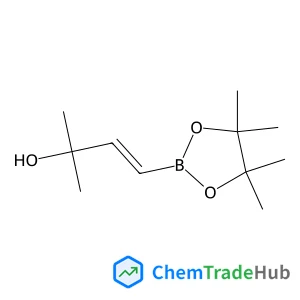
(E)-2-methyl-4-(4,4,5,5-tetramethyl-1,3,2-dioxaborolan-2-yl)but-3-en-2-ol
CAS番号:
581802-26-8
分子式:
C11H21BO3
![4-[(3-Chloro-2-fluorophenyl)amino]-7-methoxy-6-quinazolinyl acetate structure](https://static.chemtradehub.com/structs/740/740081-22-5-f58f.webp "4-[(3-Chloro-2-fluorophenyl)amino]-7-methoxy-6-quinazolinyl acetate structure")
4-[(3-Chloro-2-fluorophenyl)amino]-7-methoxy-6-quinazolinyl acetate
CAS番号:
740081-22-5
分子式:
C17H13ClFN3O3
おすすめサプライヤー




免責事項
このページに表示される学術雑誌情報は、参考および研究目的のみを目的としています。当社は雑誌出版社とは提携しておらず、投稿の取り扱いも行っておりません。出版に関するお問い合わせは、各雑誌出版社に直接ご連絡ください。
表示されている情報に誤りがある場合は、support@chemtradehub.com までご連絡ください。迅速に確認し、対応いたします。