












Synthesis of highly porous poly(tert-butyl acrylate)-b-polysulfone-b-poly(tert-butyl acrylate) asymmetric membranes
文献情報
出版日
2016-03-24
DOI
10.1039/C6PY00215C
インパクトファクター
5.582
著者
Yihui Xie, Nicolas Moreno, Hong Cheng, Pei-Ying Hong, Rachid Sougrat, Ali R. Behzad, Russell Tayouo, Suzana P. Nunes
原文を見る
要旨
For the first time, self-assembly and non-solvent induced phase separation was applied to polysulfone-based linear block copolymers, reaching mechanical stability much higher than other block copolymer membranes used in this method, which were mainly based on polystyrene blocks. Poly(tert-butyl acrylate)-b-polysulfone-b-poly(tert-butyl acrylate) (PtBA30k-b-PSU14k-b-PtBA30k) with a low polydispersity of 1.4 was synthesized by combining step-growth condensation and RAFT polymerization. Various advanced electron microscopies revealed that PtBA30k-b-PSU14k-b-PtBA30k assembles into worm-like cylindrical micelles in DMAc and adopts a “flower-like” arrangement with the PSU central block forming the shell. Computational modeling described the mechanism of micelle formation and morphological transition. Asymmetric nanostructured membranes were obtained with a highly porous interconnected skin layer and a sublayer with finger-like macrovoids. Ultrafiltration tests confirmed a water permeance of 555 L m−2 h−1 bar−1 with a molecular weight cut-off of 28 kg mol−1. PtBA segments on the membrane surface were then hydrolyzed and complexed with metals, leading to cross-linking and enhancement of antibacterial capability.
関連文献
Spatial distribution and comparative analysis of Aconitum alkaloids in Fuzi using DESI-MSI and UHPLC-QTOF-MS
Huixia Zhang, Liu Yang, Xin Chen, Shuai Zhang, Shiqi Chen, Daowen Li, Cun Li, Haiyang Jiang
2023-03-13
Paper
DOI: 10.1039/D2AN02051C
Rapid and sensitive detection of chlordimeform in cucumber and tomato samples using an immunochromatographic assay
Yingyue Zhu
2023-01-10
Paper
DOI: 10.1039/D2AN01923J
An electrochemical chlorpromazine sensor based on a gold–copper bimetallic synergetic molecularly imprinted interface on an acupuncture needle electrode
Jiandan Chen, Hongying Liu, Chenwei Wang, Kai Fan, Lihua Li, Yuqing Zhang, Lu Fang, Zheng-Zhi Yin, Zhong Lü
2023-04-13
Paper
DOI: 10.1039/D3AN00373F
Characterization of bispecific antigen-binding biotherapeutic fragmentation sites using microfluidic capillary electrophoresis coupled to mass spectrometry (mCZE-MS)
Ruhi Desai, Weidong Cui, John J. Harrahy, Alexander R. Ivanov
2023-01-03
Paper
DOI: 10.1039/D2AN01724E
Solvent-regulated fluorescence off–on signaling of Ni(ii) and Zn(ii) with the formation of two mononuclear complexes with an ATP detection ability by Zn(ii) assembly
Subham Ray, Soumik Laha, Manik Das, Uttam Kumar Das, Arijit Bag, Indranil Choudhuri, Nandan Bhattacharya, Bidhan Chandra Samanta, Tithi Maity
2022-12-20
Paper
DOI: 10.1039/D2AN01938H
Differential response for multiple ions: a smart probe to construct optically tunable molecular logic systems
Monaj Karar, Rikitha S. Fernandes, Nilanjan Dey
2023-02-04
Paper
DOI: 10.1039/D2AN01945K
Electrogenerated chemiluminescence resonance energy transfer between luminol and MnO2 nanosheets decorated with Cu2O nanoparticles for sensitive detection of RNase H
Yahao Shi, Chunting Chen, Yahui Zhang, Yongping Dong, Shangbing Wang
2023-02-11
Paper
DOI: 10.1039/D3AN00002H
Evaluation of kasugamycin as a chiral selector in capillary electrophoresis
Chunyan Zhang, Yifeng Fan, Liangliang Cai, Xiaofei Ma
2023-02-14
Paper
DOI: 10.1039/D2AN01949C
Discrimination of Robusta Amazônico coffee farmed by indigenous and non-indigenous people in Amazon: comparing benchtop and portable NIR using ComDim and duplex
Patrícia Valderrama, Enrique Anastácio Alves, Juliana Azevedo Lima Pallone, Federico Marini
2023-02-28
Paper
DOI: 10.1039/D3AN00104K
Conformational analysis of amphetamine and methamphetamine: a comprehensive approach by vibrational and chiroptical spectroscopy
Kristýna Dobšíková, Pavel Michal, Dita Spálovská, Josef Kapitán, Vladimír Setnička
2023-02-16
Paper
DOI: 10.1039/D2AN02014A
こちらもおすすめ
28770-01-62-(2-Isopropyl-1,3-o...
化合物よくある質問
「邻羟基阿托伐他汀内酯标准品」に適用される法規ガイドelinesは何ですか?
CAS番号163217-74-1の「邻羟基阿托伐他汀内酯标准品」は、GHS分類では危険物に分類されず、主にREACH規則とFDA/EPAの管理対象となります。R...
163217-74-1ortho-Hydroxy Atorva...
化合物よくある質問
メチル(3R)-3-アミノ-2,3-ジヒドロ-1-ベンゾファンラニン-5-カルボイル酸塩塩酸塩の主な用途は何ですか?
メチル(3R)-3-アミノ-2,3-ジヒドロ-1-ベンゾファンラニン-5-カルボイル酸塩塩酸塩は、医薬品や合成化学の研究に広く用いられます。また、特定の薬物の前...
2241594-15-8Methyl (3R)-3-amino-...
化合物よくある質問
トランス-4-メチルピロリジン-3-オール塩酸塩はどのように合成されますか?
トランス-4-メチルピロリジン-3-オール塩酸塩は、4-メチルピロリジンの塩酸塩化によって合成されます。一般的な合成方法では、4-メチルピロリジンを塩酸に加えて...
265108-42-7trans-4-Methylpyrrol...
化合物よくある質問
硫雜環丁烷-1,1-二氧化物は安全ですか?
硫雜環丁烷-1,1-二氧化物は安全ではありません。毒性は報告されていませんが、高温下で分解し、可燃性があるため、高圧ガスは注意が必要です。密閉した容器で保管し、...
5687-92-3Thietane 1,1-dioxide
6054-10-02H, 8H-Benzo[1,2-b
化合物よくある質問
9-ヒドロキシエリプチシネ塩酸塩はどのように合成されますか?
9-ヒドロキシエリプチシネ塩酸塩は、エリプチシネから塩酸を添加することで合成されます。選択性は高いですが、収率は約70%です。
52238-35-49-Hydroxyellipticine...
化合物よくある質問
5-塩素-2-(メチルアミノ)フェニル-(2-塩素フェニル)メタン酮の物理化学的性質は何ですか?
5-塩素-2-(メチルアミノ)フェニル-(2-塩素フェニル)メタン酮のCAS番号は5621-86-3です。この化合物は白色の結晶性粉末で、分子量は415.03で...
5621-86-3[5-Chloro-2-(methyla...
化合物よくある質問
1-[2-(4-甲氧基-苯氧基)-乙基]-哌嗪はどのように保存すればよいですか?
1-[2-(4-甲氧基-苯氧基)-乙基]-哌嗪は、直射日光を避けて暗所に、室温(15-25℃)で保管し、密閉容器に入れることで安定性を保つことができます。
117132-44-21-[2-(4-Methoxy-phen...
化合物よくある質問
2-[3-(4-甲氧基フェニル)プロピル]-4,4,5,5-四メチル-1,3,2-ドイボロロールアンの主な用途は何ですか?
2-[3-(4-甲氧基フェニル)プロピル]-4,4,5,5-四メチル-1,3,2-ドイボロロールアンは、医薬品の合成、有機合成化学、および新材料の研究で使用され...
1073371-72-82-[3-(4-Methoxypheny...
掲載誌
Polymer Chemistry

CiteScore:
8.6
自己引用率:
7.3%
年間論文数:
457
Polymer Chemistry welcomes submissions in all areas of polymer science that have a strong focus on macromolecular chemistry. Manuscripts may cover a broad range of fields, yet no direct application focus is required.
おすすめ化合物
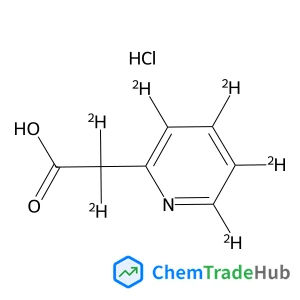
2,2-dideuterio-2-(3,4,5,6-tetradeuterio-2-pyridyl)acetic acid;hydrochloride
CAS番号:
1329799-67-8
分子式:
C7H2ClD6NO2
![S-[2,3-Bis(palmitoyloxy)propyl]-N-[(9H-fluoren-9-ylmethoxy)(hydroxy)methylene]cysteine structure](https://static.chemtradehub.com/structs/210/210532-98-2-f6a7.webp "S-[2,3-Bis(palmitoyloxy)propyl]-N-[(9H-fluoren-9-ylmethoxy)(hydroxy)methylene]cysteine structure")
おすすめサプライヤー





免責事項
このページに表示される学術雑誌情報は、参考および研究目的のみを目的としています。当社は雑誌出版社とは提携しておらず、投稿の取り扱いも行っておりません。出版に関するお問い合わせは、各雑誌出版社に直接ご連絡ください。
表示されている情報に誤りがある場合は、support@chemtradehub.com までご連絡ください。迅速に確認し、対応いたします。