












Surface- and tip-enhanced Raman scattering of bradykinin onto the colloidal suspended Ag surface
文献情報
出版日
2015-05-26
DOI
10.1039/C5CP02319J
インパクトファクター
3.676
著者
D. Swiech, Y. Ozaki, Y. Kim, E. Proniewicz
原文を見る
要旨
In this paper, surface- (SERS) and tip-enhanced Raman scattering (TERS) techniques were used to determine the adsorption mode of bradykinin (BK), a small peptide implicated in, for example, carcinoma growth, onto colloidal suspended Ag surfaces under various environmental conditions, including: peptide concentrations (10−5–10−7 M), excitation wavelengths (514.5 and 785.0 nm), and pH of aqueous sol solutions (from pH = 3 to pH = 11). The metal surface plasmon and rheology of the colloidal suspended Ag surface were explored by ultraviolet-visible (UV-Vis) spectroscopy and atomic force/scanning electron microscopy (AFM/SEM). The SERS results indicated that the peptide concentration of 10−5 M was the optimal peptide concentration for monolayer colloidal coverage. The Phe5/8 and Arg9 residues of BK generally participated in the interactions with colloidal suspended Ag surfaces. The amide group appeared to be arranged in the same manner to the Ag surface in the pH range of 3 to 11. At acidic pH of the solution (pH = 3 to 5), the BK –COO− terminal group binds to the Ag surface as a bidentate (at pH = 3) or monodentate (at pH = 5) chelating ligand. At pH = 11, the imino group of Arg9, probably due to its –CN⊕H2 protonation state, was not involved in the interaction with Ag. The reduction in the solution alkalinity (pH = 9) produced the deprotonation of the –CN⊕H2 group followed by group rearrangement in a way favoring the interaction between the lone electron pair on N and Ag. The TERS studies confirmed the proposed, on the basis of SERS, behavior of BK onto the colloidal suspended Ag at pH = 7 and showed that in different points of the colloidal suspended Ag surface the same peptide fragments approximately having the same orientations with respect to this surface interact with it.
関連文献
Catalytic Y-tailed amphiphilic homopolymers – aqueous nanoreactors for high activity, low loading SCS pincer catalysts
Joseph P. Patterson, Pepa Cotanda, Elizabeth G. Kelley, Adam O. Moughton, Annhelen Lu, Thomas H. Epps, III, Rachel K. O'Reilly
2013-01-28
Paper
DOI: 10.1039/C3PY21137A
Determination of copolymerisation characteristics in the N-carboxy anhydride polymerisation of two amino acids
Mischa Zelzer
2013-05-07
Paper
DOI: 10.1039/C3PY00431G
Optimization, automation and validation of the large-scale radiosynthesis of Al18F tracers in a custom-made automatic platform for high yield
Zhiguo Liu, Lun Yu, Kai Cheng, Yabo Feng, Pengfei Qiu, Yongkang Gai, Ming Zhou
2020-06-04
Paper
DOI: 10.1039/D0RE00144A
N-Acetoxy-phthalimide (NAPI) as a new H-abstracting agent at high temperature: application to the melt functionalization of polyethylene
Denis Bélékian, Philippe Cassagnau, Jean-Jacques Flat, Sébastien Quinebeche, Laurent Autissier, Denis Bertin, Didier Siri, Didier Gigmes, Yohann Guillaneuf, Philippe Chaumont, Emmanuel Beyou
2013-03-15
Communication
DOI: 10.1039/C3PY00246B
Linear and hyperbranched phosphorylcholine based homopolymers for blood biocompatibility
Manraj Jawanda, Benjamin F. L. Lai, Kazuhiko Ishihara, Ravin Narain
2013-03-13
Paper
DOI: 10.1039/C3PY00248A
Living radical polymerization of vinyl acetate and methyl acrylate mediated by Co(Salen*) complexes
Chei-Ming Liao, Ching-Chun Hsu, Fu-Sheng Wang, Bradford B. Wayland, Chi-How Peng
2013-03-14
Paper
DOI: 10.1039/C3PY00282A
Facile synthesis of thermal-responsive P(NIPAM-S)/SiO2 hybrid hollow spheres and their controllable release properties for fragrance
Liqin Liu, Yuyao Xie, Limin Wu
2013-03-13
Paper
DOI: 10.1039/C3PY00186E
Dual responsive micelles based on poly[(R)-3-hydroxybutyrate] and poly(2-(di-methylamino)ethyl methacrylate) for effective doxorubicin delivery
Shi Jie Ong, Yin Ting Tung, Hoi Teng Choo
2013-02-07
Paper
DOI: 10.1039/C3PY00096F
こちらもおすすめ
化合物よくある質問
2-ヒドロキシ-5-ニトロベンジンブロモイドの代替品はありますか?
2-ヒドロキシ-5-ニトロベンジンブロモイドは特定の化学反応に適しているため、代替品は限られています。しかし、同様の構造を持つ2-ヒドロキシ-4-ニトロベンジン...
772-33-82-(Bromomethyl)-4-ni...
化合物よくある質問
N-(2-ブロモフェニル)-1-チロール-3-オキソ-3-(ピペリジニル)プロペン-2-イル)ベンゼンアミドを取り扱う際の実験室安全事項は何ですか?
N-(2-ブロモフェニル)-1-チロール-3-オキソ-3-(ピペリジニル)プロペン-2-イル)ベンゼンアミドは有毒で、皮膚や粘膜に刺激を与える可能性があります。...
1800044-77-2N-[(1Z)-1-(2-Bromoph...
化合物よくある質問
1,3プロパンジオール,2-[2-(2アミノ-6クロロ-9Hピリミジン-9-イル)エチル-1,1,2,2-D4]-2,3-ジアセタートの市場動向や研究トレンドはどうですか?
この化合物は、新規治療薬の開発に注目されています。市場では、その有効性と安全性が評価され、研究分野では、分子生物学と医薬化学の新たな発見が期待されています。
1020718-81-31,3-Propanediol, 2-[...
579-44-2Ethanone, 2-hydroxy-...
化合物よくある質問
Succinimidyl-alanyl-phenylalanyl-prolyl-phenylalanine 4-nitroanilide はどの業界で使用されていますか?
Succinimidyl-alanyl-phenylalanyl-prolyl-phenylalanine 4-nitroanilide は主に医薬品開発やポ...
128802-73-3succinimidyl-alanyl-...
化合物よくある質問
メチル6-アミノ-5-クロロピリジン-2-カーボイル酸について、適用される法規ガイドラインは何ですか?
メチル6-アミノ-5-クロロピリジン-2-カーボイル酸(CAS番号: 1256794-05-4)の使用には、GHS( Globally Harmonized S...
1256794-05-4Methyl 6-amino-5-chl...
化合物よくある質問
エチル4-(シクロ Pentagonyl)アミノ-2-メチル硫化基ピリミジン-5-カルボキシレートを取り扱う際の実験室安全事項は何ですか?
取り扱いには、耐薬品性の容器を使用し、通気性の良い場所で操作することを推奨します。漏れ時は、SDS(安全データシート)を参照して適切な措置を取ること。手洗いと洗...
211245-62-4ethyl 4-(cyclopentyl...
化合物よくある質問
(S)-3-ベンZYルピペリジン塩酸塩とは何ですか?
(S)-3-ベンZYルピペリジン塩酸塩は、CAS番号1258940-00-9で表される化合物です。これは、(S)-3-苯基哌啶的盐酸盐であり、主に医薬品の原料と...
1258940-00-9(S)-3-Phenylpiperidi...
化合物よくある質問
3,5-二甲基金剛胺の主な用途は何ですか?
3,5-二甲基金剛胺は、主に医薬品の原料として使用され、また抗うつ薬や抗アルツハイマー薬の開発に利用されます。さらに、化粧品や食品添加物の製造でも重要な役割を果...
19988-45-52-(2,3-Dihydroxyphen...
化合物よくある質問
ビス(4-メチル-2-ペンチル)フェニルカルボン酸エステルの代替品はありますか?
ビス(4-メチル-2-ペンチル)フェニルカルボン酸エステル (CAS番号: 1398066-13-1) の代替品には、ビス(2-エチルヘキシル)フェノールカルボ...
1398066-13-1Bis(4-methyl-2-penty...
掲載誌
Physical Chemistry Chemical Physics

CiteScore:
5.5
自己引用率:
10.3%
年間論文数:
3036
Physical Chemistry Chemical Physics (PCCP) is an international journal co-owned by 19 physical chemistry and physics societies from around the world. This journal publishes original, cutting-edge research in physical chemistry, chemical physics and biophysical chemistry. To be suitable for publication in PCCP, articles must include significant innovation and/or insight into physical chemistry; this is the most important criterion that reviewers and Editors will judge against when evaluating submissions. The journal has a broad scope and welcomes contributions spanning experiment, theory, computation and data science. Topical coverage includes spectroscopy, dynamics, kinetics, statistical mechanics, thermodynamics, electrochemistry, catalysis, surface science, quantum mechanics, quantum computing and machine learning. Interdisciplinary research areas such as polymers and soft matter, materials, nanoscience, energy, surfaces/interfaces, and biophysical chemistry are welcomed if they demonstrate significant innovation and/or insight into physical chemistry. Joined experimental/theoretical studies are particularly appreciated when complementary and based on up-to-date approaches.
おすすめ化合物
![4-Chloro-3-(trifluoromethyl)-1H-pyrrolo[2,3-b]pyridine structure](https://static.chemtradehub.com/structs/869/869335-75-1-a9d0.webp "4-Chloro-3-(trifluoromethyl)-1H-pyrrolo[2,3-b]pyridine structure")
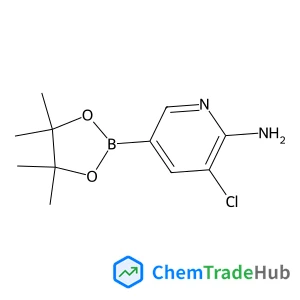
3-Chloro-5-(4,4,5,5-tetramethyl-1,3,2-dioxaborolan-2-yl)-2-pyridinamine
CAS番号:
1032758-99-8
分子式:
C11H16BClN2O2
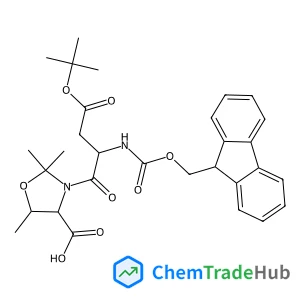
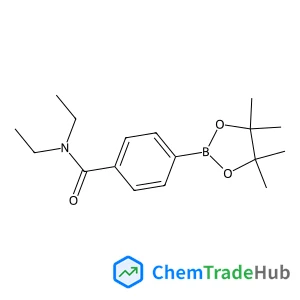
N,N-Diethyl-4-(4,4,5,5-tetramethyl-1,3,2-dioxaborolan-2-yl)benzamide
CAS番号:
325142-99-2
分子式:
C17H26BNO3
おすすめサプライヤー




免責事項
このページに表示される学術雑誌情報は、参考および研究目的のみを目的としています。当社は雑誌出版社とは提携しておらず、投稿の取り扱いも行っておりません。出版に関するお問い合わせは、各雑誌出版社に直接ご連絡ください。
表示されている情報に誤りがある場合は、support@chemtradehub.com までご連絡ください。迅速に確認し、対応いたします。