












Solvation dynamics and energetics of intramolecular hydride transfer reactions in biomass conversion
文献情報
出版日
2015-01-08
DOI
10.1039/C4CP05063K
インパクトファクター
3.676
著者
Samir H. Mushrif, Jithin J. Varghese, Chethana B. Krishnamurthy
原文を見る
要旨
Hydride transfer changes the charge structure of the reactant and thus, may induce reorientation/reorganization of solvent molecules. This solvent reorganization may in turn alter the energetics of the reaction. In the present work, we investigate the intramolecular hydride transfer by taking Lewis acid catalyzed glucose to fructose isomerization as an example. The C2–C1 hydride transfer is the rate limiting step in this reaction. Water and methanol are used as solvents and hydride transfer is simulated in the presence of explicit solvent molecules, treated quantum mechanically and at a finite temperature, using Car–Parrinello molecular dynamics (CPMD) and metadynamics. Activation free energy barrier for hydride transfer in methanol is found to be 50 kJ mol−1 higher than that in water. In contrast, in density functional theory calculations, using an implicit solvent environment, the barriers are almost identical. Analysis of solvent dynamics and electronic polarization along the molecular dynamics trajectory and the results of CPMD-metadynamics simulation of the hydride transfer process in the absence of any solvent suggest that higher barrier in methanol is a result of non-equilibrium solvation. Methanol undergoes electronic polarization during the hydride transfer step. However, its molecular orientational relaxation is a much slower process that takes place after the hydride transfer, over an extended timescale. This results in non-equilibrium solvation. Water, on the other hand, does not undergo significant electronic polarization and thus, has to undergo minimal molecular reorientation to provide near equilibrium solvation to the transition state and an improved equilibrium solvation to the post hydride shift product state. Hence, the hydride transfer step is also observed to be exergonic in water and endergonic in methanol. The aforementioned explanation is juxtaposed to enzyme catalyzed charge transfer reactions, where the enhanced solvation of the transition and product states by enzymes, due to electrostatic interactions, reduces the activation free energy barrier and the free energy change of the reaction. Similarly, we suggest that, in the intramolecular hydride shift, improved solvation of the transition state and of the product state by water is achieved due to minimal polarization and reorientation, and (near) equilibrium solvation.
関連文献
A solvent-free and efficient synthesis of bicyclic 2-pyridone derivatives for endoplasmic reticulum imaging
Xiaoyun Ran, Qian Zhou, Jin Zhang, Shanqiang Wang, Gui Wang, Hui Yang, Xiaochun Liu, Zhouyu Wang
2021-04-26
Research Article
DOI: 10.1039/D1QO00350J
Correction: Clickable glutathione using tetrazine-alkene bioorthogonal chemistry for detecting protein glutathionylation
Dilini N. Kekulandara, Kusal T. G. Samarasinghe, Dhanushka N. P. Munkanatta Godage, Young-Hoon Ahn
2018-03-22
Correction
DOI: 10.1039/C8OB90044B
Super electron donor-mediated reductive transformation of nitrobenzenes: a novel strategy to synthesize azobenzenes and phenazines
Kanako Nozawa-Kumada, Erina Abe, Shungo Ito, Masanori Shigeno, Yoshinori Kondo
2018-04-04
Communication
DOI: 10.1039/C8OB00271A
Palladium-catalyzed carbonylation of benzylic ammonium salts to amides and esters via C–N bond activation
Weijie Yu, Shuwu Yang, Fei Xiong, Tianxiang Fan, Yan Feng, Yuanyuan Huang, Junkai Fu, Tao Wang
2018-04-04
Communication
DOI: 10.1039/C8OB00488A
Consecutive Lossen rearrangement/transamidation reaction of hydroxamic acids under catalyst- and additive-free conditions
Mengmeng Jia, Heng Zhang, Yongjia Lin, Dimei Chen, Yanmei Chen
2018-04-20
Paper
DOI: 10.1039/C8OB00490K
Modular synthesis of heptaarylindole
Shin Suzuki, Takashi Asako, Kenichiro Itami, Junichiro Yamaguchi
2018-05-03
Paper
DOI: 10.1039/C8OB00993G
An improved synthesis of pyrido[2,3-d]pyrimidin-4(1H)-ones and their antimicrobial activity
Soha R. Abd El Hadi, Radwa A. Eladwy, Aly A. Shoun, Marwa M. Abdel-Aziz, Wagdy M. Eldehna, Hatem A. Abdel-Aziz, Paul A. Keller
2018-04-09
Paper
DOI: 10.1039/C8OB00627J
こちらもおすすめ
化合物よくある質問
2-メトキシ-4-(メチルスルフィニル)アミンの主な用途は何ですか?
2-メトキシ-4-(メチルスルフィニル)アミンは、主に医薬品および農薬の製造に使用されます。また、合成化学の一部として研究用材料としても利用されます。
41608-73-52-Methoxy-4-(methyls...
118684-13-24-(Bromomethyl)-3-me...
化合物よくある質問
4,6-二氯-N-甲基ピラミジンアミンの代替品はありますか?
代替品としては、4,6-二クロロピラミジンアミンや他のピラミジン系化合物が考えられます。ただし、目的と用途によって最適な代替品は異なります。
10397-15-64,6-Dichloro-N-methy...
化合物よくある質問
6-氯-4-甲基-1H-吲哚を含む廃棄物はどのように処理すべきですか?
6-氯-4-甲基-1H-吲哚の廃棄物は、適切な容器に収集し、密閉して保管します。温度は常温、湿度は低く、直射日光を避けて保管することを推奨します。廃棄処理は専門...
885520-84-36-chloro-4-methyl-1H...
化合物よくある質問
2-フローユロ-4-(トリフルオロメチル)ベンゾイドについて「に適用される法規ガイドラインは何ですか」
2-フローユロ-4-(トリフルオロメチル)ベンゾイドのCAS番号は207974-08-1です。この化合物はGHS分類で毒性物質と有害な反応物質として分類されます...
207974-08-1[2-Fluoro-4-(trifluo...
化合物よくある質問
4-ニトロフェニルN-[(ベンゼルオキシルカーボンイル]グリシングリシングリシン酸はどのように保存すればよいですか?
4-ニトロフェニルN-[(ベンゼルオキシルカーボンイル]グリシングリシングリシン酸は、室温で暗所に保管し、乾燥した環境で保存することを推奨します。容器は密閉性の...
19811-64-44-Nitrophenyl N-[(be...
化合物よくある質問
イソデスロラタドリンの代替品はありますか?
イソデスロラタドリンの代替品としては、デスロラタドリンや他の抗ヒスタミン薬が挙げられます。具体的には、デスロラタドリン、ラセカミド、フェルタドリンなどが、症状や...
183198-49-4Iso Desloratadine
化合物よくある質問
5-甲氧基-1,2,3,4-四氢异喹啉盐酸盐はどのように合成されますか?
5-甲氧基-1,2,3,4-四氢异喹啉盐酸盐の一般的な合成方法は、メタノール中で5-メトキシ-1,2,3,4-四ヒュドロイソキシンを塩酸で塩化します。この反応で...
103030-69-95-Methoxy-1,2,3,4-te...
化合物よくある質問
4-アミノ-5-メトキシ-2-トルエンサルホニック酸についての法規ガイドラインは何ですか?
CAS番号6471-78-9の4-アミノ-5-メトキシ-2-トルエンサルホニック酸は、GHS分類では corrosive(腐食性)と識別されます。EUのREAC...
6471-78-94-Amino-5-Methoxy-2-...
化合物よくある質問
甲基孕酮を取り扱う際の実験室安全事項は何ですか?
甲基孕酮の取り扱いは、PPE(個人保護具)の使用が必要な重要な安全事項を伴います。防塵マスク、ゴーグル、手袋を着用することが推奨されます。ドラフトチャンバーを使...
204063-33-22-[(Diphenylmethyl)a...
掲載誌
Physical Chemistry Chemical Physics

CiteScore:
5.5
自己引用率:
10.3%
年間論文数:
3036
Physical Chemistry Chemical Physics (PCCP) is an international journal co-owned by 19 physical chemistry and physics societies from around the world. This journal publishes original, cutting-edge research in physical chemistry, chemical physics and biophysical chemistry. To be suitable for publication in PCCP, articles must include significant innovation and/or insight into physical chemistry; this is the most important criterion that reviewers and Editors will judge against when evaluating submissions. The journal has a broad scope and welcomes contributions spanning experiment, theory, computation and data science. Topical coverage includes spectroscopy, dynamics, kinetics, statistical mechanics, thermodynamics, electrochemistry, catalysis, surface science, quantum mechanics, quantum computing and machine learning. Interdisciplinary research areas such as polymers and soft matter, materials, nanoscience, energy, surfaces/interfaces, and biophysical chemistry are welcomed if they demonstrate significant innovation and/or insight into physical chemistry. Joined experimental/theoretical studies are particularly appreciated when complementary and based on up-to-date approaches.
おすすめ化合物
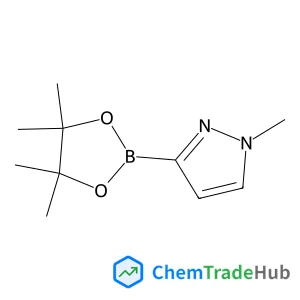
1-Methyl-3-(4,4,5,5-tetramethyl-1,3,2-dioxaborolan-2-yl)-1H-pyrazole
CAS番号:
1020174-04-2
分子式:
C10H17BN2O2
![[4-(Heptyloxy)phenyl]boronic acid structure](https://static.chemtradehub.com/structs/136/136370-19-9-ad33.webp "[4-(Heptyloxy)phenyl]boronic acid structure")
おすすめサプライヤー




免責事項
このページに表示される学術雑誌情報は、参考および研究目的のみを目的としています。当社は雑誌出版社とは提携しておらず、投稿の取り扱いも行っておりません。出版に関するお問い合わせは、各雑誌出版社に直接ご連絡ください。
表示されている情報に誤りがある場合は、support@chemtradehub.com までご連絡ください。迅速に確認し、対応いたします。