












Electrocatalytic oxygen reduction kinetics on Fe-center of nitrogen-doped graphene
文献情報
出版日
2014-02-27
DOI
10.1039/C4CP00037D
インパクトファクター
3.676
著者
Jing Sun, Zhi-Pan Liu
原文を見る
要旨
The Fe/N/C catalysts have emerged recently as a representative class of non-Pt catalysts for oxygen electrocatalytic reduction, which could have a competitive catalytic performance to Pt. However, the nature of the catalyst remains elusive, especially on the active site structure and the electrocatalytic kinetics. Here we examine two kinds of Fe/N active sites for Fe/N/C catalysts, namely, the four-coordinated FeN4 and the five-coordinated Fe(CN)N4 centers embedded in graphene layers. By using large-scale first principles calculations with a periodic continuum solvation model based on the Modified-Poisson–Boltzmann equation (CM-MPB), we identified the four (4e) and two electron (2e) oxygen reduction pathways under acidic conditions. We find that both 4e and 2e pathways involves the formation of an OOH intermediate, which breaks its O–OH bond in the 4e pathway but is reduced to H2O2 in the 2e pathway. We show that at 0.8 V vs. SHE, the 4e pathway is preferred at both FeN4 and Fe(CN)N4 centers, but the 2e pathway is kinetically also likely on the Fe(CN)N4 center. The O–OH bond breaking of OOH is the key kinetic step, which has a similar free energy barrier to the OH reduction on the FeN4 center, and is the rate-determining step on the Fe(CN)N4 center. Due to the high adsorption energy of Fe towards the fifth ligand, such as OH and CN, we expect that the active site of the real Fe/N/C catalyst is the five coordinated Fe center. We found that the barrier of the O–OH bond breaking step is not sensitive to potential and a Tafel slope of 60 mV is predicted for the ORR on the Fe(CN)N4 center, which is consistent with experimental observation.
関連文献
Mechanical behaviour of inorganic solid-state batteries: can we model the ionic mobility in the electrolyte with Nernst–Einstein's relation?
Mei-Chin Pang, Monica Marinescu, Huizhi Wang, Gregory Offer
2021-12-01
Perspective
DOI: 10.1039/D1CP00909E
Ultrafast nonequilibrium dynamics of short-range protein electron transfer in flavodoxin
Jie Yang, Yifei Zhang, Ting-Fang He, Yangyi Lu, Lijuan Wang, Bei Ding
2021-11-18
Paper
DOI: 10.1039/D1CP04445A
Appraising the potency of small molecule inhibitors and their graphene surface-mediated organizational attributes on uric acid–melamine clusters
Krishna Gopal Chattaraj, Sandip Paul
2021-11-29
Paper
DOI: 10.1039/D1CP03695E
Excited-state structure of copper phenanthroline-based photosensitizers
Alexander Guda, Johannes Windisch, Benjamin Probst, Roger Alberto, Maarten Nachtegaal, Grigory Smolentsev
2021-11-15
Paper
DOI: 10.1039/D1CP02823E
Hydrogen-bond-dominated mechanical stretchability in PVA films: from phenomenological to numerical insights
Zhen-zhen Fu, Sheng-jie Guo, Chen-xi Li, Ke Wang, Qin Zhang, Qiang Fu
2021-12-22
Paper
DOI: 10.1039/D1CP03893A
Investigation into the performance decay of proton-exchange membranes based on sulfonated heterocyclic poly(aryl ether ketone)s in Fenton's reagent
Qian Liu, Shouhai Zhang, Zhaoqi Wang, Jianhua Han, Ce Song, Peiqi Xu, Xu Wang, Shaokui Fu, Xigao Jian
2021-12-13
Paper
DOI: 10.1039/D1CP04531H
Direct evaluation of hole effective mass of SnS–SnSe solid solutions with ARPES measurement
Issei Suzuki, Zexin Lin, Sakiko Kawanishi, Kiyohisa Tanaka, Yoshitaro Nose, Takahisa Omata, Shin-Ichiro Tanaka
2021-12-08
Communication
DOI: 10.1039/D1CP04553A
Analytically and empirically consistent characterization of the resistive switching mechanism in a Ag conducting-bridge random-access memory device through a pseudo-liquid interpretation approach
Yeon-Joon Choi, Suhyun Bang, Tae-Hyeon Kim, Kyungho Hong, Sungjoon Kim, Sungjun Kim, Seongjae Cho, Byung-Gook Park
2021-11-09
Paper
DOI: 10.1039/D1CP04637C
Thiazetidin-2-ylidenes as four membered N-heterocyclic carbenes: theoretical studies and the generation of complexes with N+ center‡
Gurudutt Dubey, Nutan Mahawar, Tejender Singh, Nirjhar Saha, Subash C. Sahoo, Prasad V. Bharatam
2021-12-14
Communication
DOI: 10.1039/D1CP04732A
The crystal structure, thermal expansion and far-IR spectrum of propanal (CH3CH2CHO) determined using powder X-ray diffraction, neutron scattering, periodic DFT and synchrotron techniques
Helen E. Maynard-Casely, Nikita S. Yevstigneyev, Samuel G. Duyker, Courtney Ennis
2021-12-06
Paper
DOI: 10.1039/D1CP04477J
こちらもおすすめ
化合物よくある質問
2-ヒドロキシ-5-ニトロベンジンブロモイドの代替品はありますか?
2-ヒドロキシ-5-ニトロベンジンブロモイドは特定の化学反応に適しているため、代替品は限られています。しかし、同様の構造を持つ2-ヒドロキシ-4-ニトロベンジン...
772-33-82-(Bromomethyl)-4-ni...
化合物よくある質問
N-(2-ブロモフェニル)-1-チロール-3-オキソ-3-(ピペリジニル)プロペン-2-イル)ベンゼンアミドを取り扱う際の実験室安全事項は何ですか?
N-(2-ブロモフェニル)-1-チロール-3-オキソ-3-(ピペリジニル)プロペン-2-イル)ベンゼンアミドは有毒で、皮膚や粘膜に刺激を与える可能性があります。...
1800044-77-2N-[(1Z)-1-(2-Bromoph...
化合物よくある質問
1,3プロパンジオール,2-[2-(2アミノ-6クロロ-9Hピリミジン-9-イル)エチル-1,1,2,2-D4]-2,3-ジアセタートの市場動向や研究トレンドはどうですか?
この化合物は、新規治療薬の開発に注目されています。市場では、その有効性と安全性が評価され、研究分野では、分子生物学と医薬化学の新たな発見が期待されています。
1020718-81-31,3-Propanediol, 2-[...
579-44-2Ethanone, 2-hydroxy-...
化合物よくある質問
Succinimidyl-alanyl-phenylalanyl-prolyl-phenylalanine 4-nitroanilide はどの業界で使用されていますか?
Succinimidyl-alanyl-phenylalanyl-prolyl-phenylalanine 4-nitroanilide は主に医薬品開発やポ...
128802-73-3succinimidyl-alanyl-...
化合物よくある質問
メチル6-アミノ-5-クロロピリジン-2-カーボイル酸について、適用される法規ガイドラインは何ですか?
メチル6-アミノ-5-クロロピリジン-2-カーボイル酸(CAS番号: 1256794-05-4)の使用には、GHS( Globally Harmonized S...
1256794-05-4Methyl 6-amino-5-chl...
化合物よくある質問
エチル4-(シクロ Pentagonyl)アミノ-2-メチル硫化基ピリミジン-5-カルボキシレートを取り扱う際の実験室安全事項は何ですか?
取り扱いには、耐薬品性の容器を使用し、通気性の良い場所で操作することを推奨します。漏れ時は、SDS(安全データシート)を参照して適切な措置を取ること。手洗いと洗...
211245-62-4ethyl 4-(cyclopentyl...
化合物よくある質問
(S)-3-ベンZYルピペリジン塩酸塩とは何ですか?
(S)-3-ベンZYルピペリジン塩酸塩は、CAS番号1258940-00-9で表される化合物です。これは、(S)-3-苯基哌啶的盐酸盐であり、主に医薬品の原料と...
1258940-00-9(S)-3-Phenylpiperidi...
化合物よくある質問
3,5-二甲基金剛胺の主な用途は何ですか?
3,5-二甲基金剛胺は、主に医薬品の原料として使用され、また抗うつ薬や抗アルツハイマー薬の開発に利用されます。さらに、化粧品や食品添加物の製造でも重要な役割を果...
19988-45-52-(2,3-Dihydroxyphen...
化合物よくある質問
ビス(4-メチル-2-ペンチル)フェニルカルボン酸エステルの代替品はありますか?
ビス(4-メチル-2-ペンチル)フェニルカルボン酸エステル (CAS番号: 1398066-13-1) の代替品には、ビス(2-エチルヘキシル)フェノールカルボ...
1398066-13-1Bis(4-methyl-2-penty...
掲載誌
Physical Chemistry Chemical Physics

CiteScore:
5.5
自己引用率:
10.3%
年間論文数:
3036
Physical Chemistry Chemical Physics (PCCP) is an international journal co-owned by 19 physical chemistry and physics societies from around the world. This journal publishes original, cutting-edge research in physical chemistry, chemical physics and biophysical chemistry. To be suitable for publication in PCCP, articles must include significant innovation and/or insight into physical chemistry; this is the most important criterion that reviewers and Editors will judge against when evaluating submissions. The journal has a broad scope and welcomes contributions spanning experiment, theory, computation and data science. Topical coverage includes spectroscopy, dynamics, kinetics, statistical mechanics, thermodynamics, electrochemistry, catalysis, surface science, quantum mechanics, quantum computing and machine learning. Interdisciplinary research areas such as polymers and soft matter, materials, nanoscience, energy, surfaces/interfaces, and biophysical chemistry are welcomed if they demonstrate significant innovation and/or insight into physical chemistry. Joined experimental/theoretical studies are particularly appreciated when complementary and based on up-to-date approaches.
おすすめ化合物
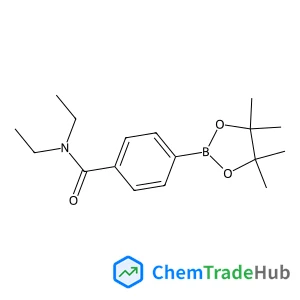
N,N-Diethyl-4-(4,4,5,5-tetramethyl-1,3,2-dioxaborolan-2-yl)benzamide
CAS番号:
325142-99-2
分子式:
C17H26BNO3
![Methyl 4-({[(2-methyl-2-propanyl)oxy]carbonyl}amino)bicyclo[2.2.2]octane-1-carboxylate structure](https://static.chemtradehub.com/structs/943/943845-74-7-b7e5.webp "Methyl 4-({[(2-methyl-2-propanyl)oxy]carbonyl}amino)bicyclo[2.2.2]octane-1-carboxylate structure")
おすすめサプライヤー




免責事項
このページに表示される学術雑誌情報は、参考および研究目的のみを目的としています。当社は雑誌出版社とは提携しておらず、投稿の取り扱いも行っておりません。出版に関するお問い合わせは、各雑誌出版社に直接ご連絡ください。
表示されている情報に誤りがある場合は、support@chemtradehub.com までご連絡ください。迅速に確認し、対応いたします。