












Investigation into the performance decay of proton-exchange membranes based on sulfonated heterocyclic poly(aryl ether ketone)s in Fenton's reagent
文献情報
出版日
2021-12-13
DOI
10.1039/D1CP04531H
インパクトファクター
3.676
著者
Qian Liu, Shouhai Zhang, Zhaoqi Wang, Jianhua Han, Ce Song, Peiqi Xu, Xu Wang, Shaokui Fu, Xigao Jian
原文を見る
要旨
Sulfonated N-heterocyclic poly(aryl ether) proton-exchange membranes have potential applications in the fuel-cell field due to their favorable proton conduction capacity and stability. This paper investigates the changes in mass and performance decay, such as proton conduction and mechanical strength, of sulfonated poly(ether ether ketone)s (SPEEKs) and three sulfonated N-heterocyclic poly(aryl ether ketone) (SPPEK, SPBPEK-P-8, and SPPEKK-P) membranes in Fenton's oxidative experiment. The SPEEK membrane exhibited the worst oxidative stability. The oxidative stability of the SPPEK membrane is enhanced due to the introduction of phthalazinone units in the chains. The SPPEKK-P and SPBPEK-P-8 membranes exhibit better radical tolerance than the SPPEK membrane, with proton conductivity retention rates of 66% and 73% for 1 h oxidative treatment, respectively. In addition, the molecular chains of SPPEKK-P and SPBPEK-P-8 exhibit relatively little disruption. The pendant benzenesulfonic groups enhance the steric effects for reducing radical attacks on the ether bonds and reduce the hydration of molecular chains. The introduction of phthalazinone units decreases the rupture points in the main chain. Therefore, the radical tolerance of the membranes is improved. These results provide a reference for the design of highly stable sulfonated heterocyclic poly(aryl ether) membranes.
関連文献
Competing pathways in the near-UV photochemistry of acetaldehyde
Benjamin W. Toulson, Kara M. Kapnas, Dmitry A. Fishman, Craig Murray
2017-05-24
Paper
DOI: 10.1039/C7CP02573D
Isomer-dependent fragmentation dynamics of inner-shell photoionized difluoroiodobenzene
Cédric Bomme, Evgeny Savelyev, Hui Xiong, Rajesh Kushawaha, Rebecca Boll, Kasra Amini, Timur Osipov, David Kilcoyne, Artem Rudenko, Nora Berrah, Daniel Rolles
2017-05-11
Communication
DOI: 10.1039/C7CP01379E
Correlation and squeezing for optical transistor and intensity for router applications in Pr3+:YSO
Ghulam Abbas Khan, Changbiao Li, Faizan Raza, Noor Ahmed, Abdul Rasheed Mahesar, Yanpeng Zhang
2017-05-12
Paper
DOI: 10.1039/C7CP01884C
Tiny changes in local order identify the cluster formation threshold in model fluids with competing interactions
Jean-Marc Bomont, Dino Costa, Jean-Louis Bretonnet
2017-05-15
Paper
DOI: 10.1039/C7CP01811H
Establishing the link between fibril formation and Raman optical activity spectra of insulin
Shigeki Yamamoto, Petr Bouř
2017-05-11
Paper
DOI: 10.1039/C7CP01556A
The mechanism of ammonium bisulfate formation and decomposition over V/WTi catalysts for NH3-selective catalytic reduction at various temperatures
Chenxu Li, Jianqiang Wang, Jun Wang, Yanping Zhai
2017-05-05
Paper
DOI: 10.1039/C7CP02324C
Gate-controlled heat generation in ZnO nanowire FETs
Andrea Pescaglini, Davide Cammi, Carsten Ronning, Daniela Iacopino
2017-05-02
Paper
DOI: 10.1039/C7CP01356F
The role of group III, IV elements in Nb4AC3 MAX phases (A = Al, Si, Ga, Ge) and the unusual anisotropic behavior of the electronic and optical properties
Yu-dong Fu, Baochang Wang, Yue Teng, Xiao-shuo Zhu, Xiao-xue Feng, Mu-fu Yan, Weiwei Sun
2017-05-12
Paper
DOI: 10.1039/C7CP01375B
Ultrasensitive and reproducible SERS platform of coupled Ag grating with multibranched Au nanoparticles
David Mares, Vitezslav Jerabek, Pavel Ulbrich, Ladislav Lapcak, Vaclav Svorcik
2017-05-11
Paper
DOI: 10.1039/C7CP01828B
Investigation of the relationship between the cycle performance and the electronic structure in LiAlxMn2−xO4 (x = 0 and 0.2) using soft X-ray spectroscopy
Daisuke Asakura, Yusuke Nanba, Yuki Makinose, Hirofumi Matsuda, Eiji Hosono
2017-05-25
Paper
DOI: 10.1039/C7CP02070H
こちらもおすすめ
化合物よくある質問
2-ヒドロキシ-5-ニトロベンジンブロモイドの代替品はありますか?
2-ヒドロキシ-5-ニトロベンジンブロモイドは特定の化学反応に適しているため、代替品は限られています。しかし、同様の構造を持つ2-ヒドロキシ-4-ニトロベンジン...
772-33-82-(Bromomethyl)-4-ni...
化合物よくある質問
N-(2-ブロモフェニル)-1-チロール-3-オキソ-3-(ピペリジニル)プロペン-2-イル)ベンゼンアミドを取り扱う際の実験室安全事項は何ですか?
N-(2-ブロモフェニル)-1-チロール-3-オキソ-3-(ピペリジニル)プロペン-2-イル)ベンゼンアミドは有毒で、皮膚や粘膜に刺激を与える可能性があります。...
1800044-77-2N-[(1Z)-1-(2-Bromoph...
化合物よくある質問
1,3プロパンジオール,2-[2-(2アミノ-6クロロ-9Hピリミジン-9-イル)エチル-1,1,2,2-D4]-2,3-ジアセタートの市場動向や研究トレンドはどうですか?
この化合物は、新規治療薬の開発に注目されています。市場では、その有効性と安全性が評価され、研究分野では、分子生物学と医薬化学の新たな発見が期待されています。
1020718-81-31,3-Propanediol, 2-[...
579-44-2Ethanone, 2-hydroxy-...
化合物よくある質問
Succinimidyl-alanyl-phenylalanyl-prolyl-phenylalanine 4-nitroanilide はどの業界で使用されていますか?
Succinimidyl-alanyl-phenylalanyl-prolyl-phenylalanine 4-nitroanilide は主に医薬品開発やポ...
128802-73-3succinimidyl-alanyl-...
化合物よくある質問
メチル6-アミノ-5-クロロピリジン-2-カーボイル酸について、適用される法規ガイドラインは何ですか?
メチル6-アミノ-5-クロロピリジン-2-カーボイル酸(CAS番号: 1256794-05-4)の使用には、GHS( Globally Harmonized S...
1256794-05-4Methyl 6-amino-5-chl...
化合物よくある質問
エチル4-(シクロ Pentagonyl)アミノ-2-メチル硫化基ピリミジン-5-カルボキシレートを取り扱う際の実験室安全事項は何ですか?
取り扱いには、耐薬品性の容器を使用し、通気性の良い場所で操作することを推奨します。漏れ時は、SDS(安全データシート)を参照して適切な措置を取ること。手洗いと洗...
211245-62-4ethyl 4-(cyclopentyl...
化合物よくある質問
(S)-3-ベンZYルピペリジン塩酸塩とは何ですか?
(S)-3-ベンZYルピペリジン塩酸塩は、CAS番号1258940-00-9で表される化合物です。これは、(S)-3-苯基哌啶的盐酸盐であり、主に医薬品の原料と...
1258940-00-9(S)-3-Phenylpiperidi...
化合物よくある質問
3,5-二甲基金剛胺の主な用途は何ですか?
3,5-二甲基金剛胺は、主に医薬品の原料として使用され、また抗うつ薬や抗アルツハイマー薬の開発に利用されます。さらに、化粧品や食品添加物の製造でも重要な役割を果...
19988-45-52-(2,3-Dihydroxyphen...
化合物よくある質問
ビス(4-メチル-2-ペンチル)フェニルカルボン酸エステルの代替品はありますか?
ビス(4-メチル-2-ペンチル)フェニルカルボン酸エステル (CAS番号: 1398066-13-1) の代替品には、ビス(2-エチルヘキシル)フェノールカルボ...
1398066-13-1Bis(4-methyl-2-penty...
掲載誌
Physical Chemistry Chemical Physics

CiteScore:
5.5
自己引用率:
10.3%
年間論文数:
3036
Physical Chemistry Chemical Physics (PCCP) is an international journal co-owned by 19 physical chemistry and physics societies from around the world. This journal publishes original, cutting-edge research in physical chemistry, chemical physics and biophysical chemistry. To be suitable for publication in PCCP, articles must include significant innovation and/or insight into physical chemistry; this is the most important criterion that reviewers and Editors will judge against when evaluating submissions. The journal has a broad scope and welcomes contributions spanning experiment, theory, computation and data science. Topical coverage includes spectroscopy, dynamics, kinetics, statistical mechanics, thermodynamics, electrochemistry, catalysis, surface science, quantum mechanics, quantum computing and machine learning. Interdisciplinary research areas such as polymers and soft matter, materials, nanoscience, energy, surfaces/interfaces, and biophysical chemistry are welcomed if they demonstrate significant innovation and/or insight into physical chemistry. Joined experimental/theoretical studies are particularly appreciated when complementary and based on up-to-date approaches.
おすすめ化合物
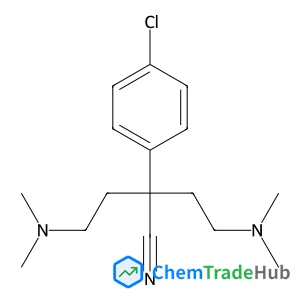
2-(4-Chlorophenyl)-4-(dimethylamino)-2-(2-(dimethylamino)ethyl)butanenitrile
CAS番号:
1246816-57-8
分子式:
C16H24ClN3
![Methyl 4-({[(2-methyl-2-propanyl)oxy]carbonyl}amino)bicyclo[2.2.2]octane-1-carboxylate structure](https://static.chemtradehub.com/structs/943/943845-74-7-b7e5.webp "Methyl 4-({[(2-methyl-2-propanyl)oxy]carbonyl}amino)bicyclo[2.2.2]octane-1-carboxylate structure")
おすすめサプライヤー




免責事項
このページに表示される学術雑誌情報は、参考および研究目的のみを目的としています。当社は雑誌出版社とは提携しておらず、投稿の取り扱いも行っておりません。出版に関するお問い合わせは、各雑誌出版社に直接ご連絡ください。
表示されている情報に誤りがある場合は、support@chemtradehub.com までご連絡ください。迅速に確認し、対応いたします。