












![1-[3-(4-Morpholinylsulfonyl)phenyl]methanamine structure](https://static.chemtradehub.com/structs/933/933989-32-3-51af.webp "1-[3-(4-Morpholinylsulfonyl)phenyl]methanamine structure")
Direct oxidation of secondary alcohol to ester by performic acid
文献情報
出版日
2013-09-25
DOI
10.1039/C3GC41198B
インパクトファクター
10.182
著者
Xiao-Hong Li, Xiang-Guang Meng, Ying Liu, Xiao Peng
原文を見る
要旨
The reaction pathways and kinetics of the oxidation reactions of 1-phenylethyl alcohol (PEA), 1-(3,4-dimethoxyphenyl)ethanol (MVA), 1-(4-hydroxy-3-methoxyphenyl)ethanol (HMOPE), 1-(3-aminophenyl)ethanol (APE), 1-(4-methylphenyl)ethanol (MPE) and cyclohexanol with performic acid (PFA) were investigated in formic acid solvent. An unexpected new reaction pathway, from which the secondary alcohols can be directly oxidized to corresponding esters, was found. The reaction products (esters and ketones) of oxidation of PEA, MVA, HMOPE, APE, MPE and cyclohexanol were detected at different reaction times. The reaction rate constants, k1, k2, k3 and power orders α, β, γ of PFA concentration for three oxidation reactions pathways: alcohol to ester, alcohol to ketone and ketone to ester were obtained, respectively. These findings might provide a new insight into the technology of lignin degradation.
関連文献
Sequence-encoded quantitative invader assay enables highly sensitive hepatitis B virus DNA quantification in a single tube without the use of a calibration curve
Nan Sheng, Bingjie Zou, Huan Tong, Yan Lu, Sixi Xing
2019-08-08
Paper
DOI: 10.1039/C9AN00970A
Carbon dot-based inverse opal hydrogels with photoluminescence: dual-mode sensing of solvents and metal ions
Yuhua Zhu, Jianying Wang, Xiang Zhu, Jun Wang, Lijie Zhou, Jinhua Li, Tao Mei, Jingwen Qian, Lai Wei, Xianbao Wang
2019-08-09
Paper
DOI: 10.1039/C9AN01287G
A colorimetric and fluorescent dual probe for palladium in aqueous medium and live cell imaging
Jin-wu Yan, Xiao-lin Wang, Qi-feng Tan, Pei-fen Yao, Jia-heng Tan, Lei Zhang
2016-03-11
Communication
DOI: 10.1039/C6AN00204H
Development and comparative investigation of Ag-sensitive layer based SAW and QCM sensors for mercury sensing applications
K M Mohibul Kabir, Ylias M. Sabri, Ahmad Esmaielzadeh Kandjani, Suresh K. Bhargava
2016-03-03
Paper
DOI: 10.1039/C5AN02568K
A surface plasmon resonance enhanced photoelectrochemical immunoassay based on perovskite metal oxide@gold nanoparticle heterostructures
Lijia Zhang, Zhongbin Luo, Lingshan Su, Dianping Tang
2019-08-14
Paper
DOI: 10.1039/C9AN01395D
Rapid and sensitive monitoring of biocatalytic reactions using ion mobility mass spectrometry
Cunyu Yan, Jason W. Schmidberger, Fabio Parmeggiani, Shaneela A. Hussain, Nicholas J. Turner, Sabine L. Flitsch, Perdita Barran
2016-03-15
Communication
DOI: 10.1039/C6AN00617E
Carbon–carbon double bond position elucidation in fatty acids using ozone-coupled direct analysis in real time mass spectrometry
Nicolas Cetraro, Robert B. Cody, Joanne Y. Yew
2019-08-27
Paper
DOI: 10.1039/C9AN01059A
A colourimetric vacuum air-pressure indicator
Dilidaer Yusufu, Andrew Mills
2019-09-18
Paper
DOI: 10.1039/C9AN01507H
Convenient and controllable preparation of a novel uniformly nitrogen doped porous graphene/Pt nanoflower material and its highly-efficient electrochemical biosensing
Shuang Ren, Huan Wang, Yufan Zhang, Yuena Sun, Lanfen Li, Hongyi Zhang, Zhihong Shi, Mingjie Li, Meng Li
2016-03-11
Paper
DOI: 10.1039/C5AN02654G
Improvement of the gas cluster ion beam-(GCIB)-based molecular secondary ion mass spectroscopy (SIMS) depth profile with O2+ cosputtering
Hua-Yang Liao, Kang-Yi Lin, Hsun-Yun Chang, Ding-Yuan Kuo, Yun-Wen You
2016-03-08
Paper
DOI: 10.1039/C5AN02677F
こちらもおすすめ
化合物よくある質問
2-ヒドロキシ-5-ニトロベンジンブロモイドの代替品はありますか?
2-ヒドロキシ-5-ニトロベンジンブロモイドは特定の化学反応に適しているため、代替品は限られています。しかし、同様の構造を持つ2-ヒドロキシ-4-ニトロベンジン...
772-33-82-(Bromomethyl)-4-ni...
化合物よくある質問
N-(2-ブロモフェニル)-1-チロール-3-オキソ-3-(ピペリジニル)プロペン-2-イル)ベンゼンアミドを取り扱う際の実験室安全事項は何ですか?
N-(2-ブロモフェニル)-1-チロール-3-オキソ-3-(ピペリジニル)プロペン-2-イル)ベンゼンアミドは有毒で、皮膚や粘膜に刺激を与える可能性があります。...
1800044-77-2N-[(1Z)-1-(2-Bromoph...
化合物よくある質問
1,3プロパンジオール,2-[2-(2アミノ-6クロロ-9Hピリミジン-9-イル)エチル-1,1,2,2-D4]-2,3-ジアセタートの市場動向や研究トレンドはどうですか?
この化合物は、新規治療薬の開発に注目されています。市場では、その有効性と安全性が評価され、研究分野では、分子生物学と医薬化学の新たな発見が期待されています。
1020718-81-31,3-Propanediol, 2-[...
579-44-2Ethanone, 2-hydroxy-...
化合物よくある質問
Succinimidyl-alanyl-phenylalanyl-prolyl-phenylalanine 4-nitroanilide はどの業界で使用されていますか?
Succinimidyl-alanyl-phenylalanyl-prolyl-phenylalanine 4-nitroanilide は主に医薬品開発やポ...
128802-73-3succinimidyl-alanyl-...
化合物よくある質問
メチル6-アミノ-5-クロロピリジン-2-カーボイル酸について、適用される法規ガイドラインは何ですか?
メチル6-アミノ-5-クロロピリジン-2-カーボイル酸(CAS番号: 1256794-05-4)の使用には、GHS( Globally Harmonized S...
1256794-05-4Methyl 6-amino-5-chl...
化合物よくある質問
エチル4-(シクロ Pentagonyl)アミノ-2-メチル硫化基ピリミジン-5-カルボキシレートを取り扱う際の実験室安全事項は何ですか?
取り扱いには、耐薬品性の容器を使用し、通気性の良い場所で操作することを推奨します。漏れ時は、SDS(安全データシート)を参照して適切な措置を取ること。手洗いと洗...
211245-62-4ethyl 4-(cyclopentyl...
化合物よくある質問
(S)-3-ベンZYルピペリジン塩酸塩とは何ですか?
(S)-3-ベンZYルピペリジン塩酸塩は、CAS番号1258940-00-9で表される化合物です。これは、(S)-3-苯基哌啶的盐酸盐であり、主に医薬品の原料と...
1258940-00-9(S)-3-Phenylpiperidi...
化合物よくある質問
3,5-二甲基金剛胺の主な用途は何ですか?
3,5-二甲基金剛胺は、主に医薬品の原料として使用され、また抗うつ薬や抗アルツハイマー薬の開発に利用されます。さらに、化粧品や食品添加物の製造でも重要な役割を果...
19988-45-52-(2,3-Dihydroxyphen...
化合物よくある質問
ビス(4-メチル-2-ペンチル)フェニルカルボン酸エステルの代替品はありますか?
ビス(4-メチル-2-ペンチル)フェニルカルボン酸エステル (CAS番号: 1398066-13-1) の代替品には、ビス(2-エチルヘキシル)フェノールカルボ...
1398066-13-1Bis(4-methyl-2-penty...
掲載誌
Green Chemistry

CiteScore:
16.1
自己引用率:
7.5%
年間論文数:
944
Green Chemistry provides a unique forum for the publication of innovative research on the development of alternative green and sustainable technologies. The scope of Green Chemistry is based on, but not limited to, the definition proposed by Anastas and Warner (Green Chemistry: Theory and Practice, P T Anastas and J C Warner, Oxford University Press, Oxford, 1998). Green chemistry is the utilisation of a set of principles that reduces or eliminates the use or generation of hazardous substances in the design, manufacture and application of chemical products. Green Chemistry is at the frontiers of this continuously-evolving interdisciplinary science and publishes research that attempts to reduce the environmental impact of the chemical enterprise by developing a technology base that is inherently non-toxic to living things and the environment. Submissions on all aspects of research relating to the endeavour are welcome. The journal publishes original and significant cutting-edge research that is likely to be of wide general appeal. To be published, work must present a significant advance in green chemistry. Papers must contain a comparison with existing methods and demonstrate advantages over those methods before publication can be considered. For more information please see this Editorial. Coverage includes the following, but is not limited to: Design (e.g. biomimicry, design for degradation/recycling/reduced toxicity…) Reagents & Feedstocks (e.g. renewables, CO2, solvents, auxiliary agents, waste utilization…) Synthesis (e.g. organic, inorganic, synthetic biology…) Catalysis (e.g. homogeneous, heterogeneous, enzyme, whole cell…) Process (e.g. process design, intensification, separations, recycling, efficiency…) Energy (e.g. renewable energy, fuels, photovoltaics, fuel cells, energy storage, energy carriers…) Applications (e.g. electronics, dyes, consumer products, coatings, pharmaceuticals, preservatives, building materials, chemicals for industry/agriculture/mining…) Impact (e.g. safety, metrics, LCA, sustainability, (eco)toxicology…) Green chemistry is, by definition, a continuously-evolving frontier. Therefore, the inclusion of a particular material or technology does not, of itself, guarantee that a paper is suitable for the journal. To be suitable, the novel advance should have the potential for reduced environmental impact relative to the state of the art. Green Chemistry does not normally deal with research associated with 'end-of-pipe' or remediation issues.
おすすめ化合物
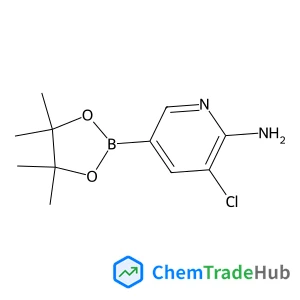
3-Chloro-5-(4,4,5,5-tetramethyl-1,3,2-dioxaborolan-2-yl)-2-pyridinamine
CAS番号:
1032758-99-8
分子式:
C11H16BClN2O2
![Pyrazolo[1,5-a]pyridine-3-carbothioamide structure](https://static.chemtradehub.com/structs/885/885275-44-5-aae0.webp "Pyrazolo[1,5-a]pyridine-3-carbothioamide structure")
おすすめサプライヤー




免責事項
このページに表示される学術雑誌情報は、参考および研究目的のみを目的としています。当社は雑誌出版社とは提携しておらず、投稿の取り扱いも行っておりません。出版に関するお問い合わせは、各雑誌出版社に直接ご連絡ください。
表示されている情報に誤りがある場合は、support@chemtradehub.com までご連絡ください。迅速に確認し、対応いたします。