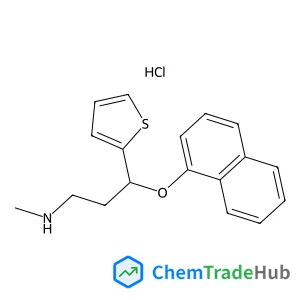
N-Methyl-3-(1-naphthyloxy)-3-(2-thienyl)-1-propanamine hydrochloride (1:1)
CAS番号:
1188266-11-6
分子式:
C18H20ClNOS
Jozef Bednarcik, Stefan Michalik, Vladimir Kolesar, Uta Rütt, Hermann Franz
Structural changes occurring in an Fe72.5Cu1Nb2Mo2Si15.5B7 alloy during a combination of constant rate heating (20 K min−1) and isothermal holding at 500 and 520 °C were investigated using in situ high-energy X-ray diffraction. We found that the ferromagnetic-to-paramagnetic transition of the amorphous phase is revealed as a change in the slope of the thermal expansion curve when heating a sample at a constant rate up to 520 °C. Real space analysis by means of the atomic pair distribution function (PDF) demonstrated that the rate and extent of the thermal expansion strongly depend on the interatomic separation. The PDF proved to be a reliable method for the description of crystallization kinetics. Further it allows determination of sizes of ultrafine nanocrystals with grain sizes well below 8 nm and thus makes observation of early stages of nanocrystallization possible. Following grain growth kinetics during isothermal annealing at 500 and 520 °C we found that the activation energy of the process is 357 ± 12 kJ mol−1.
Shang-heng Tsai, Wei-Jen Ting, Chao-Chin Hu, C. Bor Fuh
DOI: 10.1039/C3AN02226A
Ming-Lee Chu, Jung-Lee Lin
DOI: 10.1039/D0AN02478C
Salah M. Tawfik, Ali A. Abd-Elaal, Yong-Ill Lee
DOI: 10.1039/D1AN00166C
Diletta Esposito, Claudia Conte, Giovanni Dal Poggetto, Annapina Russo, Antonio Barbieri, Francesca Ungaro, Claudio Arra, Giulia Russo, Paola Laurienzo, Fabiana Quaglia
DOI: 10.1039/C8TB90153H
Zhi-Gang Gu, Salma Mirza, Shu-Hua Zhang, Jian Zhang
DOI: 10.1039/C8TA01034J
Mustafa Nigde, Ismail Agir, Rıdvan Yıldırım, Ibrahim Isildak
DOI: 10.1039/D1AN01754C
Aimei Zhou, Shuhua Han
DOI: 10.1039/D0AN02472D
Jialu Wang, Martha Sibrian-Vazquez, Jorge O. Escobedo, Mark Lowry, Lei Wang, Yu-Hsuan Chu, Richard G. Moore, Robert M. Strongin
DOI: 10.1039/C3AN01168B
Liling Lu, Xiao Han, Jingwen Lin, Yingxin Zhang, Minghao Qiu, Ying Chen, Meijin Li, Dianping Tang
DOI: 10.1039/D1AN00178G
Zhiling Luo, Changhong Liu, Shoushan Fan, Enchong Liu
DOI: 10.1039/C9TA04105B
3-イチチルビフェニルは、ビフェニルとイチプロピオニトリルを回収率約90%で反応させて合成されます。触媒は通常、亜リチウムホウ素を用います。
8-溴-5-三氟甲基喹啉は、5-トリフルオロメチル-2-メチル-1,3-ベンゼンジオールをブロモエタノールと反応させて生成します。この反応は塩基性条件下で行われ...
ジメチル4-(4,4,5,5-テトラメチル-1,3,2-ドioxaborolan-2-基)-2,6-ピリジンジカルボイル酸フェニルアミニドの代替品としては、4-...
N-(3,5-ヘキサクロロ-4-ピリドインイル)-8-メチオキシ-5-キノリンカーボン酸の市場動向は、主に産業用途での需要により影響を受けます。研究トレンドとし...
イソステアロイルグリセリルは一般的に安全性が高いとされていますが、過度な使用や個人差により皮�owsん炎などの反応が起こる可能性があります。使用前に医師に相談す...
1-(二苯甲基)-3,3-二氟-氮杂环丁烷の市場動向は、医薬品や合成化学の研究分野で注目を集めています。新興研究は、該当化合物の合成改良と生体内での作用メカニズ...
3-チオフェンスチオールのCAS番号は7774-73-4です。結晶性の白色粉末で、分子量は122.17です。この化合物は水に微溶解し、エタノールやジクロロメタン...
2-Methyl-2-propanyl (2S)-2-(aminomethyl)-1-piperidinecarboxylateは一定の安全性基準を満たしていま...
CAS番号1316822-90-8の化合物は安全性に関しては評価が不足していますが、一般的には生物学的に活性な物質であり、取り扱いには適切な安全防護措置が必要で...
Tert-butyl 2-(2-羟基乙基)哌嗪-1-羧酸は、冷暗所で保存し、直射日光から遠ざけてください。容器は密閉し、高湿度や高温を避けて保管してください。

Physical Chemistry Chemical Physics (PCCP) is an international journal co-owned by 19 physical chemistry and physics societies from around the world. This journal publishes original, cutting-edge research in physical chemistry, chemical physics and biophysical chemistry. To be suitable for publication in PCCP, articles must include significant innovation and/or insight into physical chemistry; this is the most important criterion that reviewers and Editors will judge against when evaluating submissions. The journal has a broad scope and welcomes contributions spanning experiment, theory, computation and data science. Topical coverage includes spectroscopy, dynamics, kinetics, statistical mechanics, thermodynamics, electrochemistry, catalysis, surface science, quantum mechanics, quantum computing and machine learning. Interdisciplinary research areas such as polymers and soft matter, materials, nanoscience, energy, surfaces/interfaces, and biophysical chemistry are welcomed if they demonstrate significant innovation and/or insight into physical chemistry. Joined experimental/theoretical studies are particularly appreciated when complementary and based on up-to-date approaches.
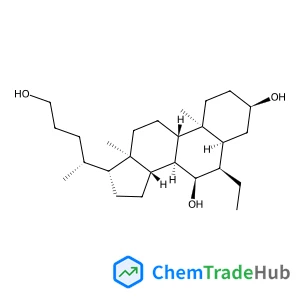
![1-(1-Benzyl-1,2,3,6-tetrahydropyridin-4-yl)-1H-benzo[d]imidazol-2(3H)-one structure](https://static.chemtradehub.com/structs/603/60373-71-9-7dfb.webp "1-(1-Benzyl-1,2,3,6-tetrahydropyridin-4-yl)-1H-benzo[d]imidazol-2(3H)-one structure")