












![1-{3-[4-Amino-3-(4-phenoxyphenyl)-1H-pyrazolo[3,4-d]pyrimidin-1-yl]-1-piperidinyl}-2,3-dihydroxy-1-propanone structure](https://static.chemtradehub.com/structs/122/1226872-27-0-e037.webp "1-{3-[4-Amino-3-(4-phenoxyphenyl)-1H-pyrazolo[3,4-d]pyrimidin-1-yl]-1-piperidinyl}-2,3-dihydroxy-1-propanone structure")
Electrochemical sensing of hepatocyte viability
文献情報
出版日
2014-02-21
DOI
10.1039/C3AN02226A
インパクトファクター
4.616
著者
Shang-heng Tsai, Wei-Jen Ting, Chao-Chin Hu, C. Bor Fuh
原文を見る
要旨
We investigated the use of amperometric and chronoamperometric methods with a double mediator system and screen-printed electrodes (SPEs) for the electrochemical sensing of hepatocyte viability. Cell counts were determined based on measuring cellular respiration via interaction of electroactive redox mediators. The oxidation currents of chronoamperometric measurement were proportional to the concentrations of ferrocyanide which was produced via interaction of cellular respiration, succinate and ferricyanide. The integrated oxidation charges increased linearly with the density of the cultured primary rat hepatocytes over a range of 1 × 10⁵ to 5 × 10⁵ cells per well (slope = 1.98 (±0.08) μC per 105 cells; R2 = 0.9969), and the detection limit was 7600 (±300) cells per well based on S/N = 3. Each density of cells was cultured in triple replicates and individual cell samples were evaluated. The results of the cytotoxic effect of the chronoamperometric method are comparable to those of the tetrazolium-based colorimetric assay. The chronoamperometric method with ferricyanide and succinate mediators is an efficient, alternative method for assessing the viability of primary hepatocytes which can be completed in 20 min. Succinate did not provide an efficient electron shuttle between cytosolic respiratory redox activity of cancer cells and extracellular ferricyanide, an effect that may be useful for distinguishing hepatocarcinoma cells from healthy hepatocytes.
関連文献
UV photopatterning of a highly metallized, cluster-containing poly(ferrocenylsilane)
Alison Y. Cheng, Scott B. Clendenning, Guocheng Yang, Zheng-Hong Lu, Christopher M. Yip, Ian Manners
2004-03-03
Communication
DOI: 10.1039/B316656B
Free-standing mesoporous titania films with anatase nanocrystallites synthesized at 80 °C
2004-03-23
Communication
DOI: 10.1039/B313609D
Selective deposition of polystyrene nanoparticles in a nanoetchpit array on a silicon substrate
Manabu Tanaka, Takumi Hosaka, Takashi Tanii, Iwao Ohdomari, Hiroyuki Nishide
2004-03-16
Communication
DOI: 10.1039/B315816K
Significant promotional effect of CCl4 on fullerene yield in the graphite arc-discharge reaction
Fei Gao, Su-Yuan Xie, Rong-Bin Huang, Lan-Sun Zheng
2003-09-24
Communication
DOI: 10.1039/B306921B
Multiple hydrogen bonding-based fluorescent imprinted polymers for cyclobarbital prepared with 2,6-bis(acrylamido)pyridine
Hiroyuki Kubo, Hiroyuki Nariai
2003-10-14
Communication
DOI: 10.1039/B309917B
ZnS bubble clusters with onion-like structures
Eleonora Spanó, Said Hamad, C. Richard A. Catlow
2004-02-27
Communication
DOI: 10.1039/B314104G
Use of allene in 1,3-dipolar addition to a carbonyl ylide: syntheses of 3-hydroxy-cis-nemorensic acid and nemorensic acid
David M. Hodgson, Frédéric Le Strat
2004-02-24
Communication
DOI: 10.1039/B316908A
A rationally designed novel receptor for probing cooperative interaction between metal ions and bivalent tryptophan side chain in solution
Yitong Li, Chi Ming Yang
2003-10-22
Communication
DOI: 10.1039/B310543A
Ionic liquids based on N-alkyl-N-methylmorpholinium salts as potential electrolytes
Ki-Sub Kim, Sukjeong Choi, D. Demberelnyamba, Huen Lee, Jaeseung Oh, Byoung-Bae Lee, Su-Jin Mun
2004-02-27
Communication
DOI: 10.1039/B400198B
Medium ring synthesis by radical ipso-substitution
David C. Harrowven, Nathalie L'Helias, Jonathan D. Moseley, Nigel J. Blumire, Stuart R. Flanagan
2003-10-01
Communication
DOI: 10.1039/B309496K
こちらもおすすめ
化合物よくある質問
3-イチチルビフェニルはどのように合成されますか?
3-イチチルビフェニルは、ビフェニルとイチプロピオニトリルを回収率約90%で反応させて合成されます。触媒は通常、亜リチウムホウ素を用います。
5668-93-93-Ethylbiphenyl
化合物よくある質問
8-溴-5-三氟甲基喹啉はどのように合成されますか?
8-溴-5-三氟甲基喹啉は、5-トリフルオロメチル-2-メチル-1,3-ベンゼンジオールをブロモエタノールと反応させて生成します。この反応は塩基性条件下で行われ...
917251-92-48-Bromo-5-(trifluoro...
化合物よくある質問
ジメチル4-(4,4,5,5-テトラメチル-1,3,2-ドioxaborolan-2-基)-2,6-ピリジンジカルボイル酸フェニルアミニドの代替品はありますか?
ジメチル4-(4,4,5,5-テトラメチル-1,3,2-ドioxaborolan-2-基)-2,6-ピリジンジカルボイル酸フェニルアミニドの代替品としては、4-...
741709-66-0Dimethyl 4-(4,4,5,5-...
化合物よくある質問
N-(3,5-ヘキサクロロ-4-ピリドインイル)-8-メチオキシ-5-キノリンカーボン酸の市場動向や研究トレンドはどのようなものでしょうか?
N-(3,5-ヘキサクロロ-4-ピリドインイル)-8-メチオキシ-5-キノリンカーボン酸の市場動向は、主に産業用途での需要により影響を受けます。研究トレンドとし...
199871-63-1N-(3,5-Dichloro-4-py...
化合物よくある質問
イソステアロイルグリセリルは安全ですか?
イソステアロイルグリセリルは一般的に安全性が高いとされていますが、過度な使用や個人差により皮�owsん炎などの反応が起こる可能性があります。使用前に医師に相談す...
222723-55-92-[(5Z,8Z,11Z,14Z)-5...
化合物よくある質問
1-(二苯甲基)-3,3-二氟-氮杂环丁烷の市場動向や研究トレンドはどうですか?
1-(二苯甲基)-3,3-二氟-氮杂环丁烷の市場動向は、医薬品や合成化学の研究分野で注目を集めています。新興研究は、該当化合物の合成改良と生体内での作用メカニズ...
288315-02-61-Benzhydryl-3,3-dif...
化合物よくある質問
3-チオフェンスチオールの物理化学的性質は何ですか?
3-チオフェンスチオールのCAS番号は7774-73-4です。結晶性の白色粉末で、分子量は122.17です。この化合物は水に微溶解し、エタノールやジクロロメタン...
7774-73-43-Thiophenethiol
化合物よくある質問
2-Methyl-2-propanyl (2S)-2-(aminomethyl)-1-piperidinecarboxylateは安全ですか?
2-Methyl-2-propanyl (2S)-2-(aminomethyl)-1-piperidinecarboxylateは一定の安全性基準を満たしていま...
475105-35-22-Methyl-2-propanyl ...
化合物よくある質問
CAS番号1316822-90-8の化合物は安全ですか?
CAS番号1316822-90-8の化合物は安全性に関しては評価が不足していますが、一般的には生物学的に活性な物質であり、取り扱いには適切な安全防護措置が必要で...
1316822-90-8Gal beta(1-3)[Neu5Ac...
化合物よくある質問
Tert-butyl 2-(2-羟基乙基)哌嗪-1-羧酸はどのように保存すればよいですか?
Tert-butyl 2-(2-羟基乙基)哌嗪-1-羧酸は、冷暗所で保存し、直射日光から遠ざけてください。容器は密閉し、高湿度や高温を避けて保管してください。
517866-79-4Tert-butyl 2-(2-hydr...
掲載誌
Analyst

CiteScore:
7.8
自己引用率:
5.6%
年間論文数:
653
Analyst publishes analytical and bioanalytical research that reports premier fundamental discoveries and inventions, and the applications of those discoveries, unconfined by traditional discipline barriers.
おすすめ化合物
![(2R,6S)-6-[(Benzyloxy)methyl]-4-{[(2-methyl-2-propanyl)oxy]carbonyl}-2-morpholinecarboxylic acid structure](https://static.chemtradehub.com/structs/109/1093085-91-6-3382.webp "(2R,6S)-6-[(Benzyloxy)methyl]-4-{[(2-methyl-2-propanyl)oxy]carbonyl}-2-morpholinecarboxylic acid structure")
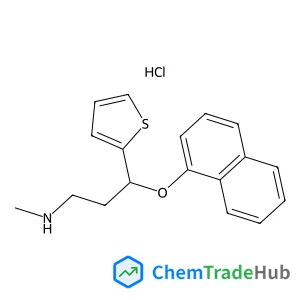
N-Methyl-3-(1-naphthyloxy)-3-(2-thienyl)-1-propanamine hydrochloride (1:1)
CAS番号:
1188266-11-6
分子式:
C18H20ClNOS
おすすめサプライヤー






免責事項
このページに表示される学術雑誌情報は、参考および研究目的のみを目的としています。当社は雑誌出版社とは提携しておらず、投稿の取り扱いも行っておりません。出版に関するお問い合わせは、各雑誌出版社に直接ご連絡ください。
表示されている情報に誤りがある場合は、support@chemtradehub.com までご連絡ください。迅速に確認し、対応いたします。