


![N-[(Benzyloxy)carbonyl]serine structure](https://static.chemtradehub.com/structs/276/2768-56-1-77f7.webp "N-[(Benzyloxy)carbonyl]serine structure")
Pressure and temperature dependent photolysis of glyoxal in the 355–414 nm region: evidence for dissociation from multiple states
文献情報
出版日
2013-03-18
DOI
10.1039/C3CP43596B
インパクトファクター
3.676
著者
Robert J. Salter, Mark A. Blitz, Dwayne E. Heard, Michael J. Pilling, Paul W. Seakins
原文を見る
要旨
The photolysis of glyoxal has been investigated in the 355–414 nm region by dye laser photolysis coupled with cavity ring-down spectroscopy. Absolute quantum yields of HCO, ΦHCO, were determined using the reaction of chlorine atoms with formaldehyde as an actinometer. The dependence of the quantum yield on pressure was investigated in 3–400 Torr of nitrogen buffer gas and at four temperatures: 233 K, 268 K, 298 K and 323 K. For 355 nm ≤ λ < 395 nm the HCO quantum yield is pressure dependent with linear Stern–Volmer (SV) plots (1/ΦHCOvs. pressure). The zero pressure quantum yield, obtained by extrapolation of the SV plots, rises from 1.6 to 2 between 355 and 382 nm and remains at 2 up to 395 nm. For λ ≥ 395 nm ΦHCO shows a stronger pressure dependence and non-linear SV plots, compatible with formation of HCO by dissociation from two electronic states of glyoxal with significantly different lifetimes. These observations are used to develop a mechanism for the photolysis of glyoxal over the wavelength range studied.
おすすめジャーナル

Biocatalysis and Biotransformation

Medicinal Chemistry Research

Bioorganic & Medicinal Chemistry

Journal of Asian Natural Products Research

Critical Reviews in Solid State and Materials Sciences

Topics in Catalysis

Bioorganic & Medicinal Chemistry Letters

Chinese Journal of Chemistry

Journal of the Indian Institute of Science

NDT & E International
関連文献
A sample-to-answer DNA detection microfluidic system integrating sample pretreatment and smartphone-readable gradient plasmonic photothermal continuous-flow PCR
Zengming Zhang, Shuhao Zhao, Lei Jiang, Junjun Wu, Wenhan Zhao, Xiaoniu Guo, Niancai Peng, Fei Hu
2022-09-20
Paper
DOI: 10.1039/D2AN00908K
Chronocoulometric signalling of BNP using a novel quantum dot aptasensor
Samantha F. Douman, Onyinyechi V. Uhuo, Kefilwe V. Mokwebo, Nelia Sanga, Emmanuel I. Iwuoha
2022-09-15
Paper
DOI: 10.1039/D2AN01357F
Two-parameter monitoring in a lab-on-valve manifold, applied to intracellular H2O2 measurements
Ilkka Lähdesmäki, Petr Chocholouš, Andrea D. Carroll, Judy Anderson, Peter S. Rabinovitch, Jaromir Ruzicka
2009-04-27
Paper
DOI: 10.1039/B822070K
Evaluation of grade and invasiveness of bladder urothelial carcinoma using infrared imaging and machine learning
David Perez-Guaita, Piotr Chlosta, Krzysztof Okon, Kamilla Malek
2022-12-16
Paper
DOI: 10.1039/D2AN01583H
Continuous size-based DEP separation of particles using a bi-gap electrode pair
Reza Derakhshan, Abas Ramiar, Amirhosein Ghasemi
2022-10-13
Paper
DOI: 10.1039/D2AN01308H
Preparation and application of chitosan-based fluorescent probes
Shenghua Lv, Shan Liang, Jingjing Zuo, Shanshan Zhang, Dequan Wei
2022-09-17
Minireview
DOI: 10.1039/D2AN01070D
Development of a voltammetric technique for monitoring brain dopamine metabolism: compensation for interference caused by DOPAC electrogenerated during homovanillic acid detection
Ismael AL Mulla, John P. Lowry, Pier Andrea Serra, Robert D. O'Neill
2009-03-05
Paper
DOI: 10.1039/B810227A
A SERS and fluorescence dual-channel microfluidic droplet platform for exploring telomerase activity at the single-cell level
Guohua Qi, Xing Du, Xuan Yi, Minmin Wang, Hongyan Zhu, Dan Sun
2022-09-14
Paper
DOI: 10.1039/D2AN01459A
An ECL sensor combined with a paper electrode for the determination of phenylalanine
Hilal Torul, Elif Çalık Kayiş, I. Hakki Boyaci, Ugur Tamer
2022-10-05
Paper
DOI: 10.1039/D2AN01340A
Molecularly imprinted nanoparticle-based assay (MINA) for microcystin-LR detection in water
Yadiris García, Myleidi Vera, Verónica A. Jiménez, Luis F. Barraza, Joao Aguilar, Susana Sánchez, Eduardo D. Pereira
2022-12-14
Paper
DOI: 10.1039/D2AN01680J
こちらもおすすめ
化合物よくある質問
2-ブロモ-9,9-ジフェニル-9H-フルオレンの主な用途は何ですか?
2-溴-9,9-二苯基芴は、医薬品、工業材料、有機合成の研究分野で応用されます。特に、レーザー材料や機能性ポリマーの合成に使用されることがあります。また、蛍光色...
474918-32-62-Bromo-9,9-diphenyl...
化合物よくある質問
四氯化铱の市場動向や研究トレンドはどうですか?
四氯化铱の市場は研究開発分野で注目されており、特にナノ技術や金属有機框架(MOFs)の分野での需要が増加傾向にあります。価格は安定しており、中国や韓国での生産が...
207399-11-9Tetrachloroiridium h...
882-06-44-Nitrocinnamic acid
化合物よくある質問
1-(4-溴-3-氟苯基)-2-氯乙酮を含む廃棄物はどのように処理すべきですか?
1-(4-溴-3-氟苯基)-2-氯乙酮 (CAS番号: 1260857-14-4) の廃棄物は専門的な廃棄処理が必要です。まず、廃棄物は密閉された容器に収集し、...
1260857-14-41-(4-Bromo-3-fluorop...
化合物よくある質問
苦参酚Kとは何ですか?
苦参酚Kは、CAS番号101236-49-1を持つ化合物で、主に天然由来の生薬から抽出されます。この化合物は、抗炎症作用や抗癌作用を持つことが報告されています。
101236-49-1Kushenol K
化合物よくある質問
POTASSIUM (1-(TERTBUTOXYCARBONYL)AZETIDIN-3-YL)TRIFLUOROBORATE を含む廃棄物はどのように処理すべきですか?
POTASSIUM (1-(TERTBUTOXYCARBONYL)AZETIDIN-3-YL)TRIFLUOROBORATE を含む廃棄物は、まず安全なエント...
1430219-73-0Potassium (1-(tert-b...
化合物よくある質問
4-庚基-4’-联苯羧酸の市場動向や研究トレンドはどうですか?
4-庚基-4’-聯苯羧酸は、特殊化学品や合成化学の分野で用いられる化学物質ですが、市場動向としては、研究開発の進展とともに需要が増加しています。また、環境配慮型...
58573-94-74'-Heptyl-4-biphenyl...
化合物よくある質問
6-ブロモ-3-メトキシ-1-フェニル-1H-インドゾールを含む廃棄物はどのように処理すべきですか?
6-ブロモ-3-メトキシ-1-フェニル-1H-インドゾールを含む廃棄物は、適切な化学廃棄処理が必要です。通常、廃棄物は密閉容器に収集され、専門の廃棄処理業者に引...
1332527-03-36-Bromo-3-methoxy-1-...
化合物よくある質問
4,4-二甲基-2-吡咯烷酮はどの業界で使用されていますか?
4,4-二甲基-2-吡咯烷酮は医薬、ポリマー、センサー、半導体などの業界で広く使用されています。特に溶媒としての性能が高く評価されています。
66899-02-34,4-dimethylpyrrolid...
51312-42-6Sodium Phosphotungst...
掲載誌
Physical Chemistry Chemical Physics

CiteScore:
5.5
自己引用率:
10.3%
年間論文数:
3036
Physical Chemistry Chemical Physics (PCCP) is an international journal co-owned by 19 physical chemistry and physics societies from around the world. This journal publishes original, cutting-edge research in physical chemistry, chemical physics and biophysical chemistry. To be suitable for publication in PCCP, articles must include significant innovation and/or insight into physical chemistry; this is the most important criterion that reviewers and Editors will judge against when evaluating submissions. The journal has a broad scope and welcomes contributions spanning experiment, theory, computation and data science. Topical coverage includes spectroscopy, dynamics, kinetics, statistical mechanics, thermodynamics, electrochemistry, catalysis, surface science, quantum mechanics, quantum computing and machine learning. Interdisciplinary research areas such as polymers and soft matter, materials, nanoscience, energy, surfaces/interfaces, and biophysical chemistry are welcomed if they demonstrate significant innovation and/or insight into physical chemistry. Joined experimental/theoretical studies are particularly appreciated when complementary and based on up-to-date approaches.
おすすめ化合物
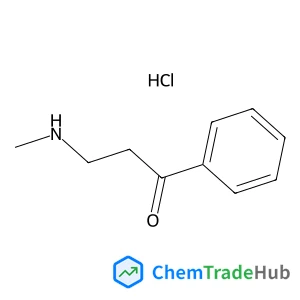
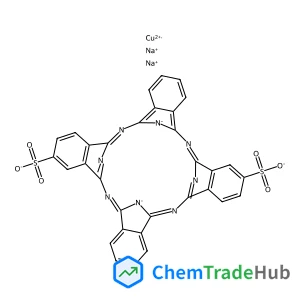
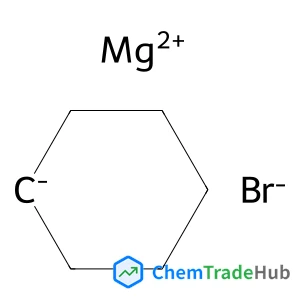
![1-Naphthalenesulfonic acid, 2-[(2-hydroxy-1-naphthalenyl)azo]-, bariumsalt (2:1) structure](https://static.chemtradehub.com/structs/110/1103-38-4-0b33.webp "1-Naphthalenesulfonic acid, 2-[(2-hydroxy-1-naphthalenyl)azo]-, bariumsalt (2:1) structure")
1-Naphthalenesulfonic acid, 2-[(2-hydroxy-1-naphthalenyl)azo]-, bariumsalt (2:1)
CAS番号:
1103-38-4
分子式:
C20H14BaN2O4S
おすすめサプライヤー





免責事項
このページに表示される学術雑誌情報は、参考および研究目的のみを目的としています。当社は雑誌出版社とは提携しておらず、投稿の取り扱いも行っておりません。出版に関するお問い合わせは、各雑誌出版社に直接ご連絡ください。
表示されている情報に誤りがある場合は、support@chemtradehub.com までご連絡ください。迅速に確認し、対応いたします。