












A versatile macro-initiator with dual functional anchoring groups for surface-initiated atom transfer radical polymerization on various substrates
文献情報
出版日
2012-04-18
DOI
10.1039/C2PY20148H
インパクトファクター
5.582
著者
Xiaolong Wang, Feng Zhou
原文を見る
要旨
A versatile macro-initiator with dual functional anchoring groups for surface-initiated atom transfer radical polymerization (SI-ATRP) on various substrates is reported. Conventional free radical copolymerization was performed with N-(3,4-dihydroxyphenyl) ethyl methacrylamide (a dopamine anchor-containing monomer), 4-(1-pyrenyl) butyl methacrylate (a pyrene anchor-containing monomer), and 2-(2-bromoisobutyryloxy) ethyl methacrylate (an ATRP-initiating monomer) to produce a random copolymer. Dopamine anchors on the copolymer could assemble on the macroscopic planar substrates (e.g., Si, Ti, Au, Cu, stainless steel, Al2O3, PI, PTFE, PDMS, textile, and wood) and pyrene anchors on the carbon-based nanoscaled materials (e.g., two-dimensional graphene oxide and one-dimensional carbon nanotubes). The successful preparation of polymer brushes through SI-ATRP in a water and methanol system from various substrates was characterized via ATR-IR, AFM, XPS, TGA, and TEM, which confirmed the versatility of the macro-initiator. More importantly, a synergistic anchoring effect between catechol and pyrene groups was discovered, leading to high quantities of grafted polymers from the graphene oxide substrates. Microcontact printing of the macro-initiator was also demonstrated in the formation of patterned surfaces on the Ti substrate.
関連文献
Synthesis and properties of pyrrolo[3,4-c]pyrrole-1,3-dione based polymer semiconductors and their performance in organic thin film transistors
Chang Guo, Bin Sun, Yuning Li
2014-05-27
Paper
DOI: 10.1039/C4PY00372A
Functionalisation of MWCNTs with poly(lauryl acrylate) polymerised by Cu(0)-mediated and RAFT methods
Jaipal Gupta, Daniel J. Keddie, Chaoying Wan, David M. Haddleton, Tony McNally
2016-05-12
Paper
DOI: 10.1039/C6PY00522E
‘Click’-BINOL based chiral ionic polymers for highly enantioselective recognition of tryptophan anions
Guo Wei, Yuliang Jiang, Fei Li, Yiwu Quan, Yixiang Cheng, Chengjian Zhu
2014-06-02
Communication
DOI: 10.1039/C4PY00755G
Rational design of soluble and clickable polymers prepared by conventional free radical polymerization of acetylene-functionalized acrylate
Yu Liu, Xiaochuan Shui, Meng Wang, Chenguang Zhang, Yuechuan Wang
2017-02-23
Paper
DOI: 10.1039/C6PY02104B
Ultra-sensitive detection of explosives in solution and film as well as the development of thicker film effectiveness by tetraphenylethene moiety in AIE active fluorescent conjugated polymer
Khama Rani Ghosh, Sukanta Kumar Saha
2014-06-11
Paper
DOI: 10.1039/C4PY00673A
Preparation of sulfonic acid functional proton conducting phosphazenes by covalent protection
Ferda Hacıvelioğlu
2017-04-17
Paper
DOI: 10.1039/C7PY00189D
Highly thermal conductive resins formed from wide-temperature-range eutectic mixtures of liquid crystalline epoxies bearing diglycidyl moieties at the side positions
Hyeonuk Yeo, Nam-Ho You, Se Gyu Jang, Seokhoon Ahn, Kwang-Un Jeong, Seung Hee Lee, Munju Goh
2017-04-05
Paper
DOI: 10.1039/C7PY00243B
“Arm-first” approach for the synthesis of star-shaped stereoregular polymers through living coordination polymerization
Zhenghai Shi, Fang Guo, Rui Tan, Hui Niu, Tingting Li, Yang Li
2017-01-31
Communication
DOI: 10.1039/C6PY02097F
A dendrimer–hydrophobic interaction synergy improves the stability of polyion complex micelles
Marcos Fernandez-Villamarin, Ana Sousa-Herves, Silvia Porto, Noelia Guldris, José Martínez-Costas, Ricardo Riguera, Eduardo Fernandez-Megia
2017-03-28
Paper
DOI: 10.1039/C7PY00304H
こちらもおすすめ
化合物よくある質問
6- bromo-1-cyclopropyl-1H-benzimidazoleの市場動向や研究トレンドはどうですか?
6- bromo-1-cyclopropyl-1H-benzimidazoleは、抗炎症、抗ウイルス作用を持つことが報告されており、新薬開発の研究対象として注目...
1416713-53-56-Bromo-1-cyclopropy...
化合物よくある質問
環氧プロpanol-d5を取り扱う際の実験室安全事項は何ですか?
取り扱う際には、防護眼鏡と手袋を使用し、ドラフトチャンバー内で操作することを推奨します。漏洩時には適切な手順で処理し、安全データシートを常に参照してください。
1246819-20-4Glycidol-d5
化合物よくある質問
2,2’-ジメチル-3,3’-ビピリジンはどのように合成されますか?
2,2’-ジメチル-3,3’-ビピリジンは、ピリジンと2-メチルアクリルアミドを有機合成反応で合成します。この反応では、ピリジンと2-メチルアクリルアミドを含有...
86156-55-02,2’-Dimethyl-3,3’-b...
化合物よくある質問
6-甲基ピリジン-2-ボリック酸の主な用途は何ですか?
6-甲基ピリジン-2-ボリック酸は、合成化学、医薬品合成、以及研究用途などに広く使用され、特に組換えDNA技術や分子生物学の研究において重要な役割を果たします。
372963-50-3(6-Methyl-2-pyridiny...
化合物よくある質問
(R)-3-(1-甲基-2-氧環己基)プロpano酸メチルは安全ですか?
(R)-3-(1-甲基-2-氧環己基)プロpano酸メチルは一定の安全性がありますが、直接的な皮膚接触や吸入は避けるべきです。使用する際は適切な個々の安全データ...
94089-47-1methyl 3-[(1R)-1-met...
化合物よくある質問
ketorolacはどのように保存すればよいですか?
ketorolacは、密封して遮光容器に保管し、直射日光や高温を避けて保存してください。温度は常温で保存し、湿度をなるべく低く保つことが推奨されます。
74103-06-3rac Ketorolac
化合物よくある質問
L-2,3-二氨基丙酸二盐酸盐を取り扱う際の実験室安全事項は何ですか?
L-2,3-二氨基丙酸二盐酸盐は腐食性が強く、皮膚や粘膜に刺激を与える可能性があります。取り扱う際は、防塵マスク、ゴーグル、手袋を使用し、適切な排気設備を使用し...
19777-68-5(S)-2,3-Diaminopropa...
化合物よくある質問
2-(4-溴ピリジン-2-基)乙腈の物理化学的性質は何ですか?
2-(4-溴ピリジン-2-基)乙腈のCAS番号は312325-73-8です。主に結晶形態で存在し、分子量は159.01 g/molです。この化合物は水に溶けやす...
312325-73-8(4-Bromo-2-pyridinyl...
化合物よくある質問
3-フローロ-[1,1-ベンジレン]-3,4-ジカルボン酸を取り扱う際の実験室安全事項は何ですか?
この化合物は毒性は低いですが、直接的な接触や吸入に注意が必要です。PPE(個人防護具)を着用し、ドラフトチャンバーを使用して操作することを推奨します。また、漏洩...
1261915-32-53'-Fluoro-[1,1'-biph...
化合物よくある質問
3-(1-氧代-1,3-二氢-2H-2-异吲哚)丙酸の主な用途は何ですか?
3-(1-氧代-1,3-二氢-2H-2-异吲哚)丙酸は、薬理学研究や医薬品製造において広く用いられる化合物です。また、工業的な用途でも一部の化学反応の触媒や助剤...
83747-30-23-(1-Oxo-1,3-dihydro...
掲載誌
Polymer Chemistry

CiteScore:
8.6
自己引用率:
7.3%
年間論文数:
457
Polymer Chemistry welcomes submissions in all areas of polymer science that have a strong focus on macromolecular chemistry. Manuscripts may cover a broad range of fields, yet no direct application focus is required.
おすすめ化合物
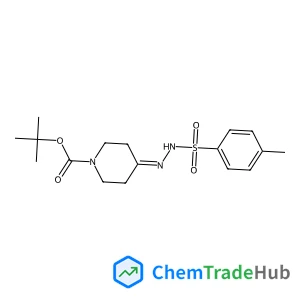
tert-Butyl 4-(2-(p-Tolylsulfonyl)hydrazono)piperidine-1-carboxylate
CAS番号:
1046478-89-0
分子式:
C17H25N3O4S
![4-[(3-Chloro-2-fluorophenyl)amino]-7-methoxy-6-quinazolinyl acetate structure](https://static.chemtradehub.com/structs/740/740081-22-5-f58f.webp "4-[(3-Chloro-2-fluorophenyl)amino]-7-methoxy-6-quinazolinyl acetate structure")
4-[(3-Chloro-2-fluorophenyl)amino]-7-methoxy-6-quinazolinyl acetate
CAS番号:
740081-22-5
分子式:
C17H13ClFN3O3
![(2S)-2-{[(9H-Fluoren-9-ylmethoxy)carbonyl]amino}-4-(methylselanyl)butanoic acid structure](https://static.chemtradehub.com/structs/121/1217852-49-7-f252.webp "(2S)-2-{[(9H-Fluoren-9-ylmethoxy)carbonyl]amino}-4-(methylselanyl)butanoic acid structure")
(2S)-2-{[(9H-Fluoren-9-ylmethoxy)carbonyl]amino}-4-(methylselanyl)butanoic acid
CAS番号:
1217852-49-7
分子式:
C20H21NO4Se
おすすめサプライヤー




免責事項
このページに表示される学術雑誌情報は、参考および研究目的のみを目的としています。当社は雑誌出版社とは提携しておらず、投稿の取り扱いも行っておりません。出版に関するお問い合わせは、各雑誌出版社に直接ご連絡ください。
表示されている情報に誤りがある場合は、support@chemtradehub.com までご連絡ください。迅速に確認し、対応いたします。