












Glycopolymer–peptidebioconjugates with antioxidant activity via RAFT polymerization
文献情報
出版日
2012-02-29
DOI
10.1039/C2PY20021J
インパクトファクター
5.582
著者
Haiting Shi, Li Liu, Xiaobei Wang, Jingyi Li
原文を見る
要旨
Well-defined protected glycopolymer poly(2-(2,3,4,6-tetra-O-acetyl-β-D-glucosyloxy)ethyl methacrylate) (PAcGlcEMA) is synthesized by reversible addition–fragmentation chain transfer (RAFT) radical polymerization. In the presence of ethanolamine and 2,2′-dithiodipyridine, PAcGlcEMA-PDS with end thiol-reactive pyridyldisulfide (PDS) group is generated by a one-pot approach. After deprotection of PAcGlcEMA, tripeptide reduced glutathione (GSH) is conjugated to PGlcEMA-PDS by thiol–disulfide exchange reaction under mild conditions. Fluorescent assay and TEM studies demonstrate that the pendant glucose residues on PGlcEMA have specific recognition with protein Concanavalin A (Con A). In comparison to PGlcEMA-PDS, the bioconjugation of GSH to PGlcEMA enhances the affinity of glycopolymer to Con A. The association constant (Ka) for the interaction of PGlcEMA-GSH bioconjugate and Con A is 6.1 × 10³ M−1, displaying a high glycoside cluster effect. The disulfide-linked GSH bioconjugate PGlcEMA-GSH shows antioxidant activity. The radical scavenging activity is validated in vitro by 1,1-diphenyl-2-picrylhydrazyl (DPPH) assay. It is found that the scavenging activity is dependent on reaction time and temperature. A sustained radical scavenging activity is observed at 37 °C, and about 50% DPPH radical is cleared after 24 h incubation. The recognition and the antioxidant activity make the peptide–glycopolymer bioconjugate PGlcEMA-GSH have potential for biodetection, biomimetics and targeted antioxidant delivery.
関連文献
Boron difluoride formazanate copolymers with 9,9-di-n-hexylfluorene prepared by copper-catalyzed alkyne–azide cycloaddition chemistry
Stephanie M. Barbon, Joe B. Gilroy
2016-05-05
Paper
DOI: 10.1039/C6PY00441E
Nucleobase-functionalized supramolecular polymer films with tailorable properties and tunable biodegradation rates
Chih-Chia Cheng, Jyun-Jie Huang, Zhi-Sheng Liao, Shan-You Huang, Zhong Xin
2017-02-07
Communication
DOI: 10.1039/C7PY00182G
Preparation of sulfonic acid functional proton conducting phosphazenes by covalent protection
Ferda Hacıvelioğlu
2017-04-17
Paper
DOI: 10.1039/C7PY00189D
Blood compatibility of heparin-inspired, lactose containing, polyureas depends on the chemistry of the polymer backbone
Y. Huang, M. A. Shaw, M. R. Warmin, E. S. Mullins, N. Ayres
2016-05-13
Paper
DOI: 10.1039/C6PY00616G
Innovative well-defined primary amine-based polyacrylates for plasmid DNA complexation
Hien The Ho, Sagrario Pascual, Véronique Montembault, Nathalie Casse, Laurent Fontaine
2014-06-16
Communication
DOI: 10.1039/C4PY00585F
New violet to yellow light sensitive diketo pyrrolo–pyrrole photoinitiators: high performance systems with unusual bleaching properties and solubility in water
Mariem Bouzrati-Zerelli, Nicolas Zivic, Frédéric Dumur, Didier Gigmes, Bernadette Graff, Jean Pierre Fouassier, Jacques Lalevée
2017-02-28
Paper
DOI: 10.1039/C7PY00202E
Ultra-sensitive detection of explosives in solution and film as well as the development of thicker film effectiveness by tetraphenylethene moiety in AIE active fluorescent conjugated polymer
Khama Rani Ghosh, Sukanta Kumar Saha
2014-06-11
Paper
DOI: 10.1039/C4PY00673A
Functionalization of aliphatic polyesters by nitroxide radical coupling
Francesca Cicogna, Serena Coiai, Paola Rizzarelli, Sabrina Carroccio, Cristian Gambarotti, Ilaria Domenichelli, Chengcheng Yang, Nadka Tz. Dintcheva, Giovanni Filippone, Calogero Pinzino, Elisa Passaglia
2014-05-29
Paper
DOI: 10.1039/C4PY00641K
Ultra-pH-sensitive polypeptide micelles with large fluorescence off/on ratio in near infrared range
Liyi Fu, Pan Yuan, Zheng Ruan, Le Liu, Tuanwei Li, Lifeng Yan
2016-12-16
Paper
DOI: 10.1039/C6PY01818A
Tumor-targeted aggregation of pH-sensitive nanocarriers for enhanced retention and rapid intracellular drug release
Wei Wu, Qiujing Zhang, Jiantao Wang, Miao Chen, Shuai Li, Zaifu Lin, Jianshu Li
2014-05-30
Paper
DOI: 10.1039/C4PY00575A
こちらもおすすめ
化合物よくある質問
6- bromo-1-cyclopropyl-1H-benzimidazoleの市場動向や研究トレンドはどうですか?
6- bromo-1-cyclopropyl-1H-benzimidazoleは、抗炎症、抗ウイルス作用を持つことが報告されており、新薬開発の研究対象として注目...
1416713-53-56-Bromo-1-cyclopropy...
化合物よくある質問
環氧プロpanol-d5を取り扱う際の実験室安全事項は何ですか?
取り扱う際には、防護眼鏡と手袋を使用し、ドラフトチャンバー内で操作することを推奨します。漏洩時には適切な手順で処理し、安全データシートを常に参照してください。
1246819-20-4Glycidol-d5
化合物よくある質問
2,2’-ジメチル-3,3’-ビピリジンはどのように合成されますか?
2,2’-ジメチル-3,3’-ビピリジンは、ピリジンと2-メチルアクリルアミドを有機合成反応で合成します。この反応では、ピリジンと2-メチルアクリルアミドを含有...
86156-55-02,2’-Dimethyl-3,3’-b...
化合物よくある質問
6-甲基ピリジン-2-ボリック酸の主な用途は何ですか?
6-甲基ピリジン-2-ボリック酸は、合成化学、医薬品合成、以及研究用途などに広く使用され、特に組換えDNA技術や分子生物学の研究において重要な役割を果たします。
372963-50-3(6-Methyl-2-pyridiny...
化合物よくある質問
(R)-3-(1-甲基-2-氧環己基)プロpano酸メチルは安全ですか?
(R)-3-(1-甲基-2-氧環己基)プロpano酸メチルは一定の安全性がありますが、直接的な皮膚接触や吸入は避けるべきです。使用する際は適切な個々の安全データ...
94089-47-1methyl 3-[(1R)-1-met...
化合物よくある質問
ketorolacはどのように保存すればよいですか?
ketorolacは、密封して遮光容器に保管し、直射日光や高温を避けて保存してください。温度は常温で保存し、湿度をなるべく低く保つことが推奨されます。
74103-06-3rac Ketorolac
化合物よくある質問
L-2,3-二氨基丙酸二盐酸盐を取り扱う際の実験室安全事項は何ですか?
L-2,3-二氨基丙酸二盐酸盐は腐食性が強く、皮膚や粘膜に刺激を与える可能性があります。取り扱う際は、防塵マスク、ゴーグル、手袋を使用し、適切な排気設備を使用し...
19777-68-5(S)-2,3-Diaminopropa...
化合物よくある質問
2-(4-溴ピリジン-2-基)乙腈の物理化学的性質は何ですか?
2-(4-溴ピリジン-2-基)乙腈のCAS番号は312325-73-8です。主に結晶形態で存在し、分子量は159.01 g/molです。この化合物は水に溶けやす...
312325-73-8(4-Bromo-2-pyridinyl...
化合物よくある質問
3-フローロ-[1,1-ベンジレン]-3,4-ジカルボン酸を取り扱う際の実験室安全事項は何ですか?
この化合物は毒性は低いですが、直接的な接触や吸入に注意が必要です。PPE(個人防護具)を着用し、ドラフトチャンバーを使用して操作することを推奨します。また、漏洩...
1261915-32-53'-Fluoro-[1,1'-biph...
化合物よくある質問
3-(1-氧代-1,3-二氢-2H-2-异吲哚)丙酸の主な用途は何ですか?
3-(1-氧代-1,3-二氢-2H-2-异吲哚)丙酸は、薬理学研究や医薬品製造において広く用いられる化合物です。また、工業的な用途でも一部の化学反応の触媒や助剤...
83747-30-23-(1-Oxo-1,3-dihydro...
掲載誌
Polymer Chemistry

CiteScore:
8.6
自己引用率:
7.3%
年間論文数:
457
Polymer Chemistry welcomes submissions in all areas of polymer science that have a strong focus on macromolecular chemistry. Manuscripts may cover a broad range of fields, yet no direct application focus is required.
おすすめ化合物
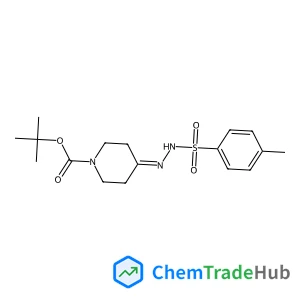
tert-Butyl 4-(2-(p-Tolylsulfonyl)hydrazono)piperidine-1-carboxylate
CAS番号:
1046478-89-0
分子式:
C17H25N3O4S
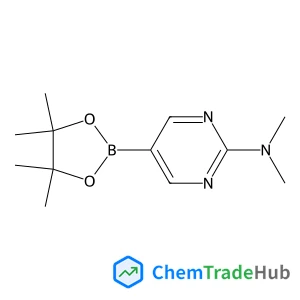
N,N-Dimethyl-5-(4,4,5,5-tetramethyl-1,3,2-dioxaborolan-2-yl)-2-pyrimidinamine
CAS番号:
1032759-30-0
分子式:
C12H20BN3O2
![2-{[(1R,2S)-2-Aminocyclohexyl]amino}-4-{[3-(2H-1,2,3-triazol-2-yl)phenyl]amino}-5-pyrimidinecarboxamide structure](https://static.chemtradehub.com/structs/137/1370261-96-3-40df.webp "2-{[(1R,2S)-2-Aminocyclohexyl]amino}-4-{[3-(2H-1,2,3-triazol-2-yl)phenyl]amino}-5-pyrimidinecarboxamide structure")
おすすめサプライヤー




免責事項
このページに表示される学術雑誌情報は、参考および研究目的のみを目的としています。当社は雑誌出版社とは提携しておらず、投稿の取り扱いも行っておりません。出版に関するお問い合わせは、各雑誌出版社に直接ご連絡ください。
表示されている情報に誤りがある場合は、support@chemtradehub.com までご連絡ください。迅速に確認し、対応いたします。