













Size-controlled synthesis of silver micro/nanowires as enabled by HCL oxidative etching
文献情報
出版日
2012-11-30
DOI
10.1039/C2CP43108D
インパクトファクター
3.676
著者
Caio C. S. de Oliveira, Rômulo A. Ando, Pedro H. C. Camargo
原文を見る
要旨
The polyol method has been widely employed for the synthesis of uniform silver nanowires (Ag NWs) in high yields. In this article, we describe the utilization of HCl oxidative etching as an effective strategy to control the width of Ag NWs produced by the polyol approach. More specifically, the width of the produced Ag NWs could be tuned from 65 to 765 nm by varying the HCl concentration in the polyol recipe. Our results indicate that the obtained widths displayed a linear and steady increase according to the HCl concentration employed in the reaction. Although the width was also dependent on other experimental parameters such as the AgNO3 and polyvinylpirrolidone (PVP) concentrations and temperature, the HCl oxidative etching enabled the controlled synthesis of Ag NWs over the widest range of widths. The size-dependent optical property investigations revealed that the transverse mode surface plasmon resonance peak for the produced Ag NWs red-shifted from 378 to 467 nm as their width increased from 77 to 584 nm. The application of Ag NWs (77 nm) as SERS substrates for the detection of 4-mercaptopyridine was also demonstrated. As the properties of metal nanostructures are strongly dependent upon size, the results reported herein can have important implications for designing the synthesis of uniform Ag NWs in high yields displaying controlled and/or desired dimensions for applications in areas including plasmonics, electronics, and sensing.
関連文献
Conjugated polymers with 2,7-linked 3,6-difluorocarbazole as donor unit for high efficiency polymer solar cells
Chun Du, Weiwei Li, Yan Duan, Cuihong Li, Huanli Dong, Jia Zhu, Wenping Hu, Zhishan Bo
2013-02-20
Paper
DOI: 10.1039/C3PY00177F
Polypyrrole–silver composites prepared by the reduction of silver ions with polypyrrole nanotubes
Jitka Škodová, Dušan Kopecký, Martin Vrňata, Martin Varga, Jan Prokeš, Miroslav Cieslar, Patrycja Bober, Jaroslav Stejskal
2013-04-05
Paper
DOI: 10.1039/C3PY00250K
Selective CO2 capture in an imine linked porphyrin porous polymer
Venkata S. Pavan K. Neti, Xiaofei Wu, Shuguang Deng, Luis Echegoyen
2013-07-03
Communication
DOI: 10.1039/C3PY00798G
Synthesis and characterization of a new multifunctional polymeric prodrug paclitaxel–polyphosphoester–folic acid for targeted drug delivery
Guoyi Zhang, Mingzu Zhang, Jinlin He, Peihong Ni
2013-05-31
Paper
DOI: 10.1039/C3PY00419H
Polymerization of methyl methacrylate by latent pre-catalysts based on CO2-protected N-heterocyclic carbenes
Stefan Naumann, Friedrich Georg Schmidt, Roman Schowner, Wolfgang Frey
2013-02-19
Paper
DOI: 10.1039/C3PY00073G
A new method to make polymers with flexible main chains and photoelectric pendants for organic semiconductors
Yeli Fan, Baoping Lin, Ying Sun, Xiaohui Gong, Hong Yang, Xueqin Zhang
2013-05-22
Paper
DOI: 10.1039/C3PY00454F
Synthesis and versatile postpolymerization modification of couplable A(BC)mD heterografted comblike block quaterpolymers
Xiao Jiang, Wei Shao, Kun Jiang, Meijing Zhang, Huanhuan Liu, Chunnuan Ye, Youliang Zhao
2013-04-05
Paper
DOI: 10.1039/C3PY00217A
pH-responsive and biodegradable polymeric micelles based on poly(β-amino ester)-graft-phosphorylcholine for doxorubicin delivery
Haibo Wang, Fangming Xu, Yin Wang, Xiangsheng Liu, Qiao Jin, Jian Ji
2013-03-01
Paper
DOI: 10.1039/C3PY00139C
Pluronic L61 as a long-circulating modifier for enhanced liposomal delivery of cancer drugs
Ergang Liu, Xiaoyi Sun, Pengyu Huang, Hao Long, Hua Wang, Xin Yu, Caihong Zheng
2013-03-27
Communication
DOI: 10.1039/C3PY00042G
RAFT copolymerization of alginate-derived macromonomers – synthesis of a well-defined poly(HEMAm)-graft-(1→4)-α-l-guluronan copolymer capable of ionotropic gelation
Ali Ghadban, Eric Reynaud, Marguerite Rinaudo, Luca Albertin
2013-07-01
Communication
DOI: 10.1039/C3PY00730H
こちらもおすすめ
化合物よくある質問
3-(2-オキサプロピル)ベンzoic酸はどのように合成されますか?
3-(2-オキサプロピル)ベンzoic酸は、ベンzoic酸とプロパノ酸をヒドロキシム化合物として反応させて生成します。具体的には、ベンzoic酸とプロパノ酸を反...
205927-63-53-(2-Oxopropyl)benzo...
114873-01-73-Fluoro-N-{[(2-meth...
化合物よくある質問
4-メチル-4-ピペリジニル-1-ピロリドイン甲酸の主な用途は何ですか?
4-メチル-4-ピペリジニル-1-ピロリドイン甲酸は、主に医薬品の合成材料や研究用物質として使用されます。さらに、一部の薬理学的研究にも応用されています。
885523-47-7(4-Methyl-4-piperidi...
化合物よくある質問
Biotin-PEG3-oxyamine HCl塩について、適切な化合物名称に適用される法規ガイドラインは何ですか?
Biotin-PEG3-oxyamine HCl塩は、GHS( Globally Harmonized System of Classification and...
1786206-22-1Biotin-PEG3-oxyamine...
化合物よくある質問
N-(4-イソチオシアネートフェニル)-2-メトキシアリニンはどのように合成されますか?
N-(4-イソチオシアネートフェニル)-2-メトキシアリニンは、4-イソチオシアノフェノールと2-メトキシアリニルアミンのアミニド反応を用いて合成されます。この...
915919-57-2N-(4-Isothiocyanatop...
化合物よくある質問
金粉蕨亭2'-O-葡萄糖甙の主な用途は何ですか?
金粉蕨亭2'-O-葡萄糖甙は主に薬理研究や医薬品製造に使用され、抗炎症作用や抗がん作用などがあります。また、その構造や性質から、合成化学や化学生理学の研究にも用...
76947-60-92-(7-Hydroxy-2,2,4,6...
化合物よくある質問
2-(2-ニトロフェニル)酢酸ヒドライドの物理化学的性質は何ですか?
2-(2-ニトロフェニル)酢酸ヒドライドのCAS番号は114953-81-0です。この化合物は白色結晶性粉末で、分子量は244.12です。水溶性は限られており、...
114953-81-02-(2-Nitrophenyl)ace...
化合物よくある質問
5-(ヒドロキシメチル)-2-チオキソ-2,3-ジヒドロピリミジン-4(1H)-オンを取り扱う際の実験室安全事項は何ですか?
この化合物は高活性のため、取り扱いには注意が必要です。PPE(個人保護具)としてゴーグル、ガントリー、および防滴シールドを着用することが推奨されます。ドラフトチ...
93185-31-05-(Hydroxymethyl)-2-...
化合物よくある質問
11-脱氢血栓烷 b2の市場動向や研究トレンドはどうですか?
11-脱氢血栓烷 b2は、血栓溶解・抗凝固作用に関する研究で注目を集めています。特に心血管疾患の治療法開発において、市場の需要が高まっています。研究トレンドとし...
67910-12-77-{(2R,3S,4S)-4-Hydr...
化合物よくある質問
3,3-二甲基哌啶-4-酮はどのように保存すればよいですか?
3,3-二甲基哌啶-4-酮は避光、常温、乾燥した場所で保存してください。容器は密閉し、遠くから火源を離して保管することを確認してください。
150668-82-93,3-Dimethyl-4-piper...
掲載誌
Physical Chemistry Chemical Physics

CiteScore:
5.5
自己引用率:
10.3%
年間論文数:
3036
Physical Chemistry Chemical Physics (PCCP) is an international journal co-owned by 19 physical chemistry and physics societies from around the world. This journal publishes original, cutting-edge research in physical chemistry, chemical physics and biophysical chemistry. To be suitable for publication in PCCP, articles must include significant innovation and/or insight into physical chemistry; this is the most important criterion that reviewers and Editors will judge against when evaluating submissions. The journal has a broad scope and welcomes contributions spanning experiment, theory, computation and data science. Topical coverage includes spectroscopy, dynamics, kinetics, statistical mechanics, thermodynamics, electrochemistry, catalysis, surface science, quantum mechanics, quantum computing and machine learning. Interdisciplinary research areas such as polymers and soft matter, materials, nanoscience, energy, surfaces/interfaces, and biophysical chemistry are welcomed if they demonstrate significant innovation and/or insight into physical chemistry. Joined experimental/theoretical studies are particularly appreciated when complementary and based on up-to-date approaches.
おすすめ化合物
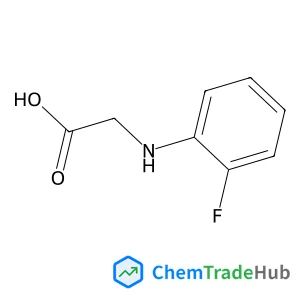
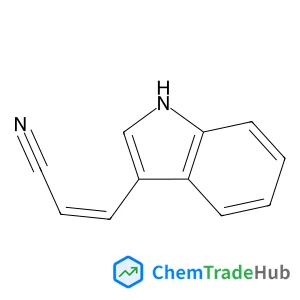
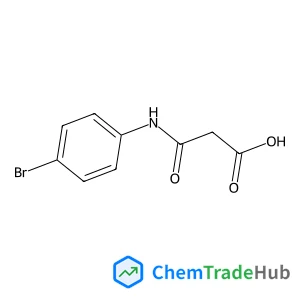
![2-[({[(2-Methyl-2-propanyl)oxy]carbonyl}amino)methyl]isonicotinic acid structure](https://static.chemtradehub.com/structs/473/473924-63-9-973b.webp "2-[({[(2-Methyl-2-propanyl)oxy]carbonyl}amino)methyl]isonicotinic acid structure")
2-[({[(2-Methyl-2-propanyl)oxy]carbonyl}amino)methyl]isonicotinic acid
CAS番号:
473924-63-9
分子式:
C12H16N2O4
おすすめサプライヤー



免責事項
このページに表示される学術雑誌情報は、参考および研究目的のみを目的としています。当社は雑誌出版社とは提携しておらず、投稿の取り扱いも行っておりません。出版に関するお問い合わせは、各雑誌出版社に直接ご連絡ください。
表示されている情報に誤りがある場合は、support@chemtradehub.com までご連絡ください。迅速に確認し、対応いたします。