












Tuning of switching properties and excited-state dynamics of fulgides by structural modifications
文献情報
出版日
2011-01-05
DOI
10.1039/C0CP01890B
インパクトファクター
3.676
著者
Ron Siewertsen, Frank Strübe, Jochen Mattay, Falk Renth, Friedrich Temps
原文を見る
要旨
The ultrafast photo-induced dynamics of the E-isomers of four selected photochromic fulgides with distinct structural motifs have been elucidated by femtosecond broadband transient absorption spectroscopy in n-hexane as solvent. E → C and E → Zisomerisations, respectively, with time constants of ∼0.12 ± 0.02 ps and ∼0.34 ± 0.03 ps taking place in parallel were found for derivatives with a methyl substituent at the central hexatriene (HT) unit. In contrast, fulgides with increased steric constraints by an iso-propyl substituent or by intramolecular bridging displayed virtually zero E → Zisomerisation, but instead a desired accelerated and more efficient ring closure in a reaction time of only ∼50 ± 10 fs. Both photoisomerisations appear to follow excited-state pathways with distinctive conical intersections. For the ring closure, direct barrierless pathways with steep downhill gradients are likely. Furthermore, the results indicate conformer-specific reactions, with ring closure exclusively by the Eα conformer and E → Zisomerisation predominantly by the Eβ conformer, because the Eα → Zchannel is unfavoured by the faster and kinetically more competitive Eα → C reaction. DFT calculations of the equilibrium structures showed that the sterically demanding groups at the HT unit shift the conformer equilibria towards the Eα conformers. At the same time, they appear to cause a favourable pre-orientation of the furyl unit that accelerates the conrotatory ring closure in the Eα → C reaction. Benzo-annulation of the furyl unit has little effect on the observed dynamics. Overall, the results demonstrate how the excited-state dynamics and thereby the photoswitching properties of fulgides can be successfully tuned and improved by structural modifications at the chromophores.
関連文献
Interfacial assembly structures and nanotribological properties of saccharic acids
Hongyu Shi, Yuhong Liu, Qingdao Zeng, Yanlian Yang, Chen Wang, Xinchun Lu
2016-11-29
Paper
DOI: 10.1039/C6CP06759J
Computational study of the interplay between intermolecular interactions and CO2 orientations in type I hydrates
M. Pérez-Rodríguez, A. Vidal-Vidal, J. M. Míguez, F. J. Blas, J.-P. Torré, M. M. Piñeiro
2016-12-12
Paper
DOI: 10.1039/C6CP07097C
Excited state proton transfer in 2′-hydroxychalcone derivatives
Michael Dommett, Rachel Crespo-Otero
2016-12-22
Paper
DOI: 10.1039/C6CP07541J
Observation of partial reduction of manganese in the lithium rich layered oxides, 0.4Li2MnO3–0.6LiNi1/3Co1/3Mn1/3O2, during the first charge
Hyung Cheoul Shim, Donghan Kim, Dongwook Shin, Seungmin Hyun, Chang-Su Woo, Taehwan Yu, Jae-Pyoung Ahn
2016-12-02
Paper
DOI: 10.1039/C6CP07574F
Probing nonlinear optical coefficients in self-assembled peptide nanotubes
Soma Khanra, Kartik Ghosh, Fabio F. Ferreira, Wendel A. Alves, Francesco Punzo, Ping Yu, Suchismita Guha
2017-01-04
Paper
DOI: 10.1039/C6CP07879F
The enthalpies of formation of carbon nanomaterials as a key factor for understanding their structural features
E. V. Suslova, S. V. Savilov, J. Ni, V. V. Lunin
2016-12-20
Paper
DOI: 10.1039/C6CP07570C
Transient photocyclization in ruthenium(ii) polypyridine complexes of indolamines
G. Carrone, L. Zayat, L. D. Slep, R. Etchenique
2016-12-08
Paper
DOI: 10.1039/C6CP06580E
Ferromagnetism in nitrogen-doped BaO: a self-interaction corrected DFT study
Elisa Albanese, Gianfranco Pacchioni
2016-12-22
Paper
DOI: 10.1039/C6CP07535E
A new potential for methylammonium lead iodide
C. M. Handley, C. L. Freeman
2016-12-08
Paper
DOI: 10.1039/C6CP05829A
Molecular hydrogen production from amorphous solid water during low energy electron irradiation
Martin R. S. McCoustra
2017-01-09
Paper
DOI: 10.1039/C6CP06928B
こちらもおすすめ
化合物よくある質問
4'-ブロモビフェニル-3-メトークシーディ.ActionBarはどのように保存すればよいですか?
4'-ブロモビフェニル-3-メトークシーディ.ActionBarは、冷暗所で、直射日光を避け、密栓の容器に保存し、遠隔場所に保管してください。温度は常温(0〜2...
149506-25-24'-Bromo-biphenyl-3-...
2947-60-6(3-Methylphenyl)acet...
化合物よくある質問
2-異丙基フェニルヒドラジン塩酸塩とは何ですか?
2-異丙基フェニルヒドラジン塩酸塩は、CAS番号58928-82-8を有する化合物で、構造式はC11H14N2HClです。これは塩基性化合物であり、水に溶けやす...
58928-82-8(2-Isopropylphenyl)h...
化合物よくある質問
5-(4-クロロフェニル)-4H-1,2,4-三氮唑-3-アミンを取り扱う際の実験室安全事項は何ですか?
5-(4-クロロフェニル)-4H-1,2,4-三氮唑-3-アミンは取り扱いに注意が必要です。PPEとして防塵マスク、ゴーグル、手袋を使用し、ドラフトチャンバーを...
98554-00-85-(4-Chlorophenyl)-1...
化合物よくある質問
去甲基雷贝拉唑硫醚はどのように合成されますか?
去甲基雷贝拉唑硫醚は、ベンジミダゾール硫化物と3-メチル-4-ピリジノールの反応によって合成されます。具体的には、2-チオキシドベンジミダゾールと3-メチル-4...
117976-91-73-({2-[(1H-Benzimida...
化合物よくある質問
2-ブロモ-5-フロロ-N-(2-フェノールメチル)ベンゼンウレアは安全ですか?
2-ブロモ-5-フロロ-N-(2-フェノールメチル)ベンゼンウレアは、毒性や刺激性の実験データに基づき、適切な取扱いと防護措置を講じることで安全に使用できます。...
923722-86-52-Bromo-5-fluoro-N-(...
化合物よくある質問
対甲苯磺酸酯-四聚乙二醇-四氢吡喃醚の物理化学的性質は何ですか?
対甲苯磺酸酯-四聚乙二醇-四氢吡喃醚のCAS番号は86259-89-4です。この化合物は無色の液体で、分子量は約724.8です。高濃度では溶血性が報告されており...
86259-89-42-(2-{2-[2-(Tetrahyd...
化合物よくある質問
2-(3-(二氟甲基)-4-氟苯基)-4,4,5,5-四甲基-1,3,2-二噁硼戊環はどのように保存すればよいですか?
2-(3-(二氟甲基)-4-氟苯基)-4,4,5,5-四甲基-1,3,2-二噁硼戊環は、室温で暗い場所に保管し、直射日光から遠ざけ、容器は密閉状態で保存してくだ...
445303-65-12-[3-(difluoromethyl...
化合物よくある質問
6-アミノ-5-クロロ-2-シクロプロピルピリミジンカルボン酸の代替品はありますか?
この化合物の代替品には、ピロリミジン酸やその類似物、またピロリミジンカルボン酸の他の異性体があります。これらの代替品は、特定の化学反応や目的に応じて選択すること...
858956-08-86-Amino-5-chloro-2-c...
化合物よくある質問
5-クロロベンゾ[1,3]二オキセイン-4-アミンに適用される法規ガイドラインは何ですか?
5-クロロベンゾ[1,3]二オキセイン-4-アミンはCAS番号379228-45-2に該当します。この化合物はGHS分類でH314(接触により急性毒性がある)と...
379228-45-25-Chloro-1,3-benzodi...
掲載誌
Physical Chemistry Chemical Physics

CiteScore:
5.5
自己引用率:
10.3%
年間論文数:
3036
Physical Chemistry Chemical Physics (PCCP) is an international journal co-owned by 19 physical chemistry and physics societies from around the world. This journal publishes original, cutting-edge research in physical chemistry, chemical physics and biophysical chemistry. To be suitable for publication in PCCP, articles must include significant innovation and/or insight into physical chemistry; this is the most important criterion that reviewers and Editors will judge against when evaluating submissions. The journal has a broad scope and welcomes contributions spanning experiment, theory, computation and data science. Topical coverage includes spectroscopy, dynamics, kinetics, statistical mechanics, thermodynamics, electrochemistry, catalysis, surface science, quantum mechanics, quantum computing and machine learning. Interdisciplinary research areas such as polymers and soft matter, materials, nanoscience, energy, surfaces/interfaces, and biophysical chemistry are welcomed if they demonstrate significant innovation and/or insight into physical chemistry. Joined experimental/theoretical studies are particularly appreciated when complementary and based on up-to-date approaches.
おすすめ化合物
![19-[Chloro(dideuterio)methyl]-19-deuterio-20,20-dideuteriooxyoctatriacontane-18,21-dione structure](https://static.chemtradehub.com/structs/124/1246818-85-8-6244.webp "19-[Chloro(dideuterio)methyl]-19-deuterio-20,20-dideuteriooxyoctatriacontane-18,21-dione structure")
![(1R)-N-((1R)-1-Phenylethyl)-1-[4-(tert-butyldimethylsilyloxymethyl)cyclohexyl]ethan-1-amine structure](https://static.chemtradehub.com/structs/672/672314-45-3-47ef.webp "(1R)-N-((1R)-1-Phenylethyl)-1-[4-(tert-butyldimethylsilyloxymethyl)cyclohexyl]ethan-1-amine structure")
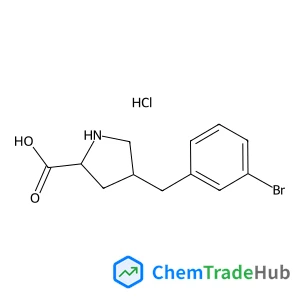
(2S,4R)-4-(3-Bromobenzyl)pyrrolidine-2-carboxylic acid hydrochloride
CAS番号:
1049734-10-2
分子式:
C12H15BrClNO2
おすすめサプライヤー





免責事項
このページに表示される学術雑誌情報は、参考および研究目的のみを目的としています。当社は雑誌出版社とは提携しておらず、投稿の取り扱いも行っておりません。出版に関するお問い合わせは、各雑誌出版社に直接ご連絡ください。
表示されている情報に誤りがある場合は、support@chemtradehub.com までご連絡ください。迅速に確認し、対応いたします。