












Titania supported gold nanoparticles as photocatalyst
文献情報
出版日
2010-11-17
DOI
10.1039/C0CP00917B
インパクトファクター
3.676
著者
原文を見る
要旨
This Perspective is focused on the photocatalytic activity of gold nanoparticles supported on titania (Au/TiO2). Titania is the most widely used photocatalyst, but its limited activity under visible light irradiation has motivated the quest for modified titania materials absorbing visible light. The review starts by justifying how doping with metallic elements is a related strategy, but different, to that leading to the use of Au/TiO2 in photocatalysis. Data supporting and confirming the photoactivity of gold nanoparticles in colloidal solutions are briefly presented to justify the possibility of gold photosensitization of titania by electron injection into the conduction band. After describing the most common procedures used to prepare Au/TiO2, the central part of this article is focused on the photocatalytic activity reported for Au/TiO2 for hydrogen generation, dye decoloration, phenol decomposition and carboxylic acid degradation, among other processes. Emphasis is given to the role that parameters like Au loading, particle size, surface area, spatial structuring and others play on the photocatalytic activity. One important issue has been to distinguish those reports using visible light from those other in which direct titania excitation by UV light has been used. These Au/TiO2 photocatalysts can find real applications in the near future for environmental remediation and for hydrogen generation.
関連文献
An accurate full-dimensional potential energy surface and quasiclassical trajectory dynamics of the H + H2O2 two-channel reaction
Kejie Shao, Bina Fu, Xingan Wang, Dong H. Zhang
2018-08-15
Paper
DOI: 10.1039/C8CP04045A
Influence of graphene thickness and grain boundaries on MoS2 wrinkle nanostructures
Seon Joon Kim, Ohmin Kwon, Dae Woo Kim
2018-05-31
Paper
DOI: 10.1039/C8CP02460J
The quest for determining one-electron redox potentials of azulene-1-carbonitriles by calculation
Nicolai Ree, Cecilie Lindholm Andersen, Martin Drøhse Kilde, Ole Hammerich, Mogens Brøndsted Nielsen, Kurt V. Mikkelsen
2018-02-19
Paper
DOI: 10.1039/C7CP08687C
Spectroscopy and dynamics of dehydrobenzo[12]annulene derivatives possessing peripheral carboxyphenyl groups: theory and experiment
Eduardo Gomez, Mario Gutiérrez, Miquel Moreno, Ichiro Hisaki, Schoichi Nakagawa, Abderrazzak Douhal
2017-12-13
Paper
DOI: 10.1039/C7CP06819K
From ligand exchange to reaction intermediates: what does really happen during the synthesis of emissive complexes?‡
P. Polzin, I. V. Eliani, J. Ströh, M. Braun, N. Ruser, P. Rönfeldt, F. Bertram, C. Näther, S. Wöhlbrandt, M. Suta, H. Terraschke
2017-12-20
Paper
DOI: 10.1039/C7CP07142F
Towards reliable references for electron paramagnetic resonance parameters based on quantum chemistry: the case of verdazyl radicals
Steffen Eusterwiemann, Armido Studer
2018-02-26
Paper
DOI: 10.1039/C7CP05657E
Tuning transition metal carbide activity by surface metal alloying: a case study on CO2 capture and activation
Martí López, Luke Broderick, John J. Carey, Francesc Viñes, Michael Nolan, Francesc Illas
2018-08-08
Paper
DOI: 10.1039/C8CP03648A
Entropic effects make a more tightly folded conformer of a β-amino acid less stable: UV-UV hole burning and IR dip spectroscopy of l-β3-homotryptophan using a laser desorption supersonic jet technique
Woon Yong Sohn, Jeong Jin Kim, Myeongwon Jeon, Takuma Aoki, Shun-ichi Ishiuchi, Masaaki Fujii, Hyuk Kang
2018-07-10
Paper
DOI: 10.1039/C8CP02106F
こちらもおすすめ
化合物よくある質問
2-メトキシ-4-(メチルスルフィニル)アミンの主な用途は何ですか?
2-メトキシ-4-(メチルスルフィニル)アミンは、主に医薬品および農薬の製造に使用されます。また、合成化学の一部として研究用材料としても利用されます。
41608-73-52-Methoxy-4-(methyls...
118684-13-24-(Bromomethyl)-3-me...
化合物よくある質問
4,6-二氯-N-甲基ピラミジンアミンの代替品はありますか?
代替品としては、4,6-二クロロピラミジンアミンや他のピラミジン系化合物が考えられます。ただし、目的と用途によって最適な代替品は異なります。
10397-15-64,6-Dichloro-N-methy...
化合物よくある質問
6-氯-4-甲基-1H-吲哚を含む廃棄物はどのように処理すべきですか?
6-氯-4-甲基-1H-吲哚の廃棄物は、適切な容器に収集し、密閉して保管します。温度は常温、湿度は低く、直射日光を避けて保管することを推奨します。廃棄処理は専門...
885520-84-36-chloro-4-methyl-1H...
化合物よくある質問
2-フローユロ-4-(トリフルオロメチル)ベンゾイドについて「に適用される法規ガイドラインは何ですか」
2-フローユロ-4-(トリフルオロメチル)ベンゾイドのCAS番号は207974-08-1です。この化合物はGHS分類で毒性物質と有害な反応物質として分類されます...
207974-08-1[2-Fluoro-4-(trifluo...
化合物よくある質問
4-ニトロフェニルN-[(ベンゼルオキシルカーボンイル]グリシングリシングリシン酸はどのように保存すればよいですか?
4-ニトロフェニルN-[(ベンゼルオキシルカーボンイル]グリシングリシングリシン酸は、室温で暗所に保管し、乾燥した環境で保存することを推奨します。容器は密閉性の...
19811-64-44-Nitrophenyl N-[(be...
化合物よくある質問
イソデスロラタドリンの代替品はありますか?
イソデスロラタドリンの代替品としては、デスロラタドリンや他の抗ヒスタミン薬が挙げられます。具体的には、デスロラタドリン、ラセカミド、フェルタドリンなどが、症状や...
183198-49-4Iso Desloratadine
化合物よくある質問
5-甲氧基-1,2,3,4-四氢异喹啉盐酸盐はどのように合成されますか?
5-甲氧基-1,2,3,4-四氢异喹啉盐酸盐の一般的な合成方法は、メタノール中で5-メトキシ-1,2,3,4-四ヒュドロイソキシンを塩酸で塩化します。この反応で...
103030-69-95-Methoxy-1,2,3,4-te...
化合物よくある質問
4-アミノ-5-メトキシ-2-トルエンサルホニック酸についての法規ガイドラインは何ですか?
CAS番号6471-78-9の4-アミノ-5-メトキシ-2-トルエンサルホニック酸は、GHS分類では corrosive(腐食性)と識別されます。EUのREAC...
6471-78-94-Amino-5-Methoxy-2-...
化合物よくある質問
甲基孕酮を取り扱う際の実験室安全事項は何ですか?
甲基孕酮の取り扱いは、PPE(個人保護具)の使用が必要な重要な安全事項を伴います。防塵マスク、ゴーグル、手袋を着用することが推奨されます。ドラフトチャンバーを使...
204063-33-22-[(Diphenylmethyl)a...
掲載誌
Physical Chemistry Chemical Physics

CiteScore:
5.5
自己引用率:
10.3%
年間論文数:
3036
Physical Chemistry Chemical Physics (PCCP) is an international journal co-owned by 19 physical chemistry and physics societies from around the world. This journal publishes original, cutting-edge research in physical chemistry, chemical physics and biophysical chemistry. To be suitable for publication in PCCP, articles must include significant innovation and/or insight into physical chemistry; this is the most important criterion that reviewers and Editors will judge against when evaluating submissions. The journal has a broad scope and welcomes contributions spanning experiment, theory, computation and data science. Topical coverage includes spectroscopy, dynamics, kinetics, statistical mechanics, thermodynamics, electrochemistry, catalysis, surface science, quantum mechanics, quantum computing and machine learning. Interdisciplinary research areas such as polymers and soft matter, materials, nanoscience, energy, surfaces/interfaces, and biophysical chemistry are welcomed if they demonstrate significant innovation and/or insight into physical chemistry. Joined experimental/theoretical studies are particularly appreciated when complementary and based on up-to-date approaches.
おすすめ化合物
![4-[(2-{2-[2-(2-Aminoethoxy)ethoxy]ethoxy}ethyl)amino]-2-(2,6-dioxo-3-piperidinyl)-1H-isoindole-1,3(2H)-dione structure](https://static.chemtradehub.com/structs/209/2093416-31-8-3162.webp "4-[(2-{2-[2-(2-Aminoethoxy)ethoxy]ethoxy}ethyl)amino]-2-(2,6-dioxo-3-piperidinyl)-1H-isoindole-1,3(2H)-dione structure")
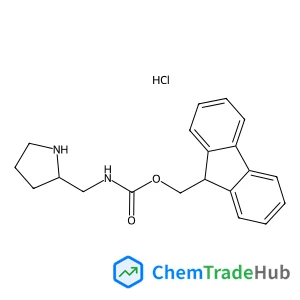
(S)-(9H-Fluoren-9-yl)methyl (pyrrolidin-2-ylmethyl)carbamate hydrochloride
CAS番号:
1217813-15-4
分子式:
C20H23ClN2O2
おすすめサプライヤー






免責事項
このページに表示される学術雑誌情報は、参考および研究目的のみを目的としています。当社は雑誌出版社とは提携しておらず、投稿の取り扱いも行っておりません。出版に関するお問い合わせは、各雑誌出版社に直接ご連絡ください。
表示されている情報に誤りがある場合は、support@chemtradehub.com までご連絡ください。迅速に確認し、対応いたします。