












The quest for determining one-electron redox potentials of azulene-1-carbonitriles by calculation
文献情報
出版日
2018-02-19
DOI
10.1039/C7CP08687C
インパクトファクター
3.676
著者
Nicolai Ree, Cecilie Lindholm Andersen, Martin Drøhse Kilde, Ole Hammerich, Mogens Brøndsted Nielsen, Kurt V. Mikkelsen
原文を見る
要旨
Electrochemical processes drive many chemical and biochemical reactions. Theoretical methods to accurately predict redox potentials are therefore crucial for understanding these reactions and designing new chemical species with desired properties. We have investigated a theoretical methodology using electronic structure methods based on density functional theory and continuum solvation models. These methods have been validated with linear correlation plots comparing theoretical and experimental results for the redox properties of a series of azulene derivatives. The results showed excellent correlations despite only minor structural variations of the azulenes, which support this rather simple theoretical methodology for determining redox potentials of organic molecules. Furthermore, we have estimated the absolute redox potential of the ferrocene/ferrocenium redox couple to be 4.8 ± 0.1 V in dichloromethane, which is slightly lower than previous estimates.
関連文献
Quantum mechanical tunnelling: the missing term to achieve sub-kJ mol−1 barrier heights
Sebastian Kozuch, Tim Schleif, Amir Karton
2021-04-21
Paper
DOI: 10.1039/D1CP01275D
First-principles study of the optical and thermoelectric properties of tetragonal-silicene
Niladri Sekhar Mondal, Subhadip Nath, Debnarayan Jana, Nanda Kumar Ghosh
2021-04-26
Paper
DOI: 10.1039/D1CP01466H
Modelling the non-local thermodynamic equilibrium spectra of silylene (SiH2)
Victoria H. J. Clark, Sergei N. Yurchenko
2021-04-29
Paper
DOI: 10.1039/D1CP00839K
Effects of solvation shell relaxation on chain association mechanisms in poly(3-hexylthiophene) solutions
Ching H. Wu, Chi C. Hua, Chun I. Wang
2021-05-04
Paper
DOI: 10.1039/D1CP00869B
Design of highly efficient g-C3N4-based metal monoatom catalysts by two extra-NM1 atoms: density functional theory simulations
Miaogen Chen, Wenya Chang, Yaxin Shi, Wei Liu, Can Li
2021-04-15
Paper
DOI: 10.1039/D1CP00972A
Direct dynamics in a proton transfer reaction of isomer product competition. Insight into the suppressed formation of the isoformyl cation
Yujie Wang, Siwei Zhao, Xu Liu, Wenqing Zhen, Gang Fu, Li Yang, Shaozeng Sun, Jiaxu Zhang
2021-04-04
Paper
DOI: 10.1039/D0CP06516A
The molecular structure of the surface of water–ethanol mixtures
Johannes Kirschner, Anderson H. A. Gomes, Olle Björneholm, Vincenzo Carravetta, Niklas Ottosson, Arnaldo Naves de Brito, Huib J. Bakker
2021-05-11
Paper
DOI: 10.1039/D0CP06387H
A new perspective for evaluating the photoelectric performance of organic–inorganic hybrid perovskites based on the DFT calculations of excited states
Zhengyang Gao, Shengyi Chen, Yang Bai, Min Wang, Weijie Yang, Wei Li, Xunlei Ding
2021-04-28
Paper
DOI: 10.1039/D1CP01000J
Encapsulating aluminum nanoparticles into carbon nanotubes for combustion: a molecular dynamics study
Liang Song, Feng-Qi Zhao, Si-Yu Xu, Xue-Hai Ju
2021-04-22
Paper
DOI: 10.1039/D1CP01135A
Molecular dynamics study of the pore formation in single layer graphene oxide by a thermal reduction process
Federico Raffone, Filippo Savazzi, Giancarlo Cicero
2021-04-26
Paper
DOI: 10.1039/D1CP00134E
こちらもおすすめ
化合物よくある質問
2-メトキシ-4-(メチルスルフィニル)アミンの主な用途は何ですか?
2-メトキシ-4-(メチルスルフィニル)アミンは、主に医薬品および農薬の製造に使用されます。また、合成化学の一部として研究用材料としても利用されます。
41608-73-52-Methoxy-4-(methyls...
118684-13-24-(Bromomethyl)-3-me...
化合物よくある質問
4,6-二氯-N-甲基ピラミジンアミンの代替品はありますか?
代替品としては、4,6-二クロロピラミジンアミンや他のピラミジン系化合物が考えられます。ただし、目的と用途によって最適な代替品は異なります。
10397-15-64,6-Dichloro-N-methy...
化合物よくある質問
6-氯-4-甲基-1H-吲哚を含む廃棄物はどのように処理すべきですか?
6-氯-4-甲基-1H-吲哚の廃棄物は、適切な容器に収集し、密閉して保管します。温度は常温、湿度は低く、直射日光を避けて保管することを推奨します。廃棄処理は専門...
885520-84-36-chloro-4-methyl-1H...
化合物よくある質問
2-フローユロ-4-(トリフルオロメチル)ベンゾイドについて「に適用される法規ガイドラインは何ですか」
2-フローユロ-4-(トリフルオロメチル)ベンゾイドのCAS番号は207974-08-1です。この化合物はGHS分類で毒性物質と有害な反応物質として分類されます...
207974-08-1[2-Fluoro-4-(trifluo...
化合物よくある質問
4-ニトロフェニルN-[(ベンゼルオキシルカーボンイル]グリシングリシングリシン酸はどのように保存すればよいですか?
4-ニトロフェニルN-[(ベンゼルオキシルカーボンイル]グリシングリシングリシン酸は、室温で暗所に保管し、乾燥した環境で保存することを推奨します。容器は密閉性の...
19811-64-44-Nitrophenyl N-[(be...
化合物よくある質問
イソデスロラタドリンの代替品はありますか?
イソデスロラタドリンの代替品としては、デスロラタドリンや他の抗ヒスタミン薬が挙げられます。具体的には、デスロラタドリン、ラセカミド、フェルタドリンなどが、症状や...
183198-49-4Iso Desloratadine
化合物よくある質問
5-甲氧基-1,2,3,4-四氢异喹啉盐酸盐はどのように合成されますか?
5-甲氧基-1,2,3,4-四氢异喹啉盐酸盐の一般的な合成方法は、メタノール中で5-メトキシ-1,2,3,4-四ヒュドロイソキシンを塩酸で塩化します。この反応で...
103030-69-95-Methoxy-1,2,3,4-te...
化合物よくある質問
4-アミノ-5-メトキシ-2-トルエンサルホニック酸についての法規ガイドラインは何ですか?
CAS番号6471-78-9の4-アミノ-5-メトキシ-2-トルエンサルホニック酸は、GHS分類では corrosive(腐食性)と識別されます。EUのREAC...
6471-78-94-Amino-5-Methoxy-2-...
化合物よくある質問
甲基孕酮を取り扱う際の実験室安全事項は何ですか?
甲基孕酮の取り扱いは、PPE(個人保護具)の使用が必要な重要な安全事項を伴います。防塵マスク、ゴーグル、手袋を着用することが推奨されます。ドラフトチャンバーを使...
204063-33-22-[(Diphenylmethyl)a...
掲載誌
Physical Chemistry Chemical Physics

CiteScore:
5.5
自己引用率:
10.3%
年間論文数:
3036
Physical Chemistry Chemical Physics (PCCP) is an international journal co-owned by 19 physical chemistry and physics societies from around the world. This journal publishes original, cutting-edge research in physical chemistry, chemical physics and biophysical chemistry. To be suitable for publication in PCCP, articles must include significant innovation and/or insight into physical chemistry; this is the most important criterion that reviewers and Editors will judge against when evaluating submissions. The journal has a broad scope and welcomes contributions spanning experiment, theory, computation and data science. Topical coverage includes spectroscopy, dynamics, kinetics, statistical mechanics, thermodynamics, electrochemistry, catalysis, surface science, quantum mechanics, quantum computing and machine learning. Interdisciplinary research areas such as polymers and soft matter, materials, nanoscience, energy, surfaces/interfaces, and biophysical chemistry are welcomed if they demonstrate significant innovation and/or insight into physical chemistry. Joined experimental/theoretical studies are particularly appreciated when complementary and based on up-to-date approaches.
おすすめ化合物
![2-Methylbenzo[h]quinoline structure](https://static.chemtradehub.com/structs/605/605-88-9-ac43.webp "2-Methylbenzo[h]quinoline structure")
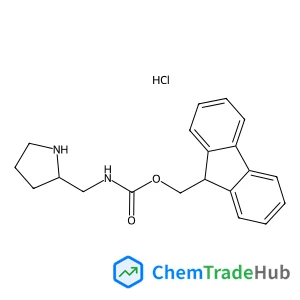
(S)-(9H-Fluoren-9-yl)methyl (pyrrolidin-2-ylmethyl)carbamate hydrochloride
CAS番号:
1217813-15-4
分子式:
C20H23ClN2O2
おすすめサプライヤー




免責事項
このページに表示される学術雑誌情報は、参考および研究目的のみを目的としています。当社は雑誌出版社とは提携しておらず、投稿の取り扱いも行っておりません。出版に関するお問い合わせは、各雑誌出版社に直接ご連絡ください。
表示されている情報に誤りがある場合は、support@chemtradehub.com までご連絡ください。迅速に確認し、対応いたします。