












Beyond the point defect limit: solid solutions, phase diagrams and trace-element partitioning
文献情報
出版日
2003-04-09
DOI
10.1039/B300153A
インパクトファクター
3.676
著者
M. Yu. Lavrentiev, N. L. Allan, J. A. Purton
原文を見る
要旨
Traditionally disorder in solid oxides has largely been investigated theoretically via classical point defect theory; such methods are not readily extended to solid solutions, liquid phases or grossly non-stoichiometric compounds. In this paper we show how Monte Carlo simulations in the semigrand canonical ensemble, which include the explicit interchange of cations and use configurational bias techniques, are an attractive method for situations involving finite and even high concentrations of defects or foreign atoms. We illustrate our approach with two examples involving CaO: (i) the phase diagram for the system CaO–MgO is calculated for both solid and liquid phases. All the characteristic features are reproduced, including the eutectic point and the regions of liquid–solid coexistence; (ii) the first direct calculation of trace-element partitioning between solid and melt phases. Our techniques take full account of local structural distortion and clustering due to the mismatch between the sizes of the cations involved.
関連文献
Review of one-dimensional and two-dimensional nanostructured materials for hydrogen generation
Veluru Jagadeesh Babu, Sesha Vempati, Seeram Ramakrishna
2014-11-28
Perspective
DOI: 10.1039/C4CP04245J
Abstraction and addition kinetics of C2H radicals with CH4, C2H6, C3H8, C2H4, and C3H6: CVT/SCT/ISPE and hybrid meta-DFT methods
Manas Ranjan Dash, B. Rajakumar
2014-12-09
Paper
DOI: 10.1039/C4CP04677C
Structural heterogeneity and dynamics of dyes on TiO2: implications for charge transfer across organic–inorganic interfaces
Jeffrey R. Christianson, J. R. Schmidt
2014-12-18
Paper
DOI: 10.1039/C4CP04814H
Synergistic effects of nonmetal co-doping with sulfur in anatase TiO2: a DFT + U study
Zong-Yan Zhao, Qing-Ju Liu
2014-12-04
Paper
DOI: 10.1039/C4CP05065G
Al20+ does melt, albeit above the bulk melting temperature of aluminium
Udbhav Ojha, Krista G. Steenbergen, Nicola Gaston
2014-12-16
Paper
DOI: 10.1039/C4CP05143B
Investigation of solvent dynamic effects on the electron self-exchange in two thianthrene couples with large inner reorganization energies
P. Choto, K. Rasmussen, G. Grampp
2014-12-11
Paper
DOI: 10.1039/C4CP04581E
Photocatalytic enhancement of hybrid C3N4/TiO2 prepared via ball milling method
Mo Zhang, Yongfa Zhu
2014-12-09
Paper
DOI: 10.1039/C4CP05173D
Phenolic resin-grafted reduced graphene oxide as a highly stable anode material for lithium ion batteries
Mochen Li, Huaihe Song, Xiaohong Chen, Jisheng Zhou, Zhaokun Ma
2014-12-18
Paper
DOI: 10.1039/C4CP04556D
Galvanic deposition of Rh and Ru on randomly structured Ti felts for the electrochemical NH3 synthesis
Kurt Kugler, Mareike Luhn, Jean André Schramm, Khosrow Rahimi
2014-12-16
Paper
DOI: 10.1039/C4CP05501B
Magnetic γ-Fe2O3, Fe3O4, and Fe nanoparticles confined within ordered mesoporous carbons as efficient microwave absorbers
Jiacheng Wang, Jiandong Zhuang, Qian Liu
2014-12-11
Paper
DOI: 10.1039/C4CP04228J
こちらもおすすめ
化合物よくある質問
2-ブロモ-9,9-ジフェニル-9H-フルオレンの主な用途は何ですか?
2-溴-9,9-二苯基芴は、医薬品、工業材料、有機合成の研究分野で応用されます。特に、レーザー材料や機能性ポリマーの合成に使用されることがあります。また、蛍光色...
474918-32-62-Bromo-9,9-diphenyl...
化合物よくある質問
四氯化铱の市場動向や研究トレンドはどうですか?
四氯化铱の市場は研究開発分野で注目されており、特にナノ技術や金属有機框架(MOFs)の分野での需要が増加傾向にあります。価格は安定しており、中国や韓国での生産が...
207399-11-9Tetrachloroiridium h...
882-06-44-Nitrocinnamic acid
化合物よくある質問
1-(4-溴-3-氟苯基)-2-氯乙酮を含む廃棄物はどのように処理すべきですか?
1-(4-溴-3-氟苯基)-2-氯乙酮 (CAS番号: 1260857-14-4) の廃棄物は専門的な廃棄処理が必要です。まず、廃棄物は密閉された容器に収集し、...
1260857-14-41-(4-Bromo-3-fluorop...
化合物よくある質問
苦参酚Kとは何ですか?
苦参酚Kは、CAS番号101236-49-1を持つ化合物で、主に天然由来の生薬から抽出されます。この化合物は、抗炎症作用や抗癌作用を持つことが報告されています。
101236-49-1Kushenol K
化合物よくある質問
POTASSIUM (1-(TERTBUTOXYCARBONYL)AZETIDIN-3-YL)TRIFLUOROBORATE を含む廃棄物はどのように処理すべきですか?
POTASSIUM (1-(TERTBUTOXYCARBONYL)AZETIDIN-3-YL)TRIFLUOROBORATE を含む廃棄物は、まず安全なエント...
1430219-73-0Potassium (1-(tert-b...
化合物よくある質問
4-庚基-4’-联苯羧酸の市場動向や研究トレンドはどうですか?
4-庚基-4’-聯苯羧酸は、特殊化学品や合成化学の分野で用いられる化学物質ですが、市場動向としては、研究開発の進展とともに需要が増加しています。また、環境配慮型...
58573-94-74'-Heptyl-4-biphenyl...
化合物よくある質問
6-ブロモ-3-メトキシ-1-フェニル-1H-インドゾールを含む廃棄物はどのように処理すべきですか?
6-ブロモ-3-メトキシ-1-フェニル-1H-インドゾールを含む廃棄物は、適切な化学廃棄処理が必要です。通常、廃棄物は密閉容器に収集され、専門の廃棄処理業者に引...
1332527-03-36-Bromo-3-methoxy-1-...
化合物よくある質問
4,4-二甲基-2-吡咯烷酮はどの業界で使用されていますか?
4,4-二甲基-2-吡咯烷酮は医薬、ポリマー、センサー、半導体などの業界で広く使用されています。特に溶媒としての性能が高く評価されています。
66899-02-34,4-dimethylpyrrolid...
51312-42-6Sodium Phosphotungst...
掲載誌
Physical Chemistry Chemical Physics

CiteScore:
5.5
自己引用率:
10.3%
年間論文数:
3036
Physical Chemistry Chemical Physics (PCCP) is an international journal co-owned by 19 physical chemistry and physics societies from around the world. This journal publishes original, cutting-edge research in physical chemistry, chemical physics and biophysical chemistry. To be suitable for publication in PCCP, articles must include significant innovation and/or insight into physical chemistry; this is the most important criterion that reviewers and Editors will judge against when evaluating submissions. The journal has a broad scope and welcomes contributions spanning experiment, theory, computation and data science. Topical coverage includes spectroscopy, dynamics, kinetics, statistical mechanics, thermodynamics, electrochemistry, catalysis, surface science, quantum mechanics, quantum computing and machine learning. Interdisciplinary research areas such as polymers and soft matter, materials, nanoscience, energy, surfaces/interfaces, and biophysical chemistry are welcomed if they demonstrate significant innovation and/or insight into physical chemistry. Joined experimental/theoretical studies are particularly appreciated when complementary and based on up-to-date approaches.
おすすめ化合物
![4-{2-[4-(2-Methyl-2-propanyl)phenyl]ethoxy}quinazoline structure](https://static.chemtradehub.com/structs/120/120928-09-8-d3db.webp "4-{2-[4-(2-Methyl-2-propanyl)phenyl]ethoxy}quinazoline structure")
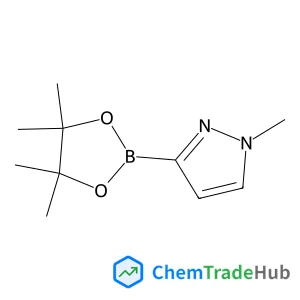
1-Methyl-3-(4,4,5,5-tetramethyl-1,3,2-dioxaborolan-2-yl)-1H-pyrazole
CAS番号:
1020174-04-2
分子式:
C10H17BN2O2
おすすめサプライヤー







免責事項
このページに表示される学術雑誌情報は、参考および研究目的のみを目的としています。当社は雑誌出版社とは提携しておらず、投稿の取り扱いも行っておりません。出版に関するお問い合わせは、各雑誌出版社に直接ご連絡ください。
表示されている情報に誤りがある場合は、support@chemtradehub.com までご連絡ください。迅速に確認し、対応いたします。